

New Zealand Geographic features are works of art that can take anywhere between two months and seven years to produce. Here’s how we make one.
Every story starts with an idea. Usually it’s a flash of light in the eyes of a writer, or a photographer, often the editor. Sometimes it happens in the field on another assignment, or in conversation with a scientist. Sometimes it’s a single line in a news story, or a point on a graph in an official press release. That’s when our editor Catherine Woulfe gets a phone call, an email, a txt—the first step on what becomes the journey to publication.
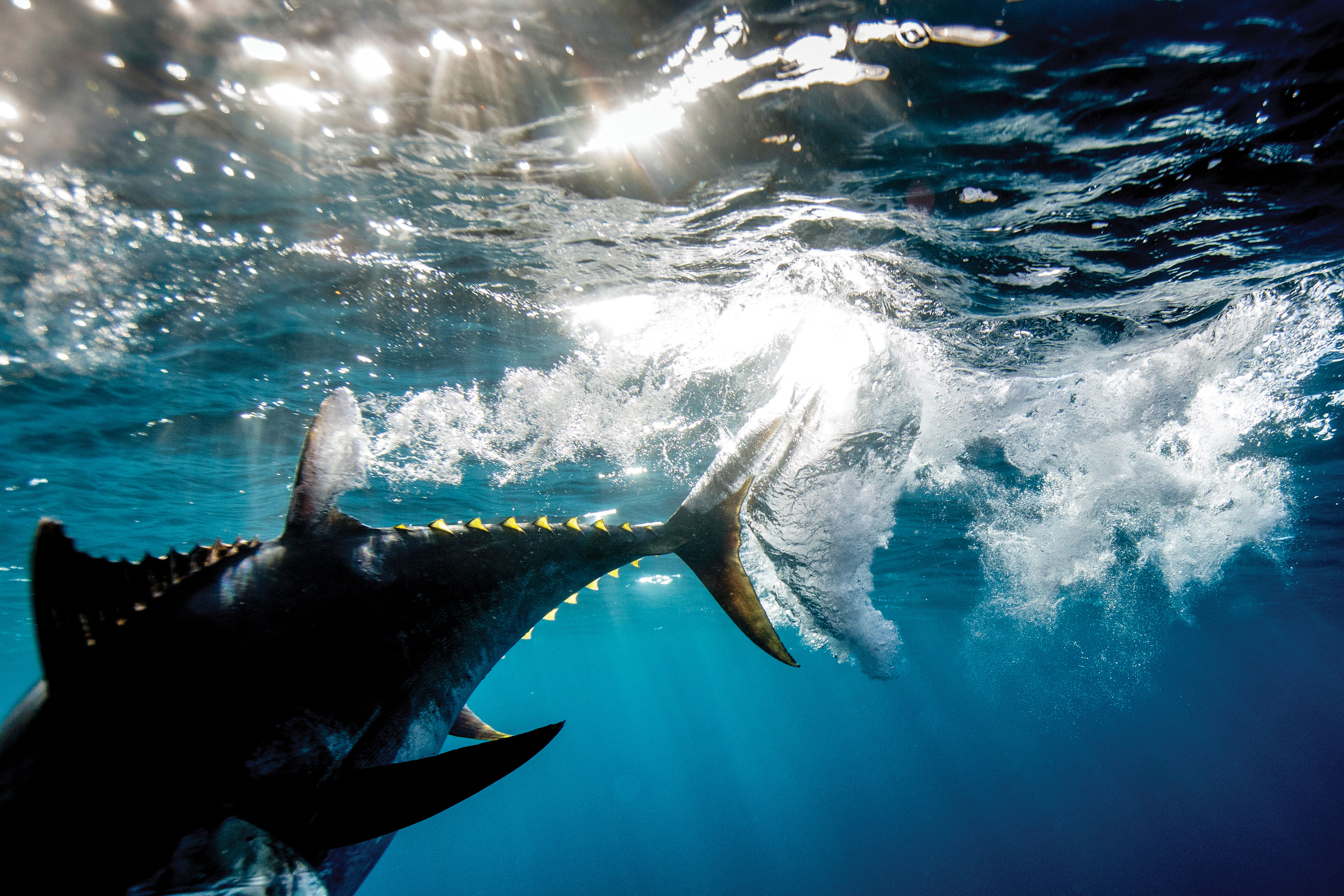
Sometimes, it can be a long journey. In 2014, Richard Robinson wrote one word on a Post-it note and stuck it to the wall of his home office. It said Tuna. This Post-it was the beginning of our longest-running feature project and a good example of what it takes to tell a story, NZGeo-style.
Lots of the pitches we receive are a subject, not a story. Someone will email and suggest we do sea lions. Or algae. But for a subject to become a story we need a news angle that can answer the reader’s question, “Why should I read about this now?” The ‘why now’ is what makes a story relevant, sometimes urgent.
The story of tuna traces a parallel line to humanity’s relationship with the sea. At first people thought tuna were an endless resource, until we largely fished out yellowfin from the biggest ocean on the planet. The largest species, Pacific bluefin, was in freefall too. But in the waters of New Zealand and Australia, new fishing regulations for southern bluefin were beginning to take effect—their precipitous decline had halted. This change in fortune within a billion-dollar fishery elevated the word on the Post-it into a compelling and complex 9000-word story.
A good story would need to follow the fish, and southern bluefin swim across a vast swathe of the planet—the Australian fishery, and into the South Pacific too. It was going to be a big reach for a local magazine. We contacted the editor of Australian Geographic, and they agreed to contribute to expenses on the wider story in exchange for being able to run the feature. Richie got to work… although not immediately.
Photographing an oceanic species means enlisting production support from the fishing companies—they’re the only ones going to sea and interacting with these magnificent fish in the wild. After months of phone calls, Richie spent a week at sea with Michael Smith, hauling in southern bluefin on a trawler off the wild West Coast. A year later he followed the tuna to Lee Fisheries where it was processed for export. Sanford allowed us aboard their huge purse seiners fishing for skipjack tuna—another week at sea. Later, we came across the work of Mark Smith. He had just returned from photographing the tuna fishery in the South Pacific, showing the horrors endured by people working as indentured labour at sea for months, or years.

More by James Frankham
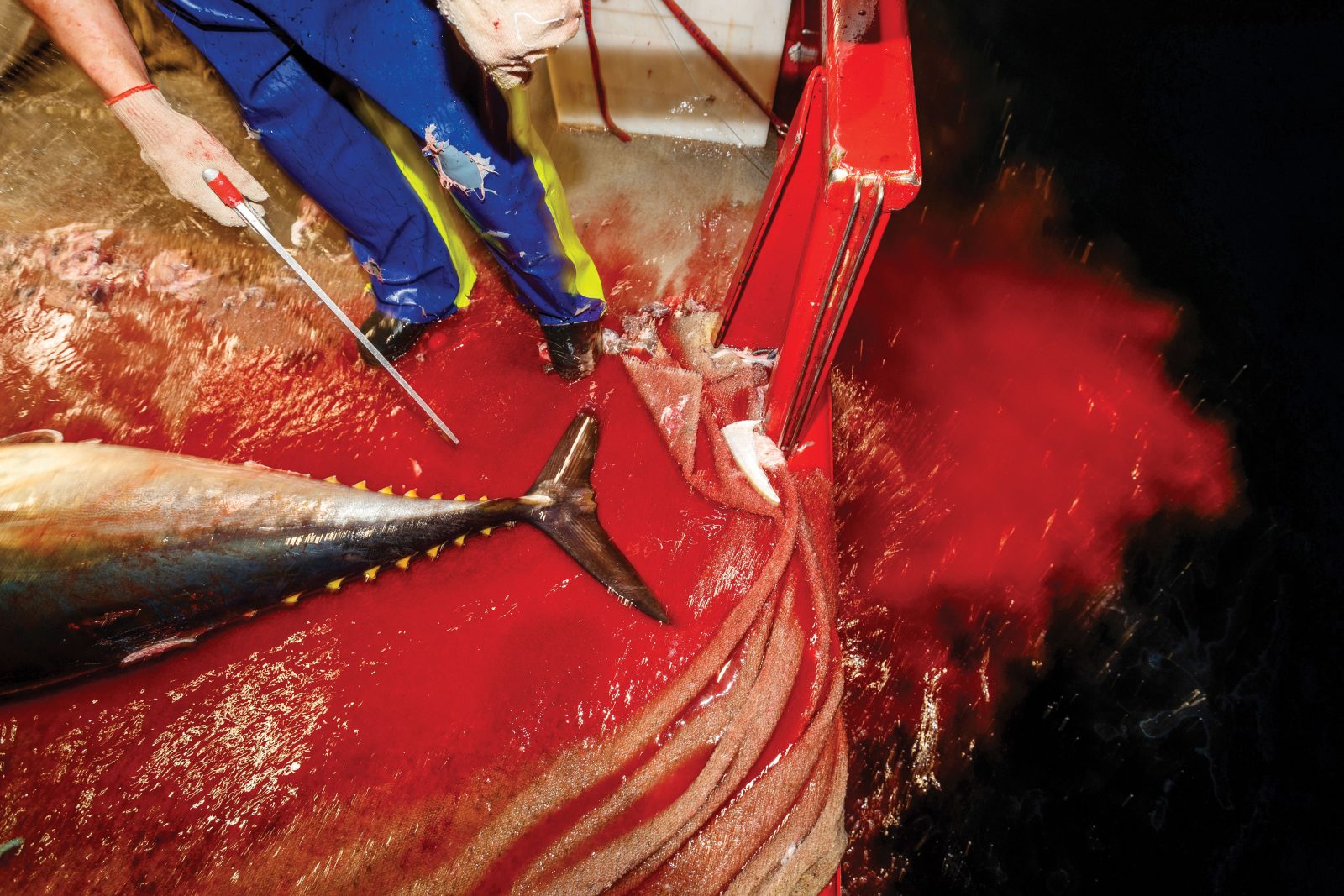
Pew Charitable Trusts contributed some funding that allowed us to expand the scope of the story further—joining Stehr Group off the coast of South Australia, transferring the fish from purse seine nets into pens off Port Lincoln. Another week in the field.
Two writers had a go at the wide-ranging story before Kate Evans made it stick, weaving in the fortunes of the fishers, the scientific effort to understand the species, and the fate of the fish itself.
In all, the project took seven years. It was the only feature we have ever covered that saw the conservation of a species actually improve across the production period. You can read the story here, and the side-car feature on the dark side of the Pacific fishery here.
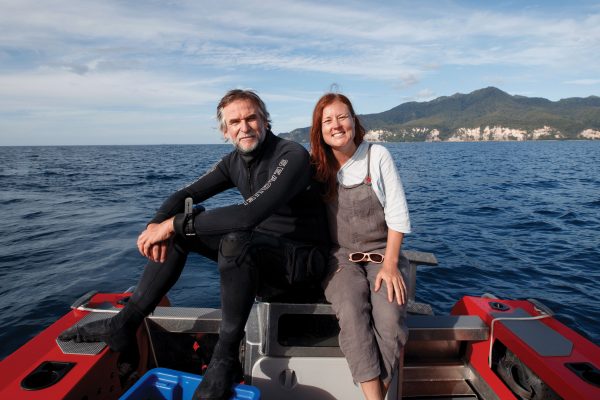
Other stories can land quicker. Like when John Summer sent us a sort of sequel to a feature he had written earlier in the year. He wanted to tell the story of trampers lost for weeks in the New Zealand bush, and the effect that time had on their psyche. He had already contacted a couple of people. One had even taken photographs during his ordeal, a strange record of that painful solace he was happy to contribute. Last month, a scientist at Auckland Museum got in touch about a remarkable collection of shells he was cataloguing that reflected the ecological change in the Manukau Harbour over the past 80 years—writer and photographer scrambled and that story will be ready for the issue we send to press tomorrow.
Most of the time, stories take about six months to research, write, photograph, edit, design and publish. And skipping steps or setting aside opportunities means the story is not as rich or complete or compelling to read.
New Zealand Geographic stories are more than just stacks of information. We analyse the consequences of events or decisions for our society and environment. It’s what sets us apart. It’s what you expect as a reader, and why you read this magazine.
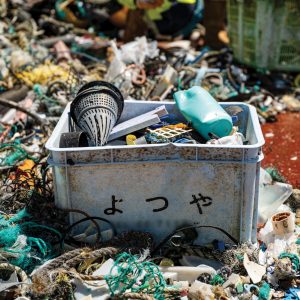
Other stories require infographics that allow a reader an understanding of an issue. Take the story we’re about to publish on recycling, for example. There is very little data available on New Zealand’s waste streams—where our waste goes, what portion gets recycled or dumped or exported—and what we do know is spread across incompatible data within industry, local government and central government, as well as external agencies. We wanted to produce a graphic that showed our consumption of various materials (say, paper, plastics, metals) and then whether it went to landfill or was recycled.
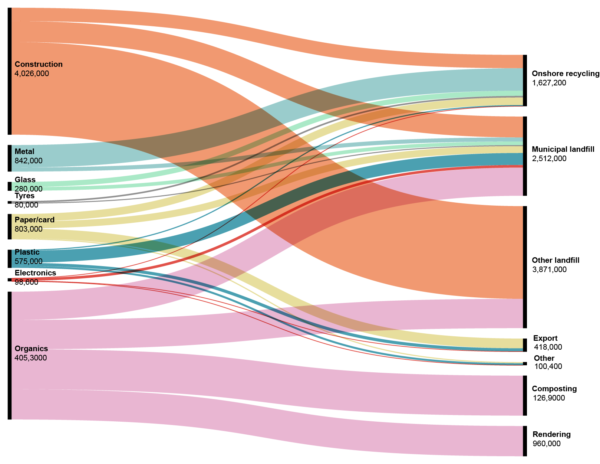
It took months, and help from the Ministry for the Environment to gather the necessary data, as it had never been combined into a coherent picture before. We could spend another couple of weeks breaking it down further to show who the users were (household, commercial, agricultural etc), but we need to balance that against getting the story out, and where we spend our time.
We have a publisher—that’s me—who largely works on keeping the wheels turning, people paid, accounts compiled, IT infrastructure operating as it should… basically maintaining the machine. There’s the editor, Catherine Woulfe, who coordinates writers, photographers, scientists, designers, subeditors, like she is spinning a hundred plates at once. There may be more than a dozen writers and photographers working on the content for a single issue, every one of them committed to making sure every tiny detail of their story sings—and that it is correct, and presented as well as it can be. Then there is our art director Marc Backwell (now based in Cape Town), and Lewis Hurst our designer and sort of ‘fixer’ who comes in on press day to reconcile a thousand small text changes and image grading and get the whole contraption off to press.
There’s often as much as 100 hours of effort that goes into researching, reporting and writing a feature story, and a similar investment from a photographer. To make an entire issue of the magazine, we’re talking perhaps 2000 hours—close to a year of one person doing 40-hour weeks. Each issue has direct costs of around $35,000, totalling some $200k in a year.
The purpose of outlining this is to point to a single salient fact: Our journalism requires real effort from real people working in the field and around the editorial office, all of which costs real money.
On the flipside, this content has real value. It is the only such journalism covering our environment in such a deep, analytical way, and the only photojournalism of this quality and timescale happening in New Zealand. While there are a handful of other outlets that we admire in New Zealand for their commitment to longform journalism, New Zealand Geographic holds a special position that makes our reporting rare and important. (We are also the only outlet supplying a digital subscription for every student in every school via the Ministry of Education.)
The survival of this title means more than the continuation of a magazine. It’s a voice in the public conversation and a cultural artefact that has intrinsic worth. I expect this is the reason that 1,800 readers have answered the call and subscribed in the past month—not only to receive the subscription, but also to see New Zealand Geographic remain a feature of our cultural landscape.
To quote writer Dave Hansford, commenting on a LinkedIn post about our appeal, “New Zealand Geographic is a taonga, and we’ve already lost far too many of those… Now, more than ever before, this matters like hell. This one must not fall.”