





It was dark, loud and wet. You could be blown up, run over, or drowned. Or you could succumb to drunken misadventure. Some people took one look at the place and quit on the spot. Others stuck it out for years, hoping to build a better life for themselves. Their stories, recorded by oral historian Rosemary Baird, are collected in her book, The Middle of Nowhere.
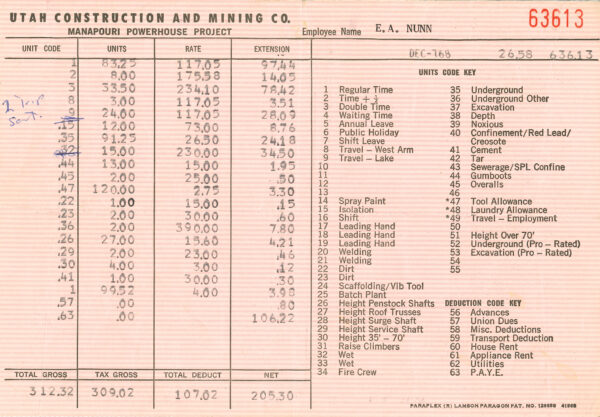
Earle Nunn’s payslip from the Manapōuri Powerhouse Project has a list of all the bonuses workers could be awarded. In December 1968, he received 12. Three were allowances for his gumboots, overalls and tools. Two were for working in confined spaces. One was for laying cement. The others are self-explanatory: “Underground”. “Underground Other”. “Wet”. “Dirt”. “Dirt”. “Isolation”.
It’s not clear why there were two separate bonuses for “Dirt”; there were also two available for “Wet”, but Nunn got only one of them. He was lucky, though, not to have received any allowances for “Noxious”. Or “Sewerage”.
The pay at Manapōuri was the best in the country. Nunn, an electrician, was earning four times as much as in his previous job in Gore. “It was a big difference,” he told Christchurch historian Rosemary Baird. “All the meals were supplied; the hut was supplied; bedding was supplied. So you could save everything if you wanted to.”
It had to be a big difference. The construction of the Manapōuri hydroelectric power station was behind schedule, and it was struggling to retain manpower. The prospect of a 300 per cent pay rise lured men to the site, but it didn’t stop them walking off the job. The place was extremely remote, and workers were beset by torrential rain, sandflies, kea, and boredom. Someone was flown to hospital every couple of days. Men arrived, took one look at it, and got the next boat out.
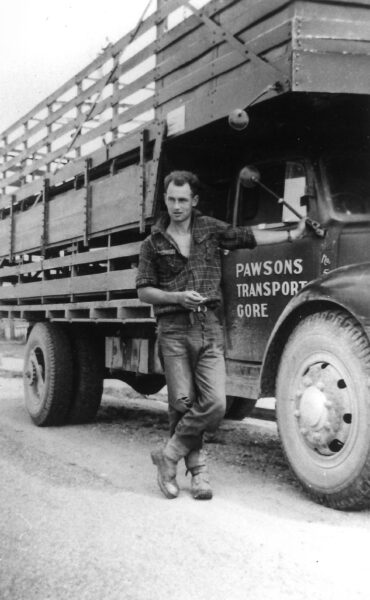
One of Nunn’s colleagues, Frank Pawson, was so affected by his experiences working there that simply quitting wasn’t enough. He moved to Australia, as if to put more distance between himself and Manapōuri.
On a summer’s day in 2009, Baird visited Pawson to record his life story for a study on New Zealanders who’d emigrated to Australia. Pawson’s description of the extreme conditions on the construction site affected her deeply, and she sought out others who had worked on the power station. Their stories are at the centre of her book, The Middle of Nowhere, a rare look into the lives of working-class people tackling one of the most dangerous jobs to have existed in New Zealand.
*
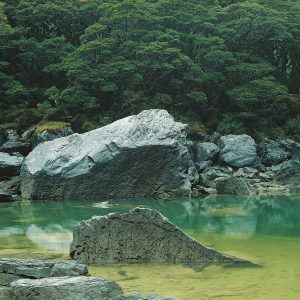
Lake Manapōuri is shaped like a paint splatter rather than a swimming pool, and that’s because it fills a series of mountain valleys on the eastern boundary of Fiordland National Park. There, all the land is steep. The Manapōuri Powerhouse Project was situated at the westernmost point of the lake, at the tip of a long channel reaching towards Fiordland like an outstretched arm.
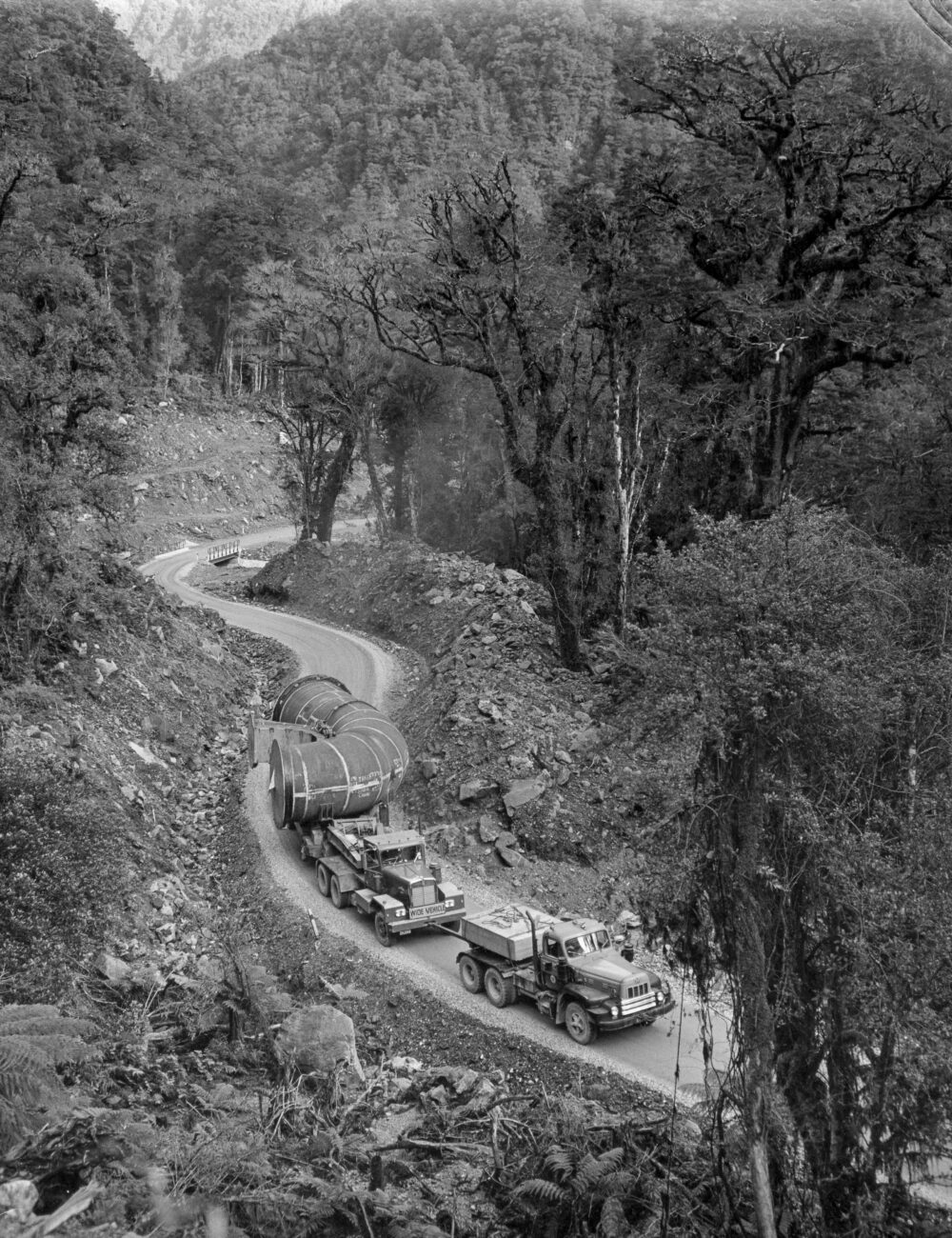
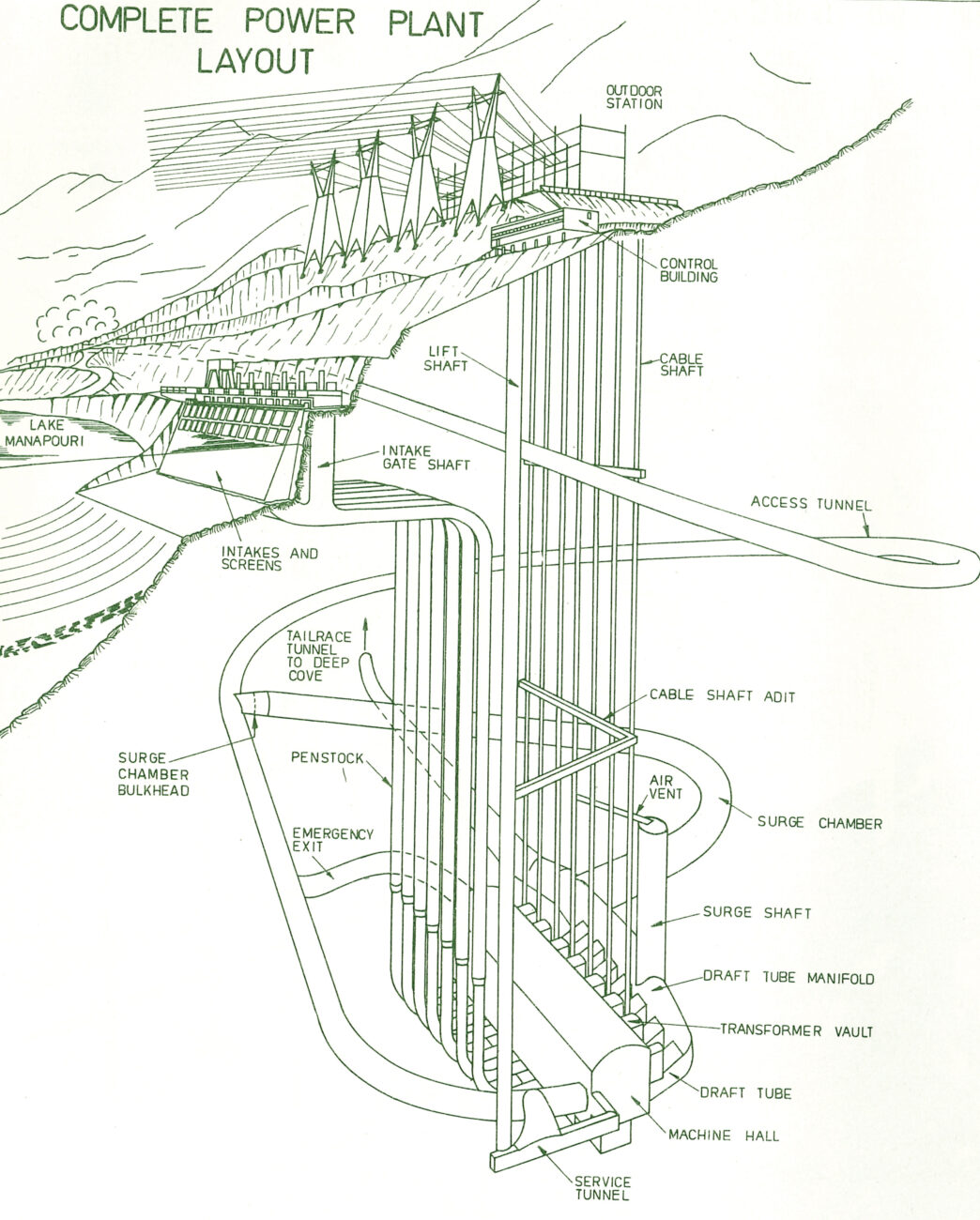
The plan for the power station involved digging seven tunnels, beginning at the level of the lake bed then descending into the earth. After taking in water from the lake, these tunnels would fall vertically, like seven elevator shafts, to seven turbines in a machine hall 200 metres underground. After flowing through the turbines—which generates electricity—the water would continue through a 10-kilometre-long tunnel to be discharged into the sea at Doubtful Sound.
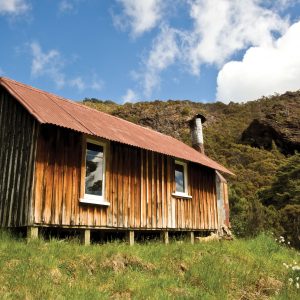
And so there were two construction sites, each tunnelling towards the other. One crew lived in an encampment of huts at the lake’s West Arm, and the other on a ship in Doubtful Sound’s Deep Cove.
Workers began to arrive in 1963, and came from around New Zealand and the world, primarily from other mining projects. There were groups of Māori, of Italians, of Yugoslavs, of Americans.
The contracts for designing and building the dam had been awarded to two United States companies. Both had been involved in building the Hoover Dam, but neither had operated in an environment like Fiordland. The American project managers were accustomed to stopping work when it rained.
Manapōuri is topographically suited to becoming a power station: it’s a high-altitude lake, meaning there’s a long distance for the water to fall and power the turbines. In terms of location, though, it was no good. It’s sensible to generate electricity close to where it will be used, and in 1962, there wasn’t a ton of demand for power in Southland.
The New Zealand government decided to create demand and capitalise on Manapōuri’s potential. An Australian company, Comalco, was looking for a cheap source of electricity for a new aluminium smelter, and so the government struck a deal: it would build the power station as long as Comalco built the smelter.
The government had not considered that Manapōuri is, ecologically, a terrible place to build a power station. The plans involved raising the lake level, which would have flooded most of the lake’s islands and a wide swathe of the shore. A massive nationwide protest, largely credited as the birth of New Zealand’s environmental movement, resulted in the government cancelling Comalco’s permission to change the lake level (Kennedy Warne wrote a belter story about the campaign). The power station would never run at optimal efficiency.
By the time the station was complete, in 1971, it had earned the title of New Zealand’s deadliest hydroelectric construction site. It still is. Partly this was due to a sporadic, if not lax, approach to safety—at the time, tunnelling projects budgeted on losing a man for every mile dug. Manapōuri’s record was worse, and its 18 fatalities weren’t solely attributable to the dangers on site. What killed people, too, was the place itself.
*
If Frank Pawson stood on the wharf at West Arm in winter, looking down the lake towards where people lived, one range of mountains loomed over his right shoulder and another over his left. The sun was so low in the sky that it would emerge from behind the peaks for only a brief spell every day. He told Baird it felt like the mountains were pressing down, threatening to squash him and everyone else there.
Dozers and other equipment would regularly freeze to the ground, but really it wasn’t the cold that was the problem. “Most of the time it was just rivers running everywhere,” Pawson told Baird. “Everything is wet. Your bed is wet, your clothes are wet.”
Average annual rainfall at West Arm is about four metres a year; on the other side of the mountains, in Doubtful Sound, it’s five.
Pawson reckoned that everybody had to leave the place every three months in order to stay sane. “They had to spend time out or else they’d go a bit loopy,” he said. “I mean, it was before the days when depression was a fancy word that everybody seemed to get, but it was depression that was bothering these people.”
There was little to do except drink, play darts, watch movies, gamble, or perhaps play rugby, if the weather allowed it.
“There’s nowhere to go,” said Italian labourer Mario Castellani, who lived and worked on the Doubtful Sound side. “There’s not even swimming. There were no roads. You go to the bush, you get eaten by a sandfly.”
The inability to spend money made it easy to save—provided people didn’t spend it letting off steam. Sometimes men would shave all their hair off to prevent themselves leaving for the weekend and blowing their wages in town. They were so embarrassed to be bald that they’d wait until their hair grew back first. Manapōuri was a sacrifice they were making on behalf of their future selves: “This was their chance to really get ahead in their life,” says Baird.
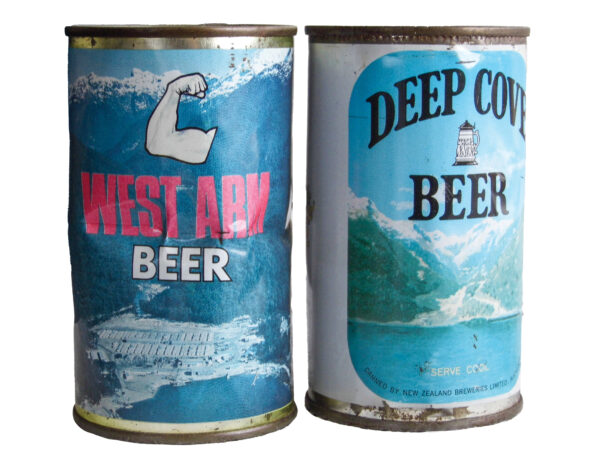
Still, the stress of it got to them. Several fatalities were the result of bad decision-making, involving what looks in retrospect like poor mental health, or alcohol—or both. “There was too much beer drunk,” said Pawson. “I’ve got no long-term effects physically from it, but I still have some bad dreams about things. About the dangerous nature of the work and the loneliness.”
More by Rebekah White
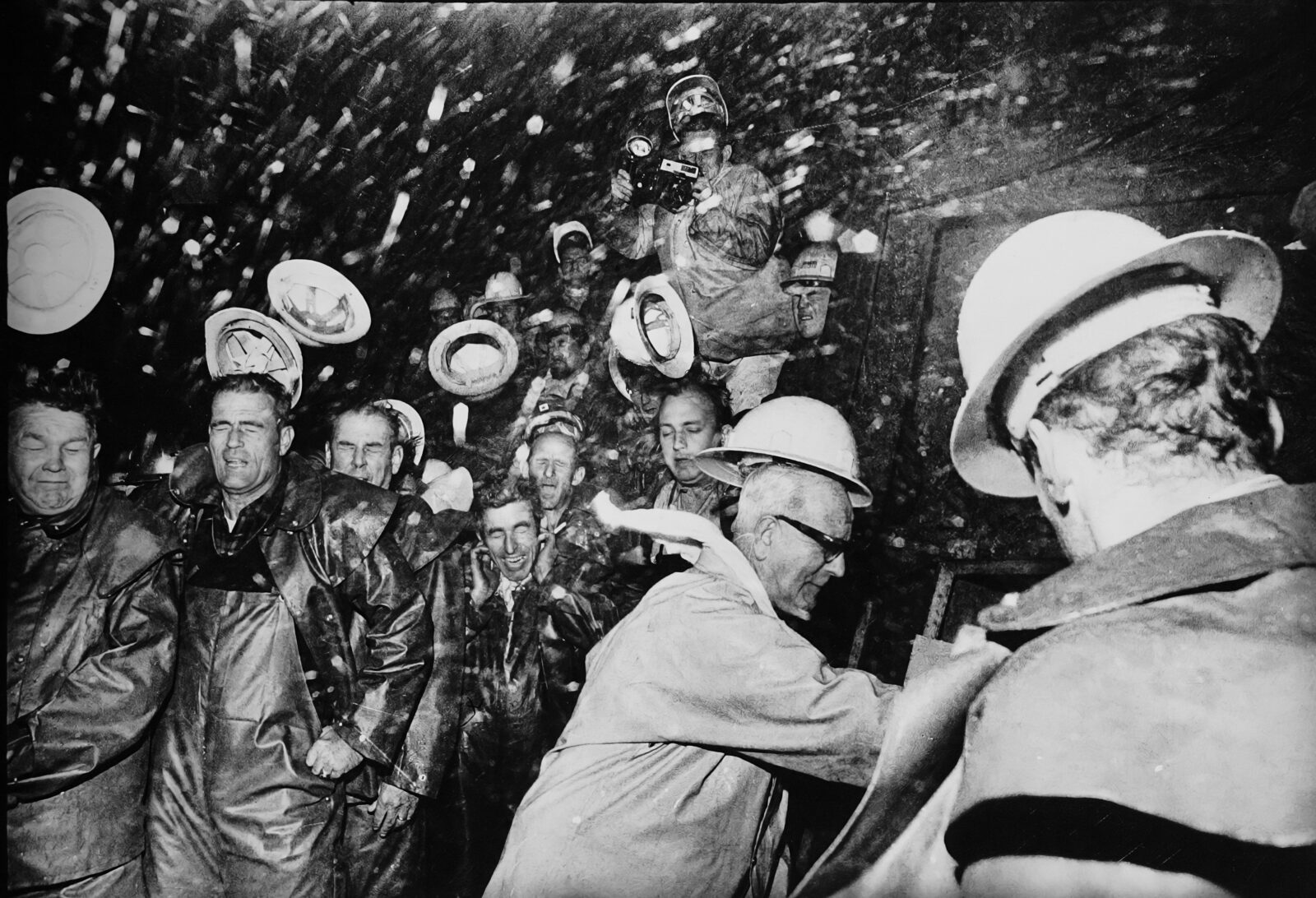
“I don’t know whether the miners put a few extra charges in to give the officials a thrill, but it was quite spectacular,” he said to RNZ. He told Stuff the “massive blast” blew the lights out and helmets off. In the dark, Durrant heard pebbles raining from the ceiling. He’d seen one flash go off, and knew it was his. “But I didn’t know what I had until I developed the film in the darkroom. When I saw what I’d got, I went ‘Yahoo!’”
There was a high rate of injury on site, whatever its cause. On the Doubtful Sound side, the only way to be evacuated was by plane, provided the weather was decent; in the first year of the project, the pilot transported 178 people to hospital, or several people a week who couldn’t be treated by the medical clinic on site.
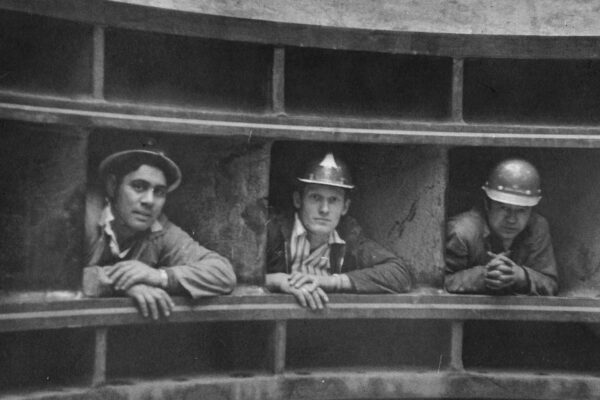
Castellani described working in the tunnel in water up to his chest. It would spurt out from the face in jets as they drilled, firing bits of rock at them like projectiles. “Oh man,” he said, “that rock, coming out like a blackened arrow.” Other labourers told Baird about waiting for explosives to detonate. They’d grip their hats to stop them being blown down the tunnel by the shock wave. They’d open their mouths, recalled Pawson, because that somehow eased the sensation of “getting your body battered by a huge vibrator”.
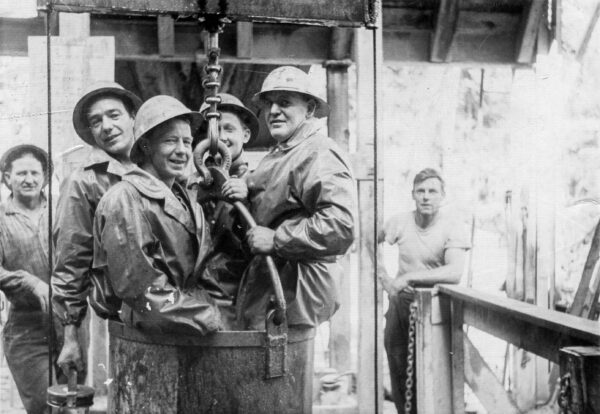
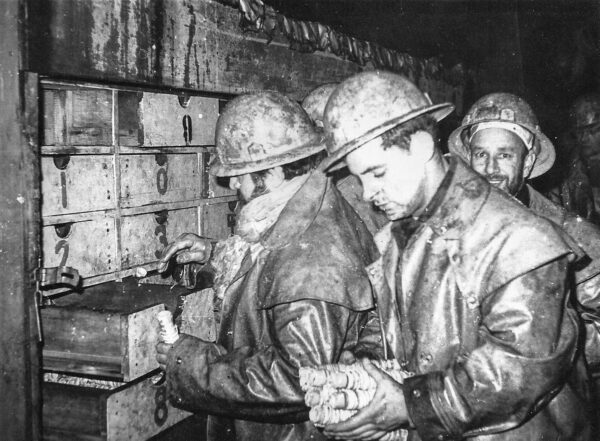
Baird found that the workers downplayed their own injuries. Pawson told her that he hadn’t been involved in any nasty accidents, but later mentioned that he’d been impaled in the knee by a piece of steel and had spent weeks recovering in hospital in Gore. Nunn, working on scaffolding in one of the shafts, had liquid concrete aggregate poured over him. It knocked his colleague off the scaffold; the man fell 10 metres and survived. The next day, the same thing happened again. Nunn was furious. Still, he felt that he had it better than the workers in Doubtful Sound. There, Baird learned, the Italian labourers would start shifts in silence, but as they returned, they’d be singing—“an implicit celebration”, she writes, “at making it out of the tunnel unscathed”.
One of the nurses stationed in the medical clinic in Doubtful Sound, Heather Marshall, recalled how the atmosphere changed depending on how dangerous the work was. “A few months ago, the boys had had a particularly bad run,” she told a radio interviewer in 1967. “There was water in the tunnel. It was shocking, the conditions they were working under. The rock was bad and dangerous. And then they struck a good patch and you’d think there was a whole batch of canaries around the place. Everyone was whistling. There was laughter.”
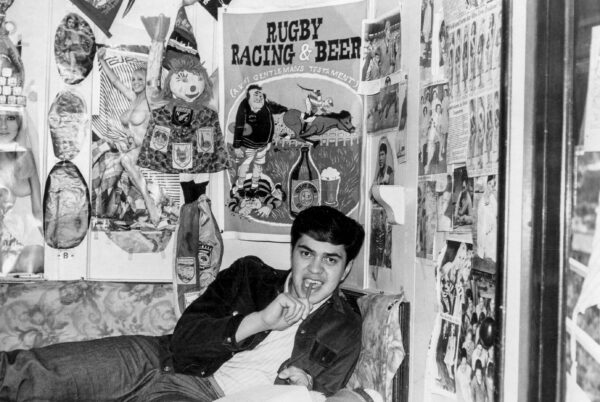
On the same radio show, Manapōuri workers brushed off any suggestion that their work was terrifying. Baird suspects that they dismissed the dangers in order to cope with them. “I think they just had to achieve a certain level of being blasé or else you wouldn’t keep working,” she says. “I just don’t think they could have kept going if they’d been dwelling on it.”
The people who stayed on the job, she says, all spoke about it with humility and resolve. “They were all people who just sort of got on with it. They were not really complainers. They were all just like, ‘Yep, we came to make a life. We did it. It was hard, but anyone would have done it. I’m proud of it, but I didn’t do anything that special.’
“They were people who made the best of things.”
*
Earle Nunn was one of them. Eventually, he was able to move his family to a nearby village constructed for the wives and children of power station workers, and he switched to night shifts so that he could see his kids during the day. It was a hard life, but worth it. He earned enough to buy a house, then a caravan, a boat, and a car. “I went there straight out of an apprenticeship, basically, as a boy,” he said, “and perhaps became a man.”
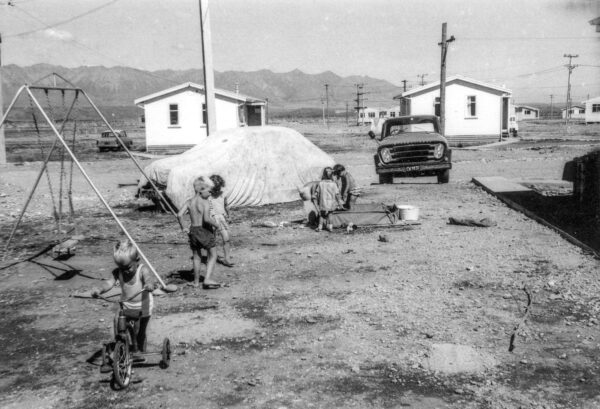
The town was its own challenge for the families who lived there. Schoolgirl Kirsty Murrell, in an essay on ‘Life in a Construction Village’, described absent fathers and women driven to distraction with boredom. “I know a lady who waxes down her walls and floors every day just for something to do,” she wrote. Others recalled basketball leagues, ballet classes, Girl Guides, Scouts, and children making their own fun. One woman ended up driving the Fiordland Travel launch and giving tourist commentaries; another wrote for the local newspaper. Many sold homebaking to power station workers at a substantial mark-up. (Women were superstitiously banned from entering the tunnels, but Baird heard stories about workers disguising their wives as men and sneaking them in for a look.)
Pawson, like Nunn, describes his time on the site as formative. “I thought I was a pretty good operator before I went in there, and I thought I could handle myself fairly well. I basically knew nothing.” Manapōuri might have given him nightmares for life, but it also made that life possible. “It just allowed me to do almost whatever I wanted to do—I picked it up at West Arm.” In Australia, he got his pilot’s licence, fulfilling a long-held dream, and explored the outback by air. Its wide open spaces were the physical opposite of Fiordland.
*
The aluminium smelter at Tiwai Point still operates. It uses slightly more electricity each year than Wellington. It’s still powered by Lake Manapōuri, and it will be until at least 2044.
The power station used to be open to the public: it was on the Fiordland tourist track, and people could take tours of the machine hall. “But then they stopped,” says Baird, “because of health and safety reasons.”
Baird spent 15 years collecting oral histories and researching Manapōuri, but found it hard to convince a publisher a book would be worthwhile. Her project was “not of national importance”, she heard. To her, the fact that none of her interviewees were particularly important was the whole point.
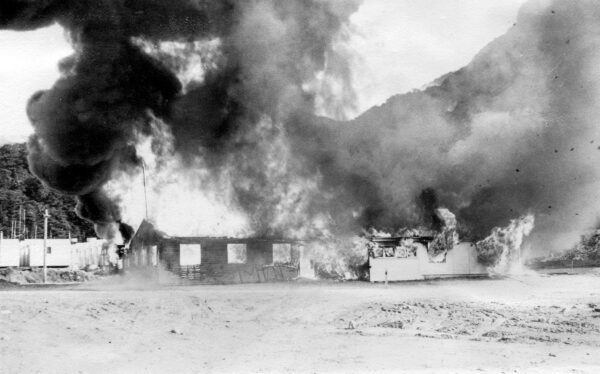
“Oral history is about the everyday,” says Baird. “It’s about what’s normal at the time but disappears because we don’t document the recipes we cook, or the clothes we wear, or the furniture, or what school was like. It’s not about their public life. It’s about how they felt, and how they made their decisions, and how their family worked.
“There are so many New Zealanders in our history who are like this. They’re not people whose stories are necessarily told anywhere else.”
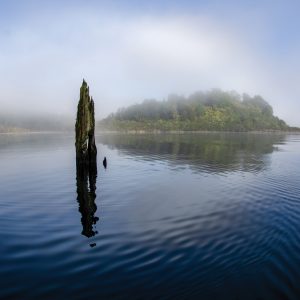
When Baird paid a visit to Manapōuri, she boarded the staff ferry on the lake’s eastern shore, joining the morning commute. It was perhaps an hour’s ride, and very early. Mist lay on the lake, and islands rose steeply and suddenly out of it. Entering West Arm, she saw how it was fortified on either side by mountains. “It did feel like travelling into another world,” she says.
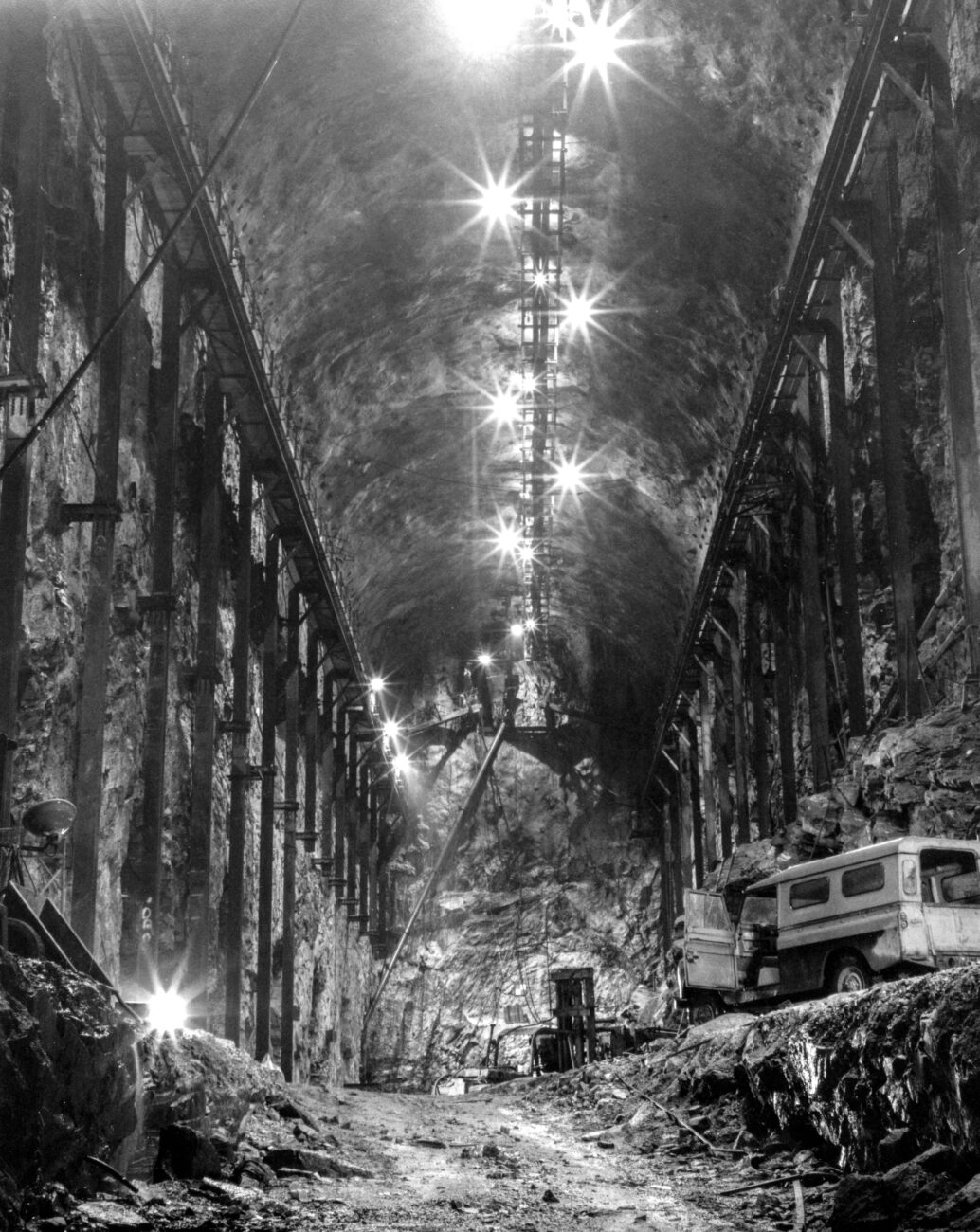
The access tunnel to the machine hall was a two-kilometre-long road spiralling into the mountain, lit only by small guard lights, like a runway. The walls were raw rock, wet with rivulets of water, and Baird felt the weight of the mountain pressing down.
For the first time, she realised, she was seeing what it had all been like: the days and years of dark, sodden labour.
Then the access road opened out into the machine hall—bright and spacious, surfaces smoothed and painted—and the glimpse was gone.