



Like last year, we are presented with a stark set of choices: survive, grow, or die.
A year ago I rapped out a letter much like this one. It was something new for us: an unvarnished appraisal of New Zealand Geographic’s position—our founding principles, finances and uncertain future. We were trapped in a curve of winnowing earnings, rising costs, and digital change.
I found that letter hard to send. We have always been able to navigate heavy weather without outside help, but this time I knew it was different. If NZGeo was going to survive the year, I calculated, we needed 25 per cent more subscriptions. And to achieve that, we had to radically change our relationship with readers. We could no longer view you as buyers or subscribers, but rather as stakeholders in our future.
In a first for New Zealand media, NZGeo shared our financial accounts. We conducted an open survey and published the results, in particular the many comments regarding what we should be reporting and how. Your response was extraordinary, and on December 9 last year we reached our goal of 10,000 subscriptions—10,000 shares in our future.
In the first instance, thank you. Thank you for your confidence in our team, and for your commitment to the unique role our journalism plays in the public conversation.
It’s a role we do not take lightly. Our environment is under greater pressure than ever, and the stakes keep climbing. Our stories need to be compelling, but also sharp. There are solutions to many of New Zealand’s environmental problems, they just haven’t been implemented yet—held back by short-term cost, perceived rights or social inertia. Part of our role is to point the way.
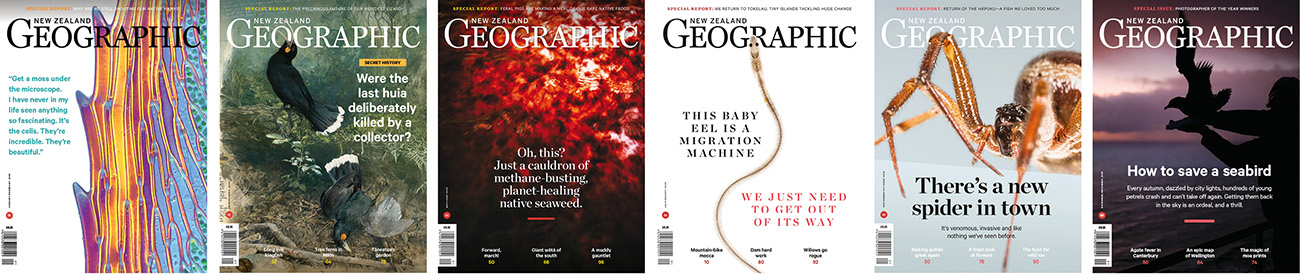
In the past year we have reported on the methane-busting science now swirling around seaweed, and we unpicked the challenges of recycling—judged by Kiwis as the third most important thing they can do for the climate, but actually ranking 59th. We celebrated the hard slog transforming gullies in Hamilton and a community garden changing Tāneatua. We tracked the wild pigs that are devouring native frogs (56 in one night!), met a venomous, invasive new spider and followed migrating eels blocked by dams. We found magical stories of wild ice and wild flowers and marching girls, waded into the tangled politics of recreational fishing, and marvelled at hāpuku returning to a remote fiord. We tramped into the mountain fortress where giant wētā are making their last stand and spent five days in a fishing boat to bring you stories from Tokelau, the farthest corner of our realm.
We could bring you these stories because you were there too, supporting us for another year. But here I am again, rapping out another letter, because two things have not changed: New Zealand needs our unique brand of journalism more than ever. And, the environment for media in 2025 has become objectively worse.
As of today, we have 10,273 subscriptions —but nearly half of those are up for renewal in the next two months.
If you read no further, please clock this point: At the very minimum, NZGeo still needs a total of 10,000 subscriptions to stay afloat. If you have a subscription expiring, please renew.
*
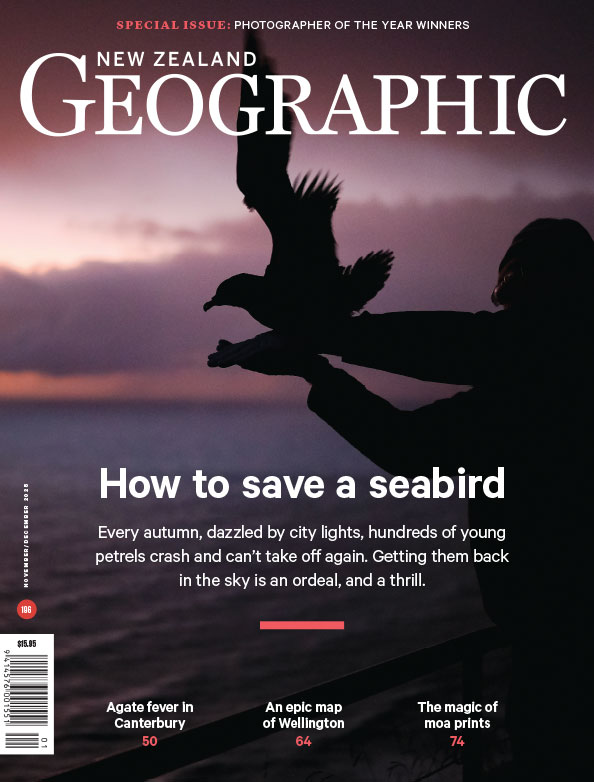
In 2025, the media has been shaken by forces more significant than at any time in the past century. Ten years ago, pundits were forecasting the death of print, a prediction that came true for many titles. But in the new context of AI, the same voices are forecasting the death of the internet as we know it, too. We’re seeing the effects of AI already: Rather than searching online for, say, “Are birds affected by light pollution?” then clicking through to a story on the NZGeo website, users in 2025 are presented an AI-generated answer and go no further. This has led to a 20 per cent reduction in traffic to nzgeo.com in the past year alone, threatening the thin returns we receive from digital publishing.
Like last year, we are presented with a stark set of choices: survive, grow, or die.
As readers, those options are largely yours to choose… you just subscribe, or not. And if you choose to subscribe, you also have a second choice as a stakeholder—if we grow, how do we grow?
Think of it like this: Every 2000 subscriptions gives us enough working capital to hire a staff journalist which would almost double our output of stories, or run a podcast, or publish a book series, or produce another weekly newsletter.
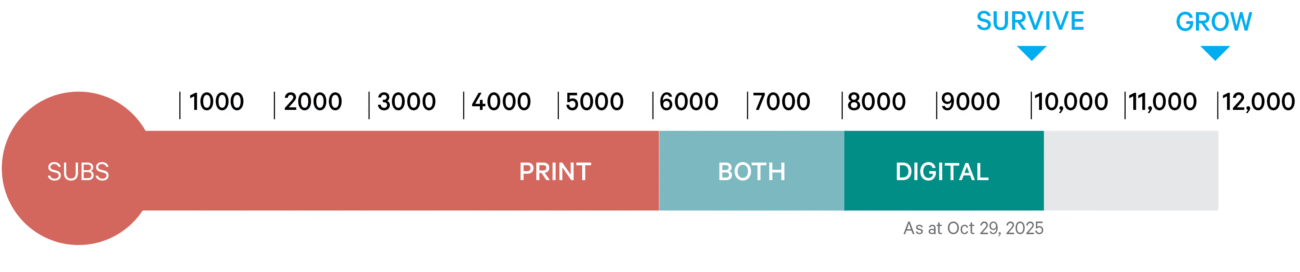
Over the next few weeks I’m going to publish our 2025 finances and our plans for our future in our newsletter. I’m also going to present a choice; renew existing subscriptions, stay at 10,000 and we’ll keep doing what we’re doing. Or hit 12,000 and we set out into new territory, growing something new and important.
I have always believed that New Zealand Geographic could be a stronger, more influential voice, so I would like to hear from you on the shape that would take—you can do that right now at nzgeo.com/survey
If you value our work, please renew. If you want more from NZGeo, invest in a gift subscription or encourage a friend or family member to subscribe too.
Thank you for caring about NZGeo and the work we do—we couldn’t do it without you.
- Fill out the survey: nzgeo.com/survey
- Check your sub: nzgeo.com/your-account
- Subscribe: nzgeo.com/subscribe
- Sign up to newsletter: nzgeo.com/newsletter
- Drop me a line: james@nzgeographic.co.nz
More by James Frankham