


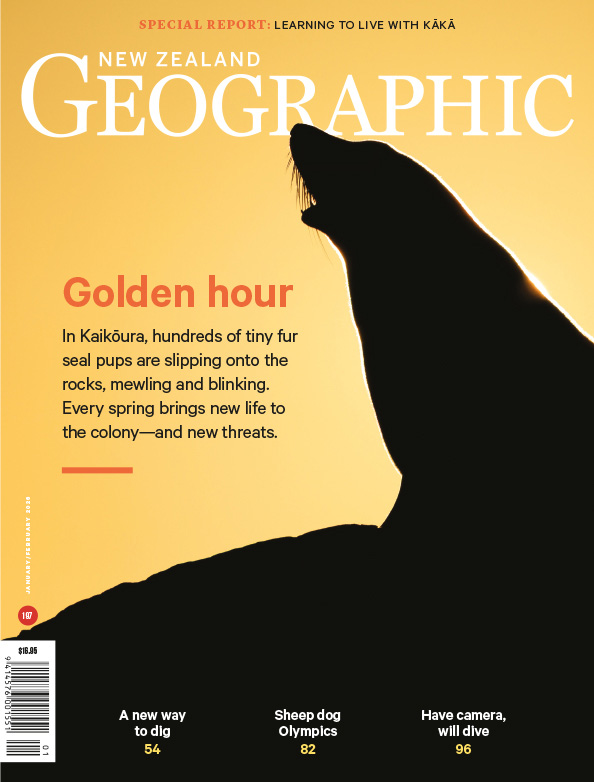



On page 54, Nic Low writes about a beach settlement at Moeraki. The sea is eating it, graves and taonga and all. Sheep and rabbits are chipping away with sharp hooves and scraping paws. Nic spirals out into a story about Ngāi Tahu reclaiming control of archaeology—keeping their ancestors and treasures safe, and not always in museums.
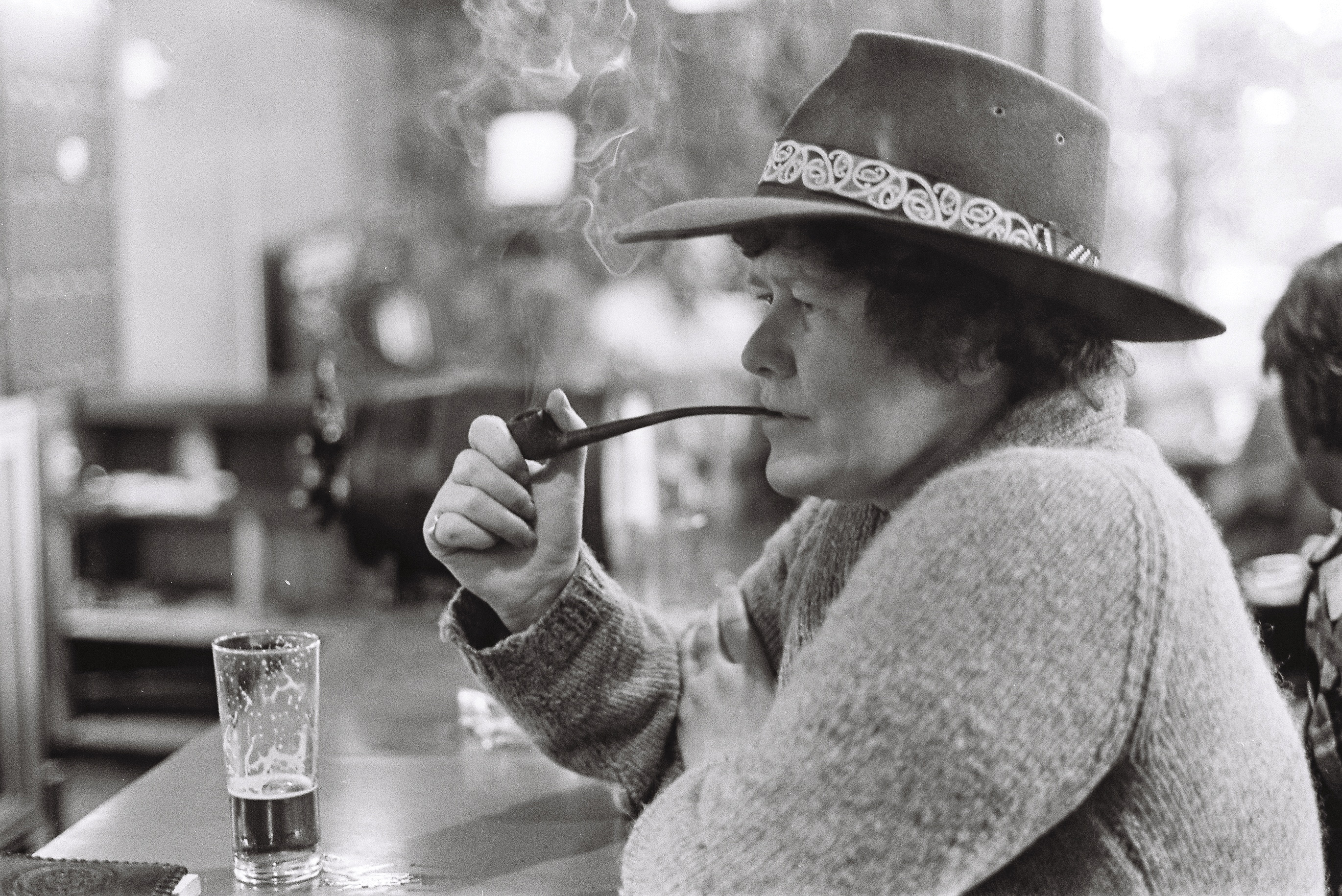
Another Ngāi Tahu writer, the late Keri Hulme, considered this same beach her “tūrangawaewae-ngākau”, the standing-place of her heart. She spent much of her childhood there, fishing, inspecting rock pools, dog-paddling, exploring. Even then, erosion was under way, she wrote in a 2015 essay for iwi magazine Te Karaka.
“One of my brothers reburied a small skull that had fallen out of a cliff-top urupā several times, and we were warned not to go near certain places at night by older people. And, every so often, we’d find stuff on the beaches—a bit of a bone fish-hook, sharp little flint flakes, a pierced pumice-float? We knew in our bones that there’d been people living & fishing here long before us.”
In 1985, Hulme won the Booker Prize for her novel the bone people. For decades, she told media the “odd dreams” that sparked the book happened when she was living in Motueka. But in Te Karaka she revealed that the first dreams, and first drafts, came to her in the bach her father helped to build at Moeraki. (It, too, was being thumped by the elements.) She describes a dream:
“I was looking at the south end of the beach, because something was glinting there. The glint was from hair, long hair. There was a child there, dancing. For himself, the waves maybe? I looked out the bach window. It was dark outside.
“Bloody weird dream I thought, and went back to sleep. But I noted it down in my dream diary, and played with the idea…”
Anyone who knows the bone people will recognise that child. It’s an extraordinary thing to read Nic’s story with this one in mind.
More by Catherine Woulfe