Spiders customise the design of their webs according to their diet.
(more…)
More by Skye Wishart


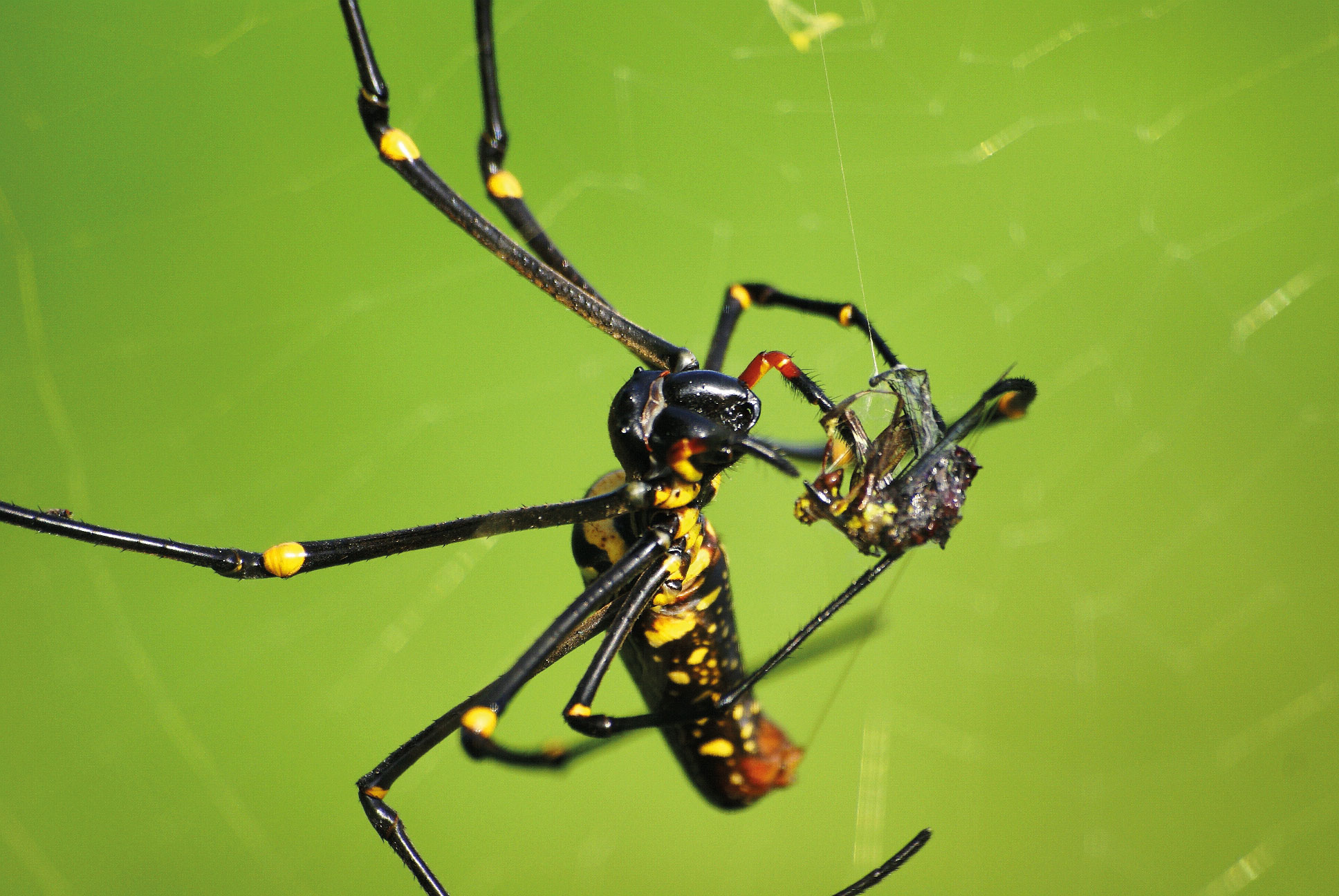
It was believed that vibrations made by prey struggling in a spiderweb dictate the stickiness and architecture of the web, but a recent study published in Royal Society Open Science suggests that nutrition, specifically protein, is the main driver.
Researchers worked with the webs of giant wood spiders, Nephila pilipes, whose main prey are flies and crickets. Flies vibrate the web by buzzing, whereas crickets kick violently. The researchers looked at both nutrition and vibration by placing live crickets and flies in the webs, or confused the spiders by serving them dead crickets while vibrating the web like a fly, and vice versa.
The spiders poured more energy into creating stronger webs when feeding on crickets, which are higher in protein and so more nutritious, regardless of the vibration. If they ate flies, however, they didn’t create a web so sticky, but instead made more threads to create a finer mesh.
A question still remains around whether spiders can change the design of a web to take advantage of nutrients available, or whether those nutrients determine the architecture of the web.
More by Skye Wishart
Subscribe to our free newsletter for news and prizes
3
$1 trial for two weeks, thereafter $8.50 every two months, cancel any time
Signed in as . Sign out