Island fortresses less protected than expected (more…)
More by Skye Wishart



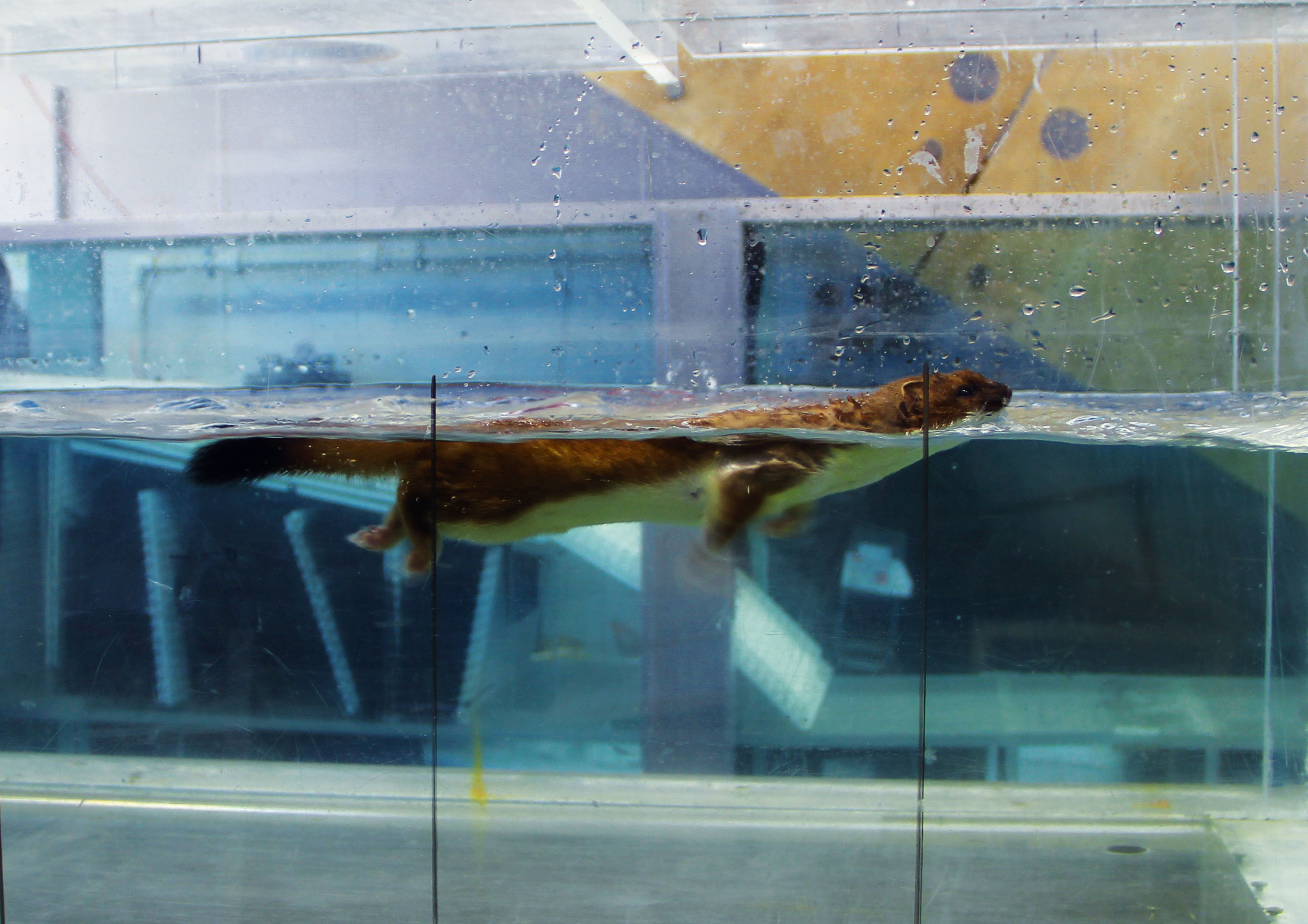
Stoats can swim further than ever thought possible—bad news for the fauna on some of New Zealand’s predator-free islands, previously thought out of reach of the bloodthirsty mustelids.
University of Waikato associate professor Carolyn King placed 10 tame stoats into a circulating tank of water to observe them paddle, and while a few grew tired and had to be fished out early, one clocked up a distance of 1.8 kilometres over two hours.
King says these experiments show only the minimum speed and endurance of stoat swimming, and then only in artificial conditions. Reality could be different, she says, because a wild, fit stoat with strong motivation to explore could potentially swim further than its domesticated brethren.
In addition, floating logs, currents or stepping stones could boost its range—one animal in the experiment was even able to rest by floating unaided.
Even worse for the native fauna, female stoats are almost always pregnant with a litter of up to 12 pups, ready to establish a new population upon reaching an island.
Previous to this experiment, islands more than 1.5 kilometres away were assumed to be safe. King’s advice is that offshore islands that are either close to the mainland or can be reached by island-hopping need to be monitored for stoat incursions.
“We suggest the risk extends to three to five kilometres offshore,” she says, taking in the existing sanctuaries of Mana Island, Motuihe Island and Tiritiri Matangi.
More by Skye Wishart
Subscribe to our free newsletter for news and prizes
3
$1 trial for two weeks, thereafter $8.50 every two months, cancel any time
Signed in as . Sign out