One of a rare breed

In fact, Don Merton is the only one of his kind. As a senior conservation officer for the Directorate of Protected Ecosystems and Species, he is New Zealand’s sole officer working full-time on endangered birds....

Hollyford memories

Fiordland Private Museum stands among a jumble of weathered cabins eight kilometres from Marian Corner where the tourist route continues to Milford Sound via the Homer Tunnel. It is a onetime Public Works Department camp known as Henderson’s and there is a transient look about it — like everything in the area — as if […]...

Canterbury’s damaging nor’wester

The northwest wind in Canterbury drives people crazy. Suicide rates go up and domestic violence increases, and when this hot, dry wind reaches gale force physical destruction becomes widespread. On October 15, 1988, Canterbury farmers watched in despair as thousands of tonnes of topsoil, already bone-dry from drought, were blown out to sea by a […]...

Goldminers’ legacy

The goldminers of the 1860s wrote a colourful chapter in the history of New Zealand place names. They were tough, practical men in a strange and empty land. New towns mushroomed overnight and they often disappeared just as quickly. They were heady years and there was a vitality, and sometimes a sardonic humour, to the […]...

The barbecue stars

In the dusk of a summer’s evening the smoke from barbecues and campfires rises into a darkening sky full of brilliant stars. Centre stage is the Pot, with a line of three stars forming the bottom of a southern hemisphere saucepan or dipper. These stars run across the celestial equator, so they are also visible, […]...

Exploring under the ice

A piece of state of the art technology originally developed for the military is exploring one of earth’s last frontiers—under the ice of Antarctica. It is a remote operated vehicle (ROV), known as the Phantom, a mobile underwater camera capable of recording high quality pictures at depths inaccessible to divers. The ROV has been jointly […]...

Celebration and discovery

Welcome to the first issue of New Zealand’s own geographic journal. Our mission is to explore New Zealand’s wildlife and environment, our people and towns, our history and natural heritage. Our publication will celebrate the evolution of New Zealand and New Zealanders, We are confident about this country and we want to inspire New Zealanders […]...

Goat Island revisited

The creation of New Zealand’s first marine reserve in 1977 was a bold scientific experiment and a test of public opinion. Editor Kennedy Warne revisited the reserve to see what effect protection has had....

Kepler Track

Award-winning landscape photographer Dennis Brett took his cameras to a rain-soaked Te Anau in October and returned with these striking images of a liquid landscape....

Coin helps rare penguin

The treasury’s 1988 coin issue is helping the cause of the yellow-eyed penguin. Though Treasury probably won’t part with any cash for the cause, the new one dollar coin will increase public awareness of the threatened species. The coin, designed by Waikanae artist Maurice Conly, shows penguins in a typical shoreline situation. Only 18,500 sterling […]...

Wild horses

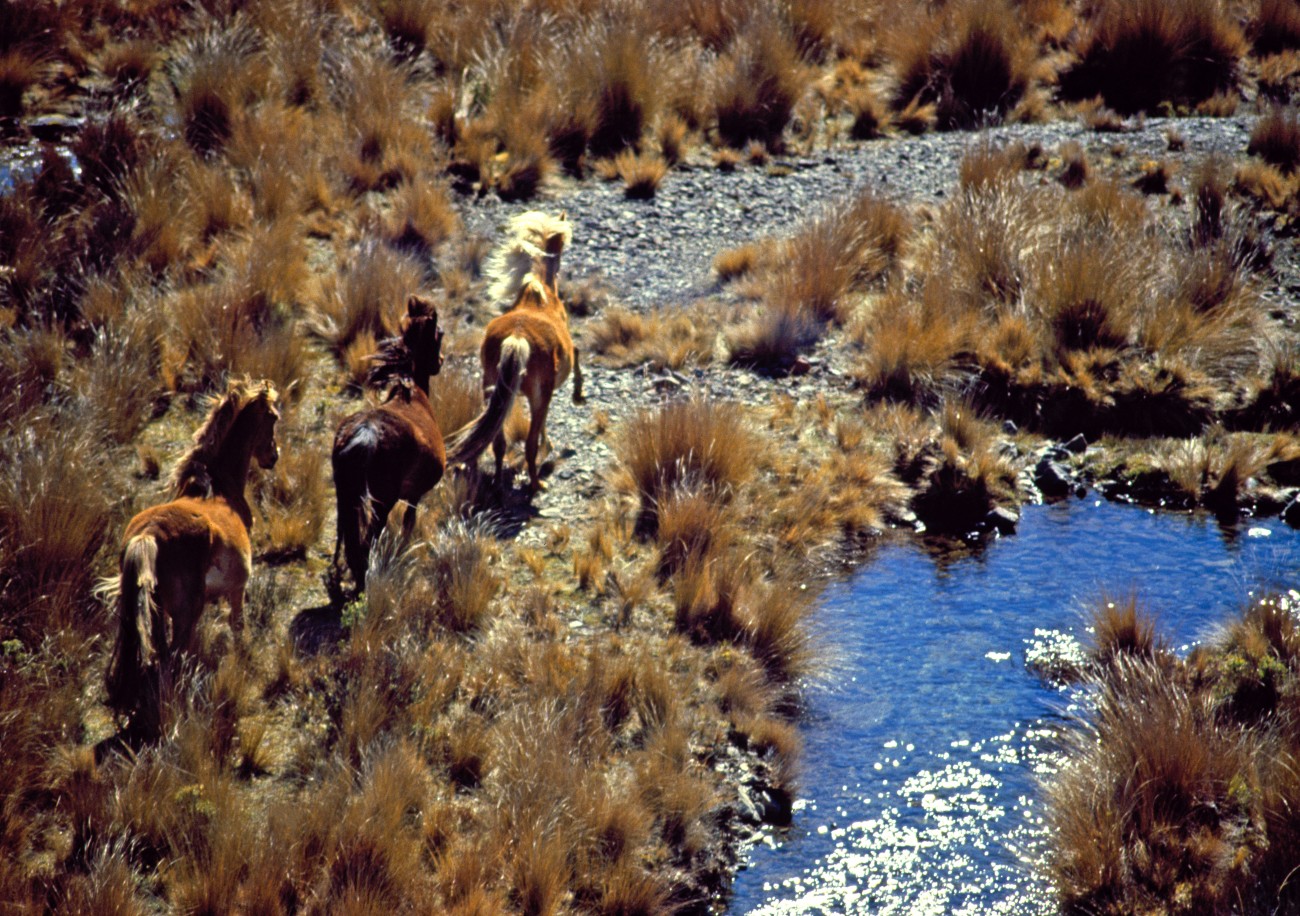
Once hunted to the point of extinction, the Kaimanawa wild horses now thrive in the harsh high country of the Desert Road. Ironically, their rapidly increasing numbers pose a threat to the fragile native plants of the area. In the developing ecological tussle the horses are again in the firing line....

Dingle’s toughest journey

Mountaineer Graeme Dingle’s 1200km odyssey with six young violent offenders was a journey he would later describe as the most difficult and stressful adventure of his career, and one that nearly claimed his life....

Life on Campbell Island

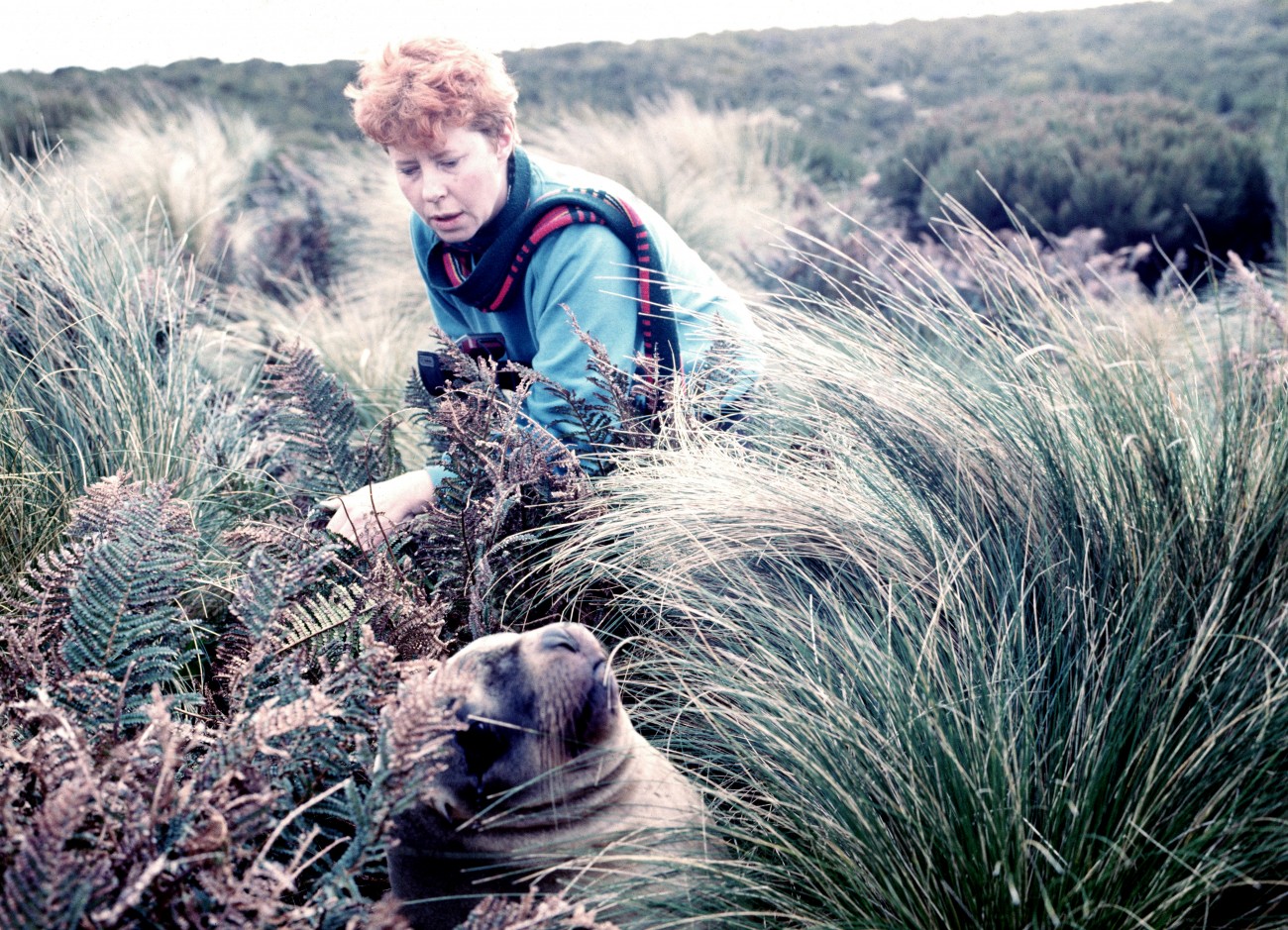
On the map it’s just a speck in the vast Southern Ocean, lashed by the winds of the Furious Fifties. Yet scientists and weather staff queue up for a chance to live in this remote southern outpost. Raewyn MacKenzie went to find out what draws them there....

Look who’s back!

One of the Coromandel’s most famous visitors is back. Willie, or Humphrey, a three-tonne sea elephant who hit international headlines last year when he adopted a Wharekawa dairy herd and refused to return to the sea, has been seen in the neighbourhood again. Early in November he was spotted in the Whangamata estuary and has […]...

Kids flock to see zoo’s two pandas

Before the end of summer more than 100,000 school children will have seen the two giant panda bears residing at the Auckland zoo, despite opposition from the World Wildlife Fund and the New Zealand Royal Forest and Bird Protection Society. The two pandas, Fei Fei and Xiao Xiao, are on display until mid-January when they […]...

Green or yellow, take your pick

A green gecko in the Auckland area has the unusual habit of throwing off yellow progeny. Herpetologists describe the yellow offspring as a colour morph—a genetic variant which lacks the ability to produce blue pigment. There are seven varieties of green tree gecko in New Zealand. Opinions vary as to whether they are seven separate […]...

Bellamy down-under

If David Bellamy could have his own way, his new television series on New Zealand natural history would be titled Raiders of the Last Ark. But Stephen Spielberg won’t let him, so he’s had to settle for Moa’s Ark. The Hollywood sci-fi movie producer has apparently threatened to sue Bellamy if he adapts the title […]...

Celebrating nature

An international celebration of nature, based in Dunedin, is planned for 1990. Television New Zealand’s inaugural Pacific festival of Nature Films, scheduled for the end of November that year, is to coincide with an international bird preservation conference in Hamilton, and in Christchurch, the 20th International Ornithological Congress. The year 1990 will see the Commonwealth […]...

Contributing writers, photographers and artists

New Zealand Geographic will survive on the strength of its journalism. For that reason we have set exacting standards for our contributors. To encourage them, we intend to acknowledge and applaud the writers, photographers and artists whose work appears in our journal....

Looking into glass

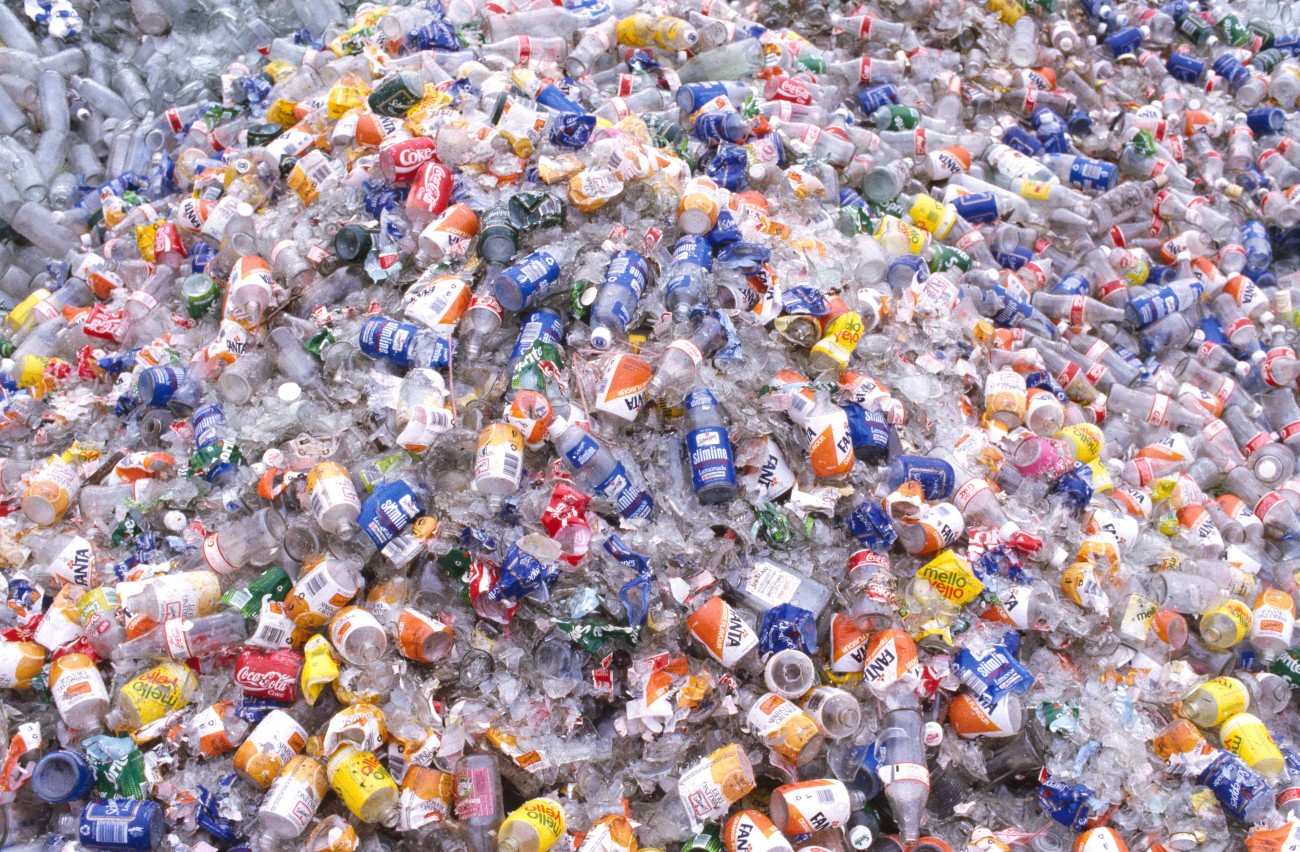
From the pure white silica sands of Parengarenga Harbour to the bottles, jars and windows we come into contact with each day, the making of glass is both a science and an art. Louise Callan takes a look at this unique and timeless substance....

Magazine

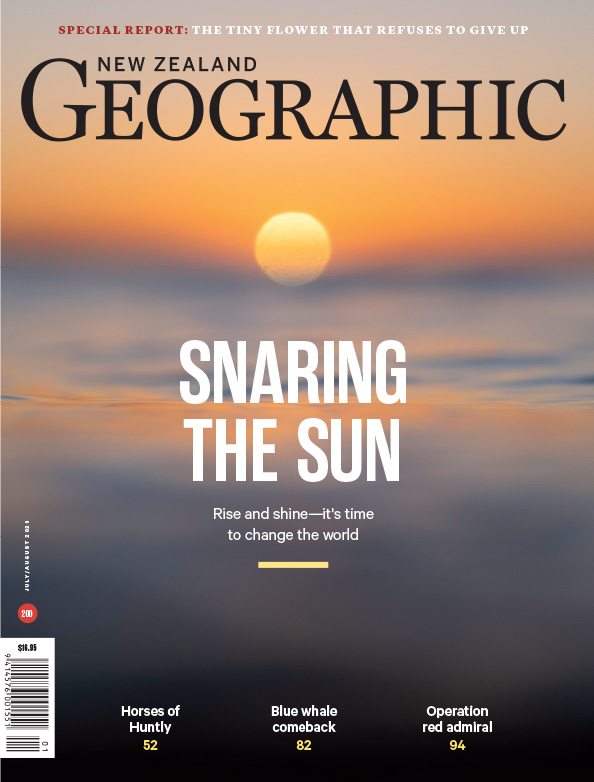
Issue 200

Jul - Aug 2026

Solar power
Horses of Huntly
Forget me not
Whaling
Red admirals

Issue 200 Jul - Aug 2026

Trending

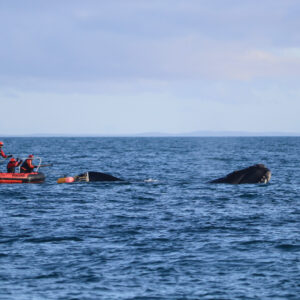
On December 10, 2024, a juvenile bottlenose dolphin was reported tangled in fishing line near Riverhead, in the upper reaches of the Waitematā Harbour. The dolphin couldn’t flex its tail properly, or dive, or chase fish. Its pod headed elsewhere. One larger dolphin stayed behind, and for the next month it stuck close, spending almost […]...
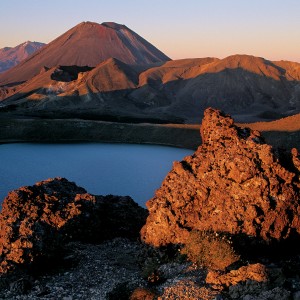
Tongariro is by far the most popular national park in the North Island, attracting tens of thousands of skiers, walkers and trampers every year. The park centres around three active volcanoes: Tongariro, Ngauruhoe and Ruapehu, all of which are considered by local Maori to be sacred ancestors. In 1887 the chief of the local iwi Ngati […]...
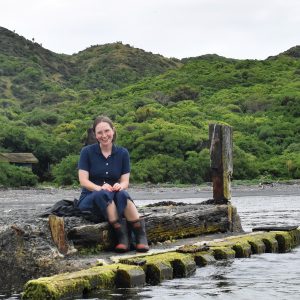
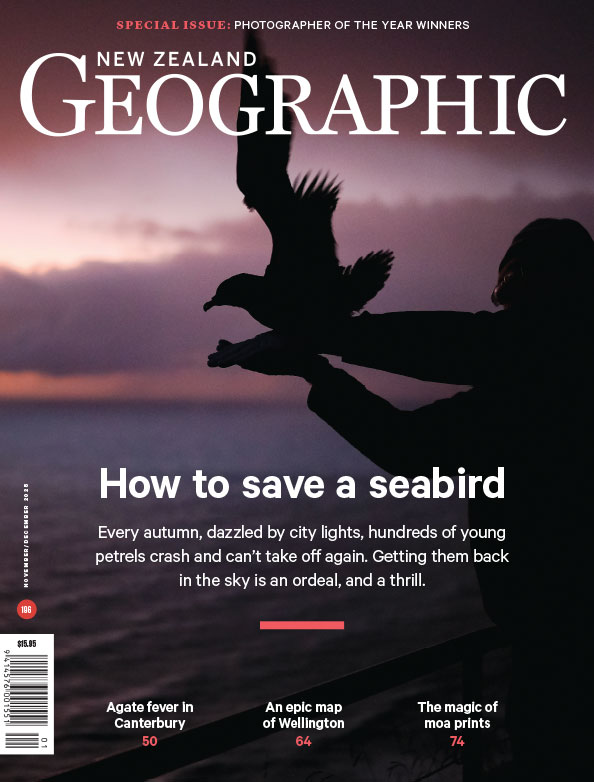
Flora Feltham wrote an early version of our cover story when she was living on Wellington’s predator-free reserve Mana Island with her husband, then a DOC ranger. The couple spent two years on the island, often alone, spanning Feltham’s first pregnancy and 10 months of their baby’s life. An incredible honour, she says, but it […]...
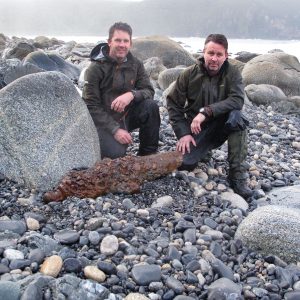
You find something, something old, something with a tale to tell. Who do you call?...
I slithered along the gravel through a streamway barely 25 centimetres high, 10 centi­metres of water lapping gently along the centre line of my face. With my head turned sideways, I could breathe only through the top of my mouth by pursing my lips, awkwardly, into a snorkel shape, as freezing water sloshed about my […]...
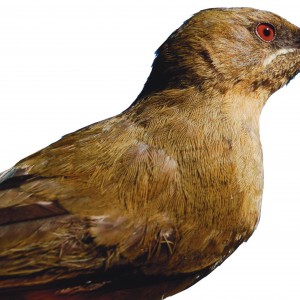
For all sorts of reasons: to defend territory, attract a mate, let a mate know where it is, be­cause it’s fun, because it’s dawn. What is unusual about New Zealand native birds (and many bird species in the southern Hemisphere) is that the females can belt out a tune as well as their male coun­terparts, […]...
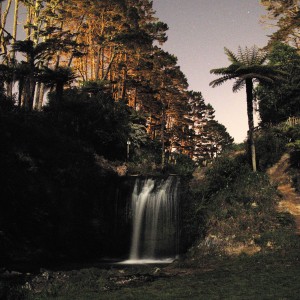
Where can the city dweller look for the inexhaustible wild? Perhaps it lies closer than we think, on the flipside of the ordinary, along the unkempt edges of the familiar. An urban green space can become a site of pilgrimage, a place to discover a waterfall by moonlight....
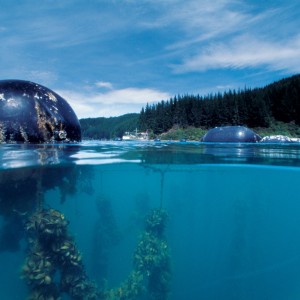
Seafood is healthy and the world wants more. Too bad that most wild fisheries are overfished and collapsing. Over the last few dec­ades, aquaculture has begun to offer a solution to this difficulty, but it’s not a solution that wins universal acclaim. In New Zealand, the black floats that mark mussel farms (above)—our main form […]...
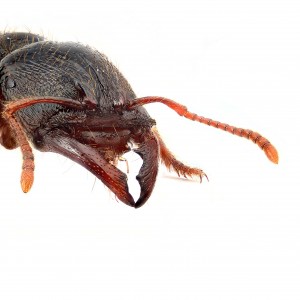
Robotic in form and startlingly efficient en masse, ants have outlived the dinosaurs and now scuttle over every major landmass but Antarctica. Humans can learn a lot from these diminutive critters, which communicate using cocktails of exotic pheromones, expeditiously divide labour among thousands, and silently conduct their small and significant lives for the greater good—of the colony and their immediate […]...
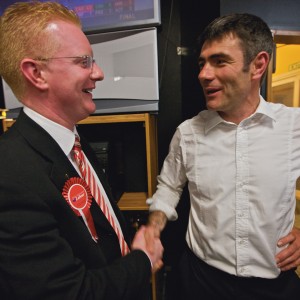
Fine documentary photojournalists are as rare and as delightful to encounter as any of New Zealand’s endangered species. As this magazine’s art director, I am all too aware of the difficulties that a complex photo-journalistic assignment poses. An instinct that puts a photographer in a certain place at a certain time with an eye for the […]...

Archive

×

Subscribe to our free newsletter for news and prizes