

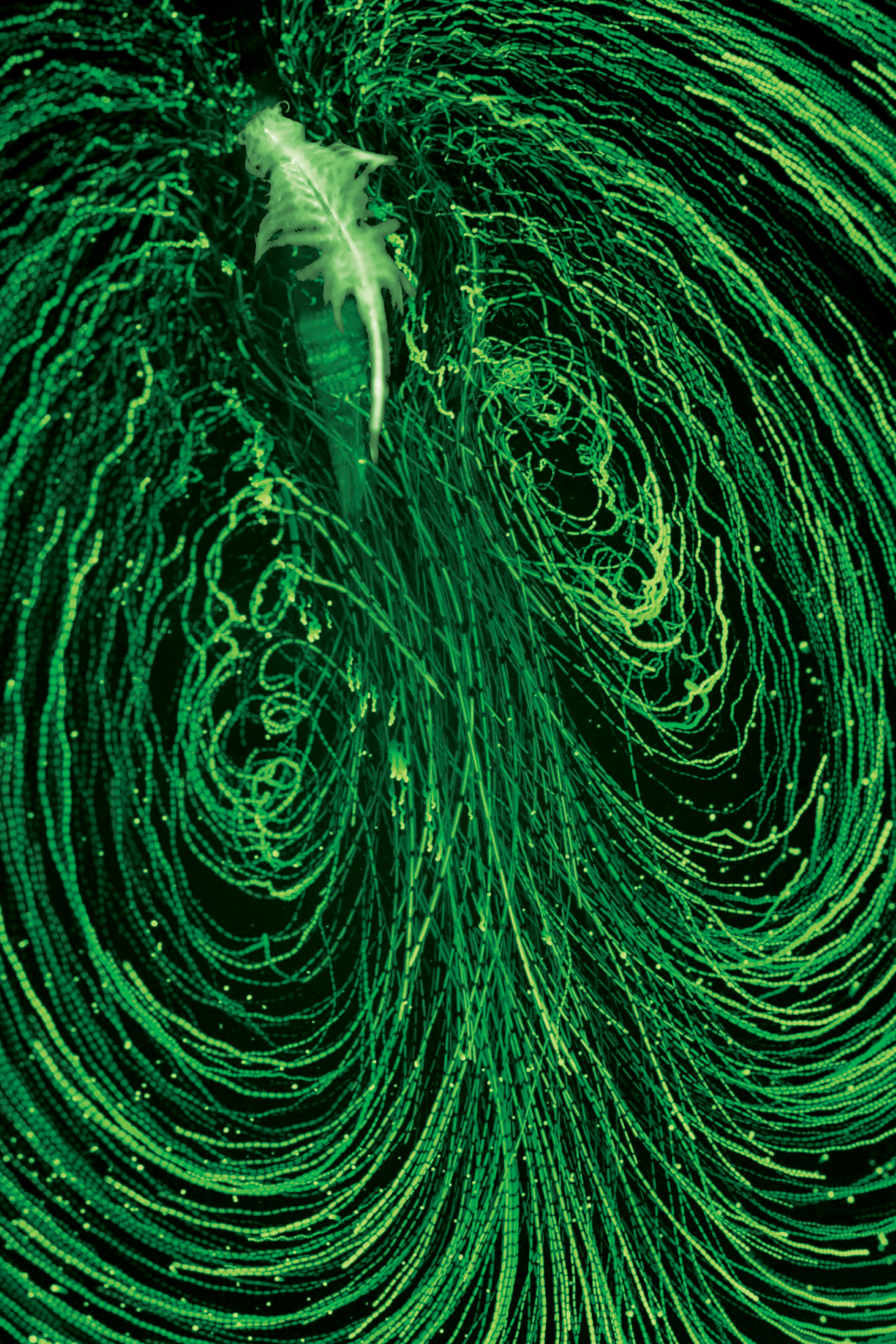
The krill effect

A one-centimetre-long shrimp can’t create an ocean current when it swims, but en masse, these tiny creatures could be contributing to ocean mixing.

A Stanford University study published in Nature watched brine shrimp, Artemia salina, as they swam in a tank. When they swim upwards, as a band just 50 centimetres deep, their wake mixes the water 1000 times more than it would mix naturally.

Ocean krill are five times the length of brine shrimp, and twice a day they vertically swim hundreds of metres as a group in a band tens of metres deep—which the authors say means the krills’ downward jets could have a collective effect on ocean mixing.

More by

A one-centimetre-long shrimp can’t create an ocean current when it swims, but en masse, these tiny creatures could be contributing to ocean mixing.

A Stanford University study published in Nature watched brine shrimp, Artemia salina, as they swam in a tank. When they swim upwards, as a band just 50 centimetres deep, their wake mixes the water 1000 times more than it would mix naturally.

Ocean krill are five times the length of brine shrimp, and twice a day they vertically swim hundreds of metres as a group in a band tens of metres deep—which the authors say means the krills’ downward jets could have a collective effect on ocean mixing.

More by

Issue 152

Jul - Aug 2018

Tiny houses
Sustainable seas
Hardwicke
Predator-free Fiordland

Issue 152 Jul - Aug 2018

More by

×

Subscribe to our free newsletter for news and prizes

3 FREE ARTICLES LEFT

Subscribe for $1  | 

3 FREE ARTICLES LEFT THIS MONTH


Keep reading for just $1

$1 trial for two weeks, thereafter $8.50 every two months, cancel any time

Signed in as . Sign out