
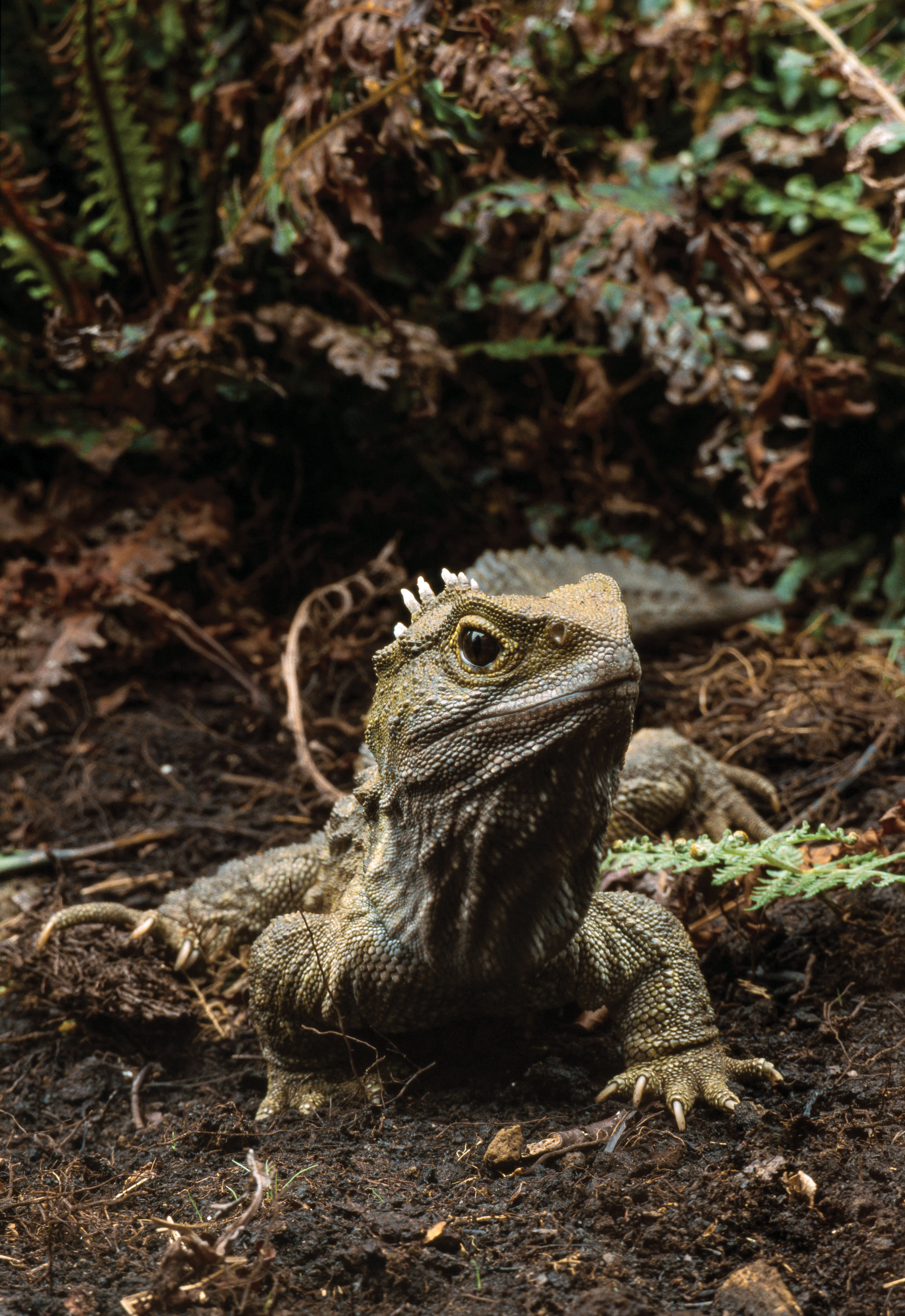
Tuatara: weird all the way through

Kevin Schafer / Alamy

Tuatara are even stranger than we thought. The “living fossils”, the only surviving members of their reptile order Rhynchocephalia, also play host to a multitude of bacteria completely unknown to science.

A team of scientists from the University of Auckland, Manaaki Whenua – Landcare Research, and Victoria University of Wellington spent two summers catching 161 tuatara around the country. Swabs of each animal’s cloaca—the multifunctional opening under the base of the tail—were then gene sequenced. More than 70 per cent of the bacteria fell into the “unknown” category, the scientists report in Ecology and Evolution. It’s a “unique and strange” gut community, lead scientist Cam Hoffbeck says—much like the animal itself.

Kevin Schafer / Alamy

Tuatara are even stranger than we thought. The “living fossils”, the only surviving members of their reptile order Rhynchocephalia, also play host to a multitude of bacteria completely unknown to science.

A team of scientists from the University of Auckland, Manaaki Whenua – Landcare Research, and Victoria University of Wellington spent two summers catching 161 tuatara around the country. Swabs of each animal’s cloaca—the multifunctional opening under the base of the tail—were then gene sequenced. More than 70 per cent of the bacteria fell into the “unknown” category, the scientists report in Ecology and Evolution. It’s a “unique and strange” gut community, lead scientist Cam Hoffbeck says—much like the animal itself.

Issue 187

May - Jun 2024

Red billed gulls

Search & rescue

Amber

Ōrongorongo

Huts

Plankton

Issue 187 May - Jun 2024
×

Subscribe to our free newsletter for news and prizes

3 FREE ARTICLES LEFT

Subscribe for $1  | 

3 FREE ARTICLES LEFT THIS MONTH


Keep reading for just $1

$1 trial for two weeks, thereafter $8.50 every two months, cancel any time

Signed in as . Sign out