




For 13 years conservationists have promoted marine protection as a good thing for the Hauraki Gulf. Now they have their wish, what’s going to happen?
This week Minister of Conservation Tama Potaka faced a sea of green chairs in the debating chamber, arranged like waves. He made the third reading from the tattered remains of the Hauraki Gulf Marine Protection Bill, a document that was consulted and compromised nearly to death.
It began 13 years ago as a collaborative process called Sea Change, drawing together a host of Gulf users, from greenies to fishos, to hash out a plan to protect the 14,000 square kilometre marine park. Everybody wanted the same thing—the return of abundance—but it was always going to be a scrap. Fishos didn’t want to give up their favourite spots, commercial fishing companies didn’t want a reduction in catch, iwi were battling for manamoana and conservationists wanted to stop the decline at any cost.
Nevertheless, the Bill that passed in Parliament this week creates 12 new High Protection Areas (HPAs) covering some 6 per cent of Marine Park, five Seafloor Protection Areas and a couple of extensions to existing reserves.
OK, some places with new rules. But what’s going to change? What does this mean for the state of the Gulf?
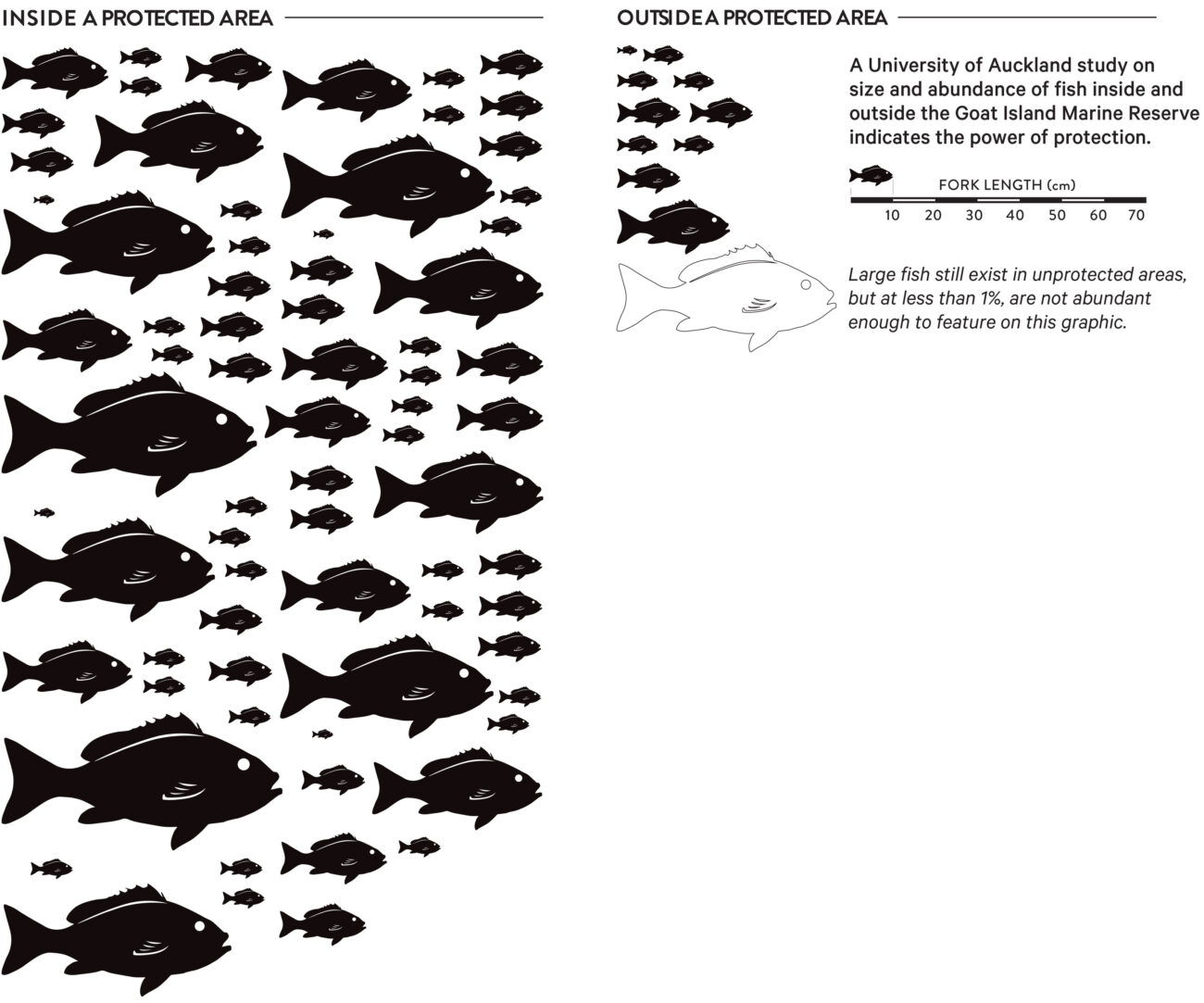
We can answer those questions with some confidence. When the Cape Rodney–Okakari Point Marine Reserve (Goat Island) was established in 1975, University of Auckland scientists set up camp on the shore. Over the past half-century they have monitored its recovery closely, findings that are a crystal ball for the future of protected areas elsewhere in the Gulf.
Here’s what is going to happen. Each new high protection area (HPA) will act as a tiny oasis in a vast desert. Within the HPAs, our crystal ball suggests we will see the abundance of snapper soar 700 per cent in a period of four to seven years. The population structure will differ from unprotected waters, with a greater number of older, larger fish, including large females which produce 30 times the number of eggs as the pannies.
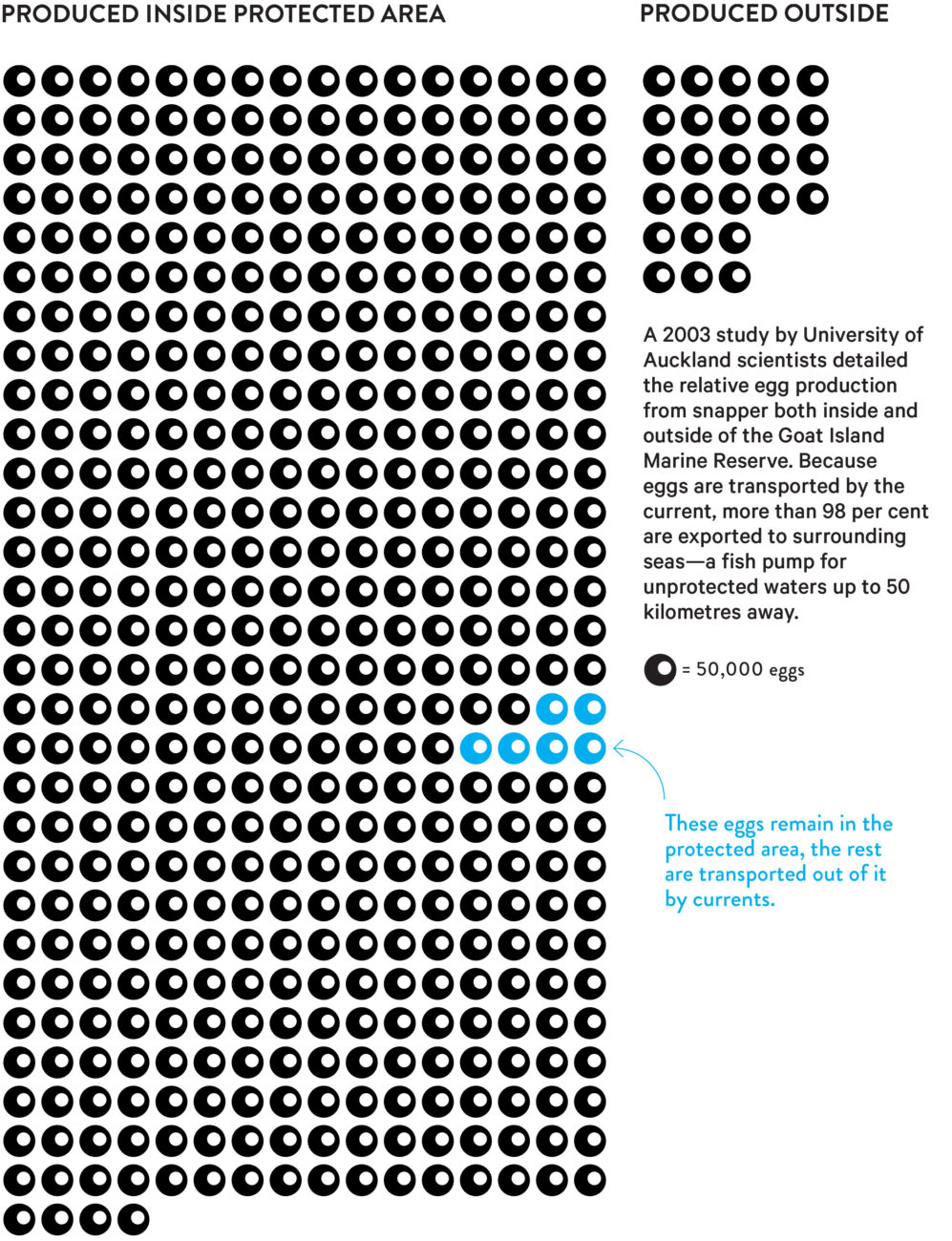
Like a fish pump, the increased number of eggs and larvae in the water column will spill over into unprotected waters. A 2003 study from Goat Island showed that just two per cent stays in the reserve, the rest is exported into waters as far as 50 kilometres away. The same study also showed that 11 per cent of snapper in the entire Gulf came from this one tiny marine reserve. Within a few years, local fishers interviewed said that fishing outside the protected area had improved, as similar studies have shown around new protections at the Chathams, California and Hawai’i.
A network of marine reserves will be more effective than just one. Together, the 12 HPAs spread around the Gulf will work like cell phone towers, each broadcasting a larval signal into unprotected waters, which should result in more fish and larger fish as the areas recover, first in the protected areas, later in unprotected areas too.
It’s important to remember there are things these new marine protections will not change. Erosion, flooding, sediment and nutrient run-off do not respect boundaries. Nor does the invasive weed Caulerpa, or the range-expanding godzilla urchin Centrostephanus. Marine protection cannot moderate the heat anomaly affecting sponges, kelp and other algae. These ravages will affect all waters of the Gulf, protected or not.
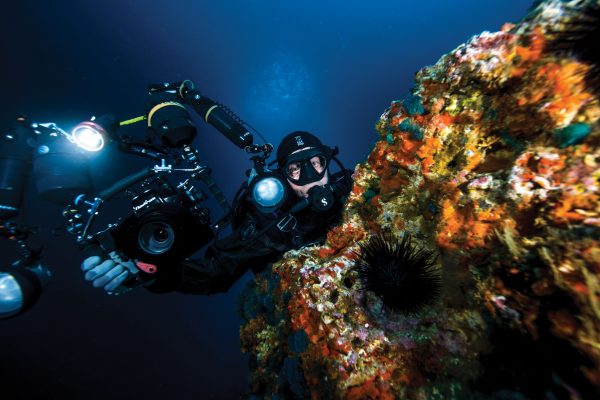
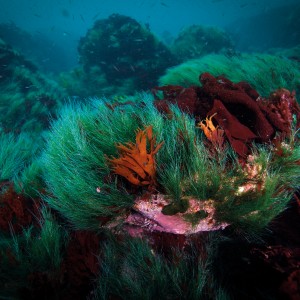
We’re also working from a low base. More than a third of the Gulf’s rocky reef is now barren—deforested by an explosion of kina that are the result of overfishing. At Goat Island it was 20 years before lush kelp returned, as crayfish and large snapper take a while to make a dent in kina populations. Encouragingly, recent University of Auckland experiments at the Noises, Hauturu/Little Barrier and the Mokohinaus discovered that systematically removing kina from the reef by hand can reduce this timeframe to just six months. Once gone, the kelp and other algae blooms immediately.
More by James Frankham
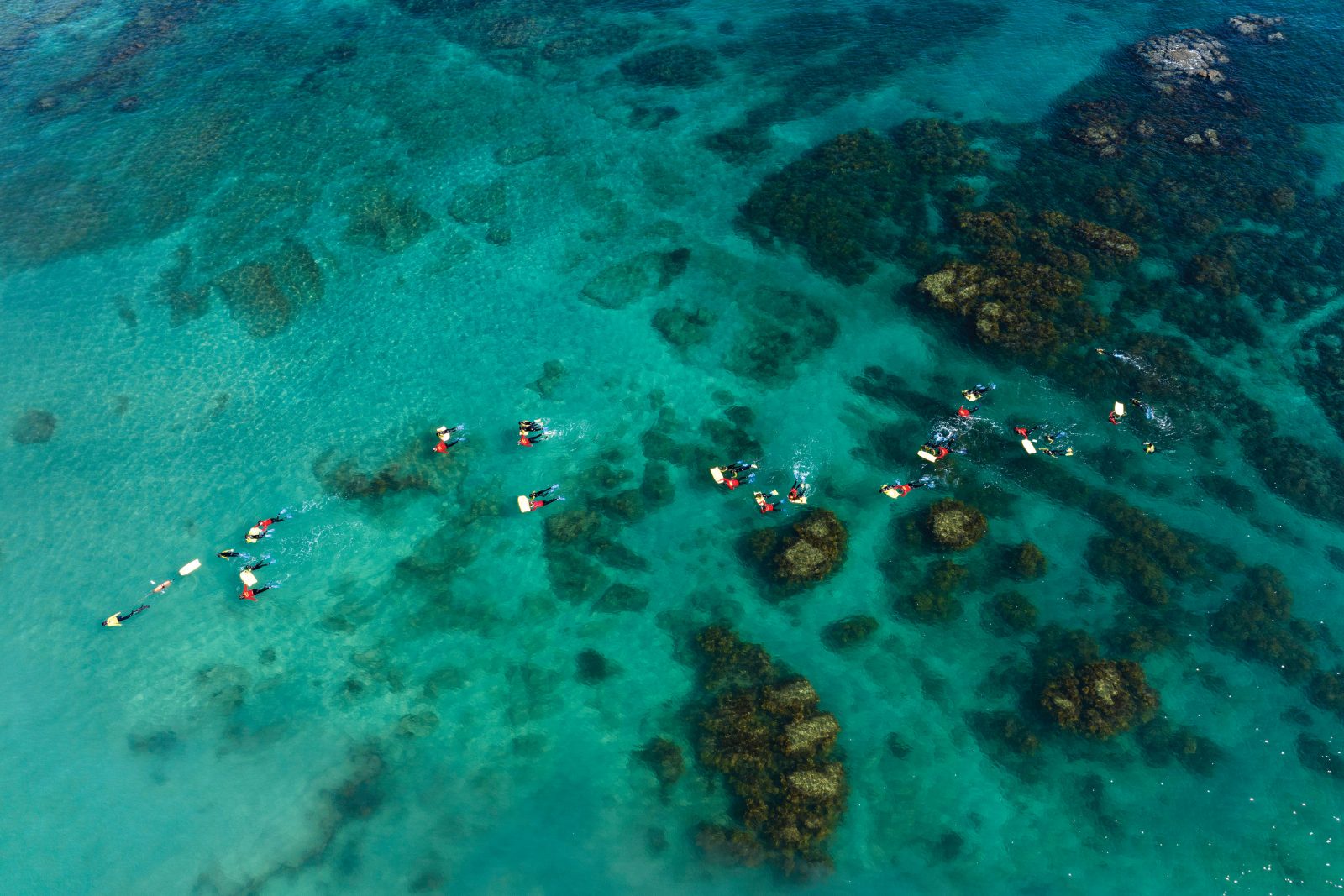
Culling kina by hand, however, is an intensive exercise. In one small bay at the Noises researchers removed 120,000 urchins.
Let’s do a quick back-of-envelope calculation. Scientists took about 50 hours on SCUBA to clear kina from a hectare of barren—roughly the size of a rugby field (if you include the in-goal areas). There are 180 rugby fields of barrens inside the high protected areas alone. Hmmm, let’s see, 180 x 50 = 9000 hours underwater. A long time for one diver. But if you had 9000 divers you’d be done in an hour!
You don’t need a crystal ball to realise that kickstarting recovery in this way is a massive project, but focus attention to the most valuable or vulnerable sites and it may be possible to scrub decades off natural processes. Indeed, for spots with loads of kina and longstanding barrens, this manual intervention may be the only means of breaking the stranglehold of the urchins.
There is one last factor to consider. Sitting in the sidelines are a number of habitat restoration projects that only make sense in the context of protection. For years experts have been discussing manually reseeding crayfish into the Gulf, which receives a natural flush of crayfish larvae only once every seven years or so. It wouldn’t be worthwhile restoring crayfish if they were going to be pulled out and eaten, but these HPAs are ideal cradles for the project. Likewise artificial mussel beds and the kina removal mentioned above—all will be more effective in the context of protection.
So start your watches. The countdown to an abundant and resplendent Gulf that everyone has wanted for 13 years begins today, at least that’s what the crystal ball says.