


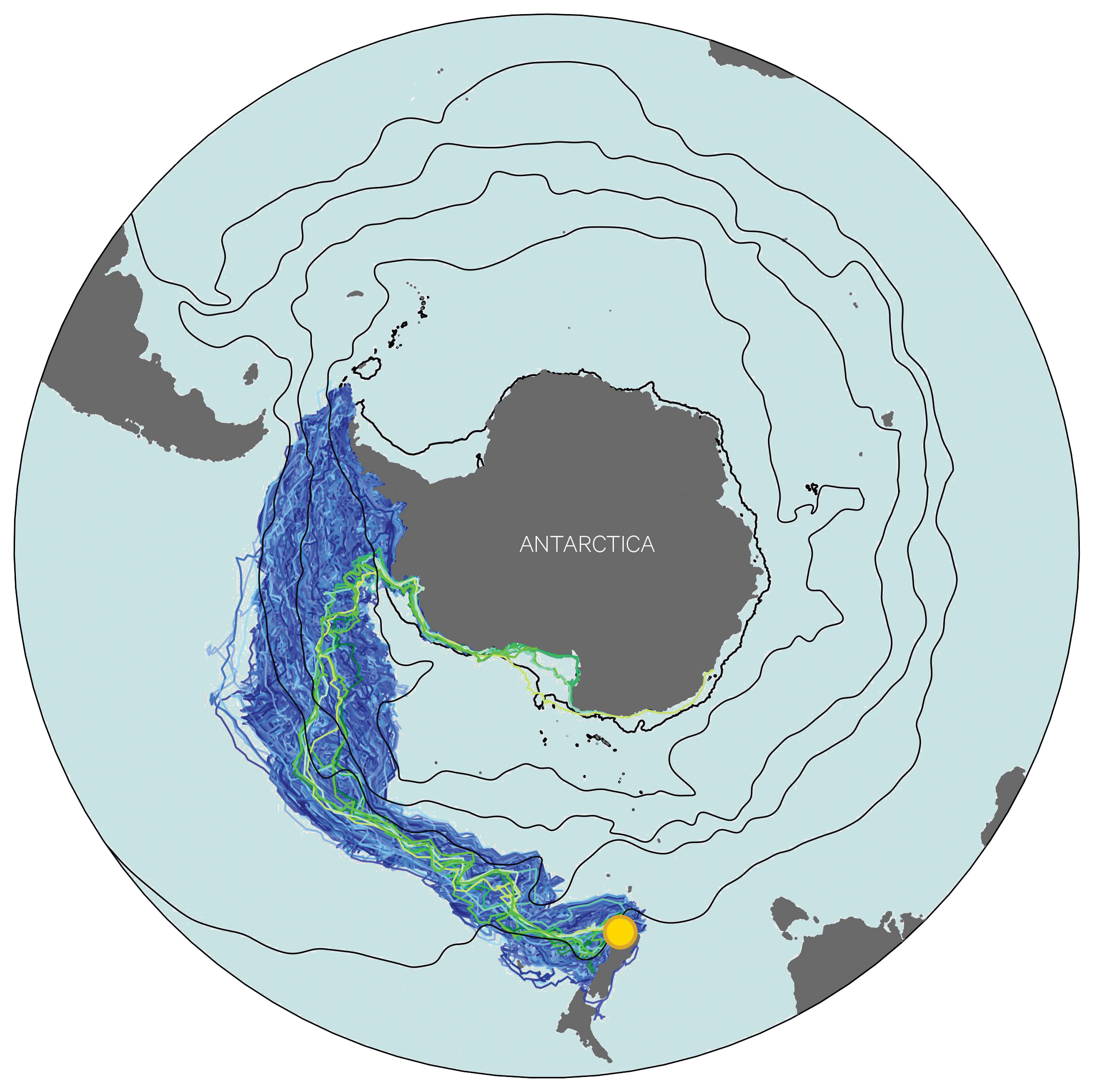
Small marine creatures can hitch lifts on floating objects all the way to Antarctica, a new study suggests—and as climate change makes the icy continent more hospitable to colonisers, that’s a problem.
The study, published in Global Change Biology, involved researchers from New Zealand, Australia and the US and was led by Hannah Dawson, now at the University of Tasmania.
Scientists have long known that rafts of bull kelp sometimes wash ashore in Antarctica, Dawson says, but the only way to trace the origin of each clump is genetic testing. “To get the big picture, it’s not very practical to walk around the Antarctic coastline trying to find all the washed-up things to test them.”
Instead, using the computer equivalent of dropping a stick in a river to see where it ends up, the team released millions of virtual particles into 19 years’ worth of ocean currents data.
The results show floaters such as bull kelp, plastics and driftwood can arrive from much further away, and more often, than previously thought. These rafts could carry all sorts of species, including shellfish and crustaceans, snails, sponges, starfish and urchins. Most rafts take around a year to cruise to the continent—arriving not only from sub-Antarctic islands, but also from all the major Southern Hemisphere land areas, including Australia, South Africa, and South America.
New Zealand is a major contributor, with floaters riding the currents that hustle between the east coast of the South Island and the west coast of Antarctica.
“This kind of rafting is a natural process that’s probably been happening for a long time,” says Dawson. “But the concern is that warmer water and less sea ice reduce the barriers to arrival, and open the door for non-native species on the rafts to colonise those waters.”
In the graphic, colours indicate where floaters washed up. Most-hit was the tip of the Antarctic Peninsula, a region with relatively warm water and often ice-free conditions—a prime spot for newcomers to set up camp.
More by Connie Buchanan