Belly flopping frogs (more…)
More by Skye Wishart



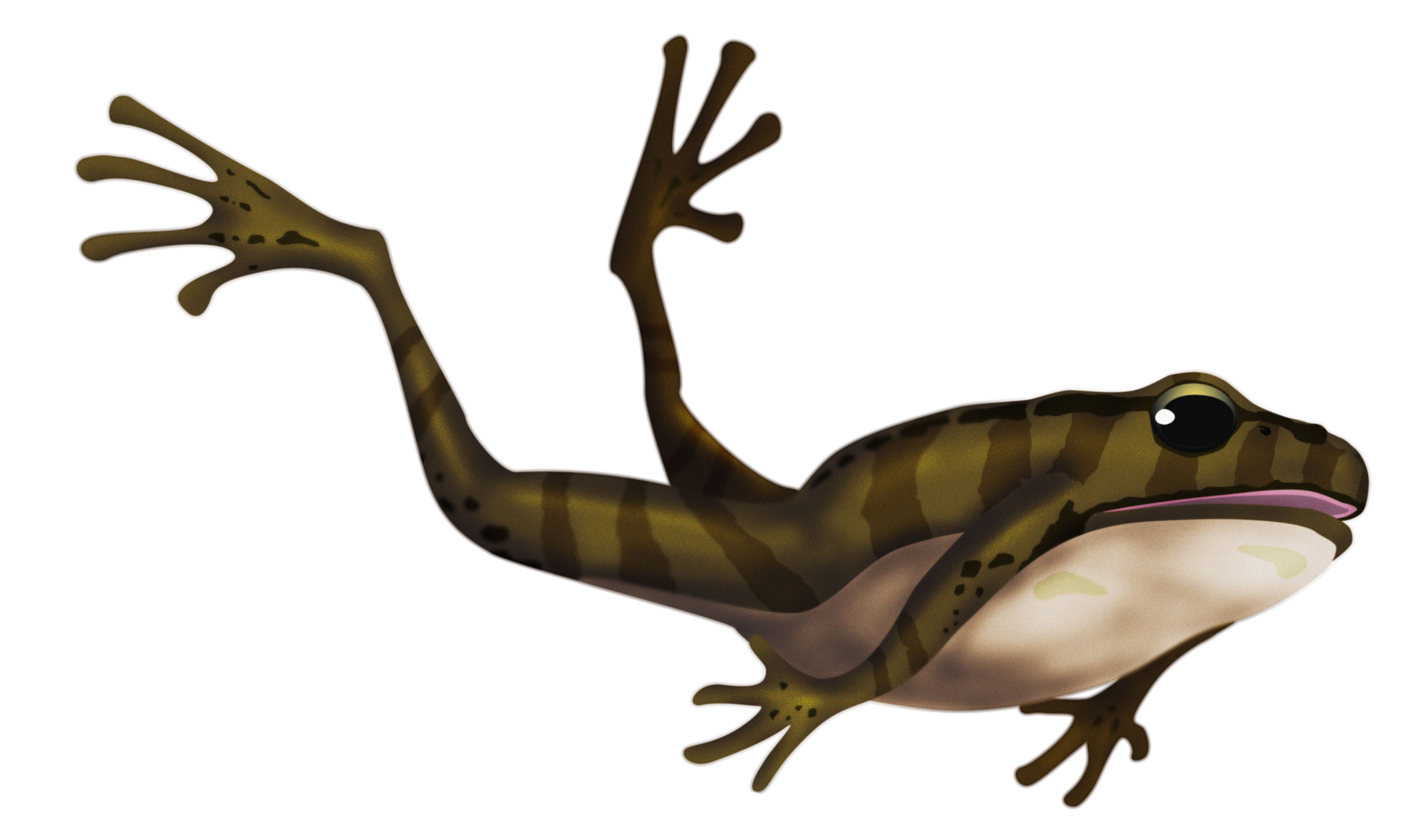
Our native frog species (Leiopelmatids) learnt to jump before they learnt to land on firm ground, culminating in a less-than-graceful belly flop. Exotic frogs, which have a longer evolutionary lineage, manage to rotate their front legs mid-flight ready for a tidy touchdown, and recycle their hind legs back into position for another launch. Luckily for Leiopelma, little “inscriptional ribs” and a shield-like pelvic cartilage may play a role in avoiding total intestinal pulverisation. (No advantage in having these diminutive ribs had been noted until a recent US study—“modern” frogs don’t have them.)
Poor form notwithstanding, this method of landing can be good or bad depending on the kind of predator in pursuit, said Phil Bishop of the University of Otago department of zoology. A visual predator will lose track of a cleverly camouflaged crash-landed Leiopelmatid, whereas those species that keep rapidly jumping attract attention. However, a predator with a keen sense of smell—like many introduced mammalian predators—is likely to lunch on our primitive natives.
More by Skye Wishart
Subscribe to our free newsletter for news and prizes
3
$1 trial for two weeks, thereafter $8.50 every two months, cancel any time
Signed in as . Sign out