Round or oval? Egg shape reflects birds’ ability to take to the air. (more…)
More by Skye Wishart


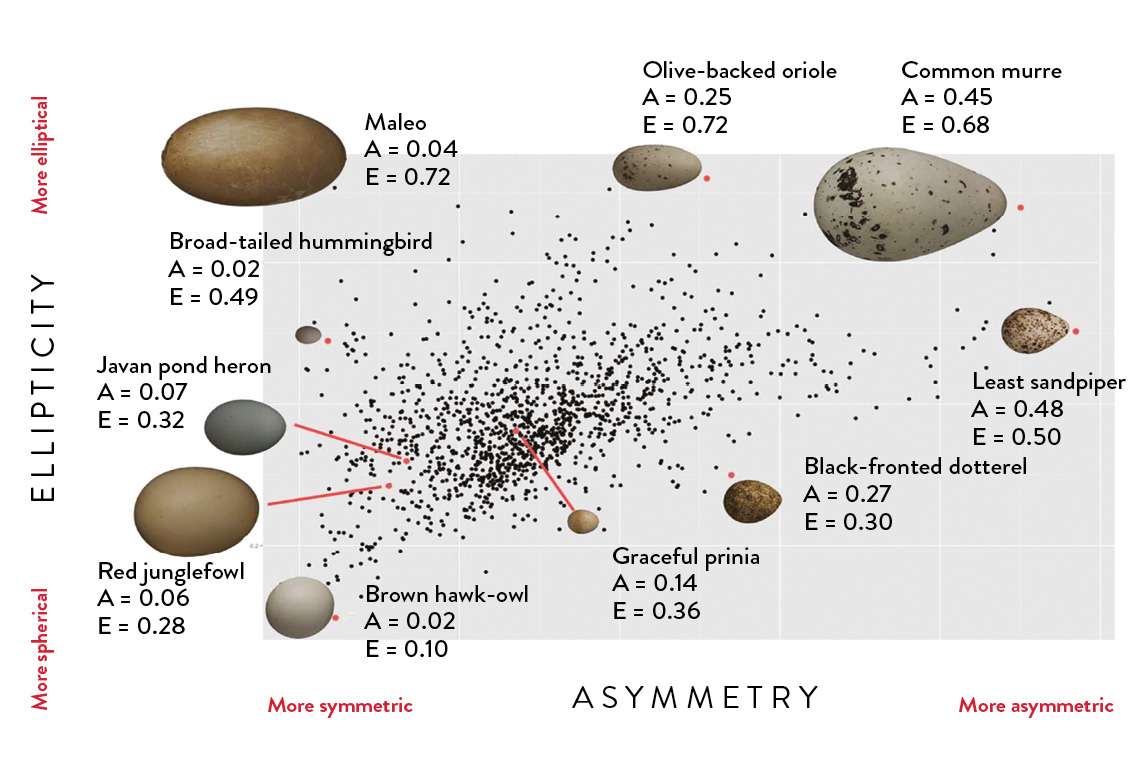
The shape of a bird’s egg reflects its ability to fly. The less aerodynamic the egg, the more likely the bird is to be flightless, while eggs that are elongated or assymmetic tend to belong to birds that are powerful flyers.
Birds optimised for flight have sleek, streamlined bodies, which limits how wide their oviducts can stretch as their eggs pass through it. These species lay elliptical eggs, the shape allowing the egg to retain its volume without being wide.
Researchers scanned 1000 eggs from different bird species, and along the way, found exceptions to the rule. Kiwi are flightless but lay elliptical eggs, says author Mary Caswell Stoddard, which might be related to the precociality of the chicks—how little parental care they need.
“Kiwi chicks are very precocial—this requires a large-volumed egg, so that the chick is ready to go and pumped full of nutrients when it hatches,” she says. “An elliptical egg would allow more volume to be packed into an egg without increasing the egg’s width, or girth.”
Another exception is the penguin, which lays asymmetrical eggs, says Stoddard.
“Although penguins do not fly, their bodies are streamlined for powerful swimming, which might also influence egg shape.”
More by Skye Wishart
Subscribe to our free newsletter for news and prizes
3
$1 trial for two weeks, thereafter $8.50 every two months, cancel any time
Signed in as . Sign out