




In November last year we made a deal with subscribers—this relationship was no longer purely transactional.
If you subscribe, we owe you more than six magazines or online access… we must tell you where we spend subscription income, and how. In a first for New Zealand media, we published our accounts, and we’re doing the same again, below.
However before we dive into the nitty gritty, the summary is this: Your subscriptions saved New Zealand Geographic in 2025. And renewing them will save us in 2026. The next two months are do or die, and here’s why…
Last year’s plea for a help ran into Christmas, resulting in a wonderful bulge in our subscription year. So much so that the last quarter of the calendar year nets more than January to September put together. Check out the bullhorns on the graph below—first one for the subscription campaign, second one for Christmas.
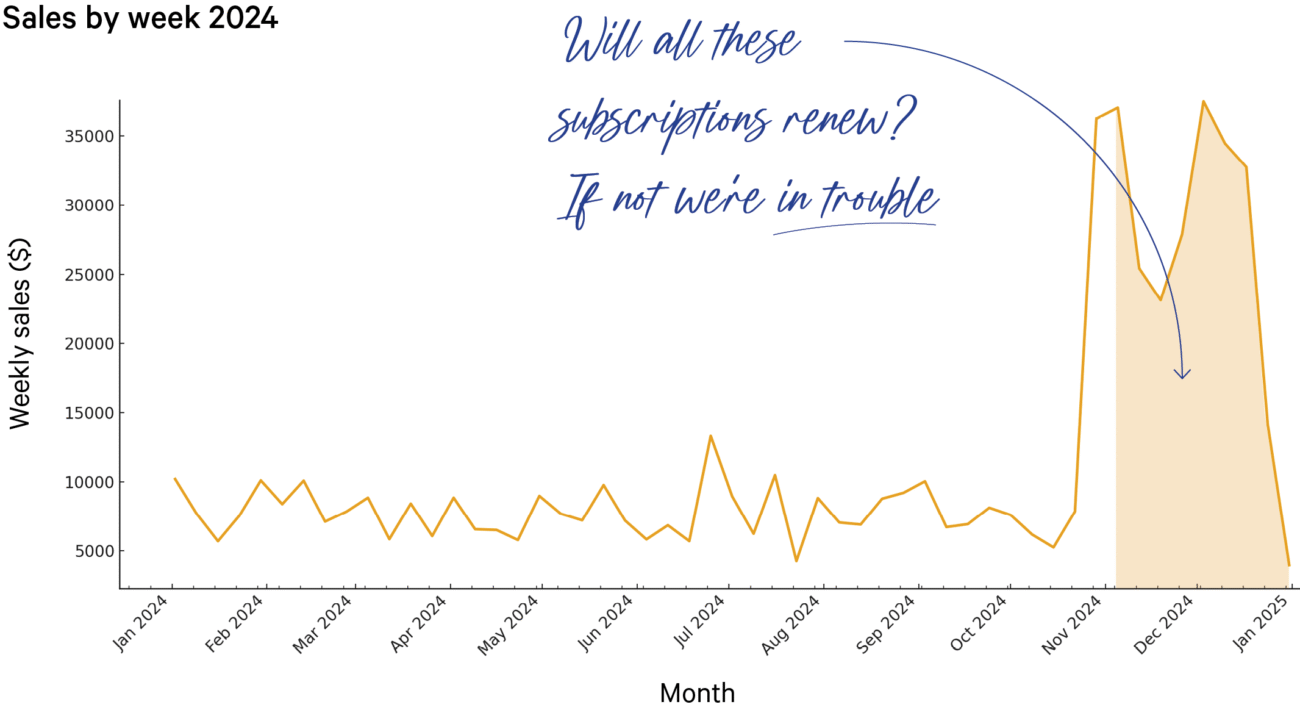
More than 4000 subscriptions are coming up for renewal in the next two months, representing quarter of a million dollars. Renew them and NZGeo will survive to write another year. Pass them in, we’re stuffed. Everything hangs on what you do in the next two months.
We still need 10,000 subscriptions to get through 2026, so the best thing you can do is to keep doing what you’re doing—renew. Your continued support will allow us to maintain New Zealand’s best environmental journalism at a time when the environment is under unprecedented stress.
But let me paint a new picture for you… Every 2000 subscriptions gives us about $85k of new working capital that can be put towards a staff journalist—we know that we could almost double our output of stories with that resource. Alternatively we could run a weekly podcast, or an additional newsletter, or something else valuable to you and our country.
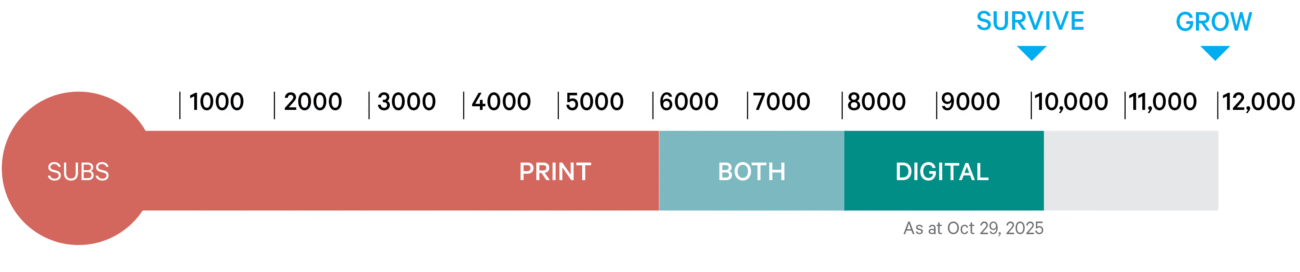
So, together, we have a choice; renew the subscriptions, stay at 10,000 and we’ll keep doing what we’re doing. Hit 12,000 and we’re into new territory, growing something new and important.
To get to 12,000 we need new subscriptions from those of you who read these emails and click the odd story. You can subscribe right now for your household. Or buy a gift subscription for someone else. And you can fill out our reader survey to tell us how you want NZGeo to spend the money. And if you have a subscription coming up in the next two months, please renew, because we still need you.
*
Right… now for the detail of our finances: As I forecast 12 months ago, our accounts look very different this year. Total revenue was down from $1.7M to less than $1.5M, but stay put for a moment and I’ll show you why that’s not the end of the world.
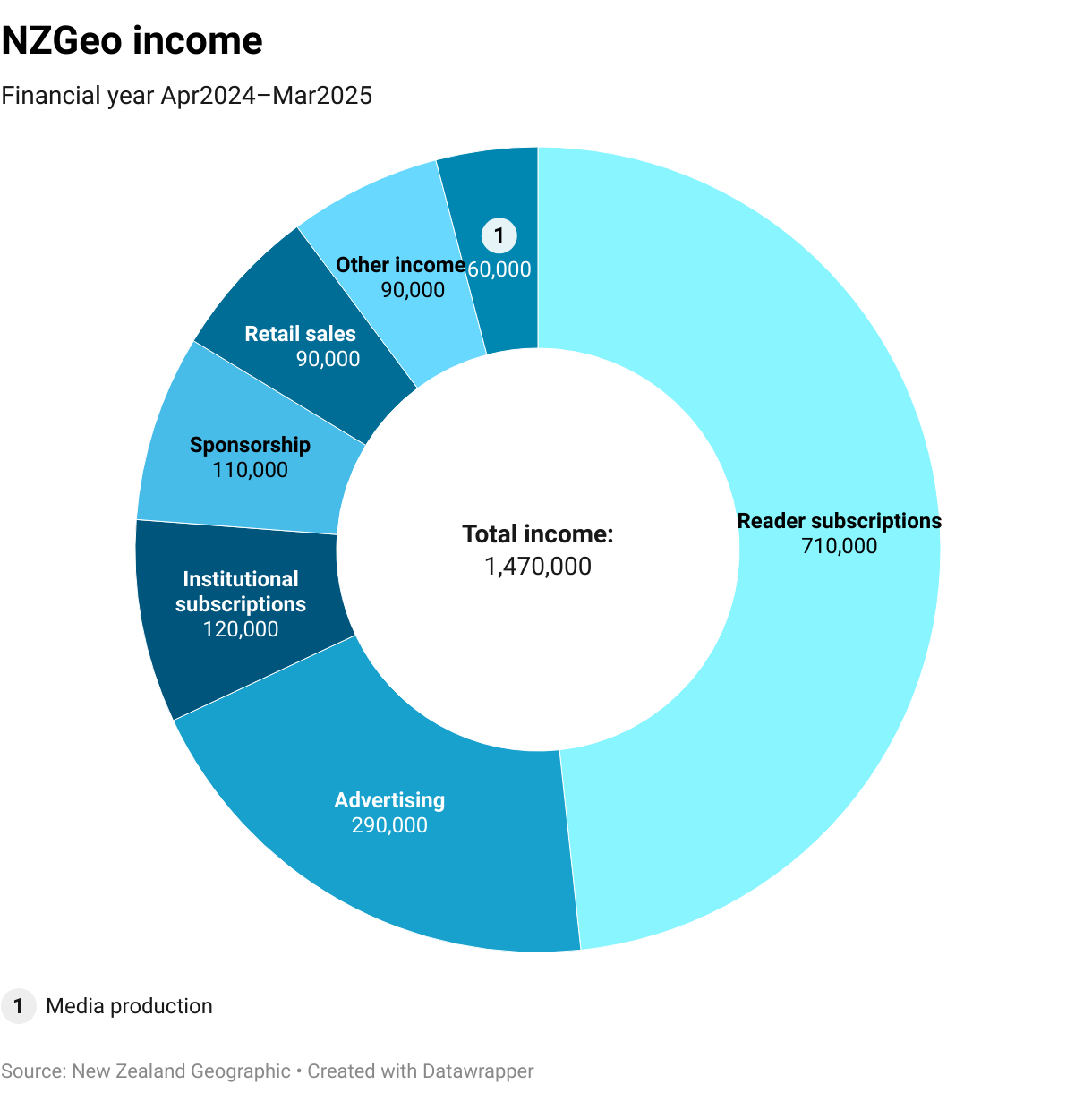
For those unaccustomed to accounting, income (or revenue) is the money we receive, but there are always associated costs. At the end of the day a sustainable business gets to bank the difference, profit, which most of the time gets ploughed back into things that help grow the business. I am rounding numbers to the nearest $10k so we don’t get bogged down in unnecessary detail. In the last financial year, our income looked like this:
| Account | Income |
|---|---|
| Reader subscriptions (print & digital) | 710,000 |
| Advertising (mainly print ads) | 290,000 |
| Institutional subscriptions (digital) | 120,000 |
| Sponsorship (mostly Photographer of the Year) | 110,000 |
| Retail sales (print) | 90,000 |
| Media production (content produced with funding) | 60,000 |
| Other income | 90,000 |
| Total Income | 1,470,000 |
Advertising dropped 5% in the last financial year (about $20k) but compared with the catastrophic collapse in ad returns for other media outlets, that’s a win.
Of greater consequence was the cliff-like drop in media production work forecast in last year’s call, plunging from $520k down to $63k, off the back of the closing of the Public Interest Journalism Fund. It washed nearly half a million bucks right out of the books. (That revenue came with a lot of costs, so the loss didn’t automatically travel down to the bottom line, but we’ll explore the effect of that later.)
Sponsorship revenue from Photographer of the Year fell nearly 25% this year. Try as we might, we managed to get sponsorship for just 10 of 16 slots—the brands that support such things are having a hard time in the current market too.
Retail sales were up 50% (by revenue), a result of last year’s campaign, some good covers and a $1 increase in cover price.
But the thing that saved our bacon in the last financial year—without any shadow of a doubt—was you.
NZGeo could pay its staff, photographers, writers and make great journalism for one reason alone: Subscriptions in 2024/2025 leaped from $520k to $710k, a 36% increase.
You transformed our business, and the change is more than monetary. Take one step back from this pile of figures and the student of finance will recognise another remarkable thing: In five weeks in late 2024 NZGeo managed to move its revenue from a business dominated by content production that was propping up a failing journalism product, to a business making most of its revenue from its core function of journalism, and turning it from a red-line cost centre back into the black. And that was all you. Thank you.
*
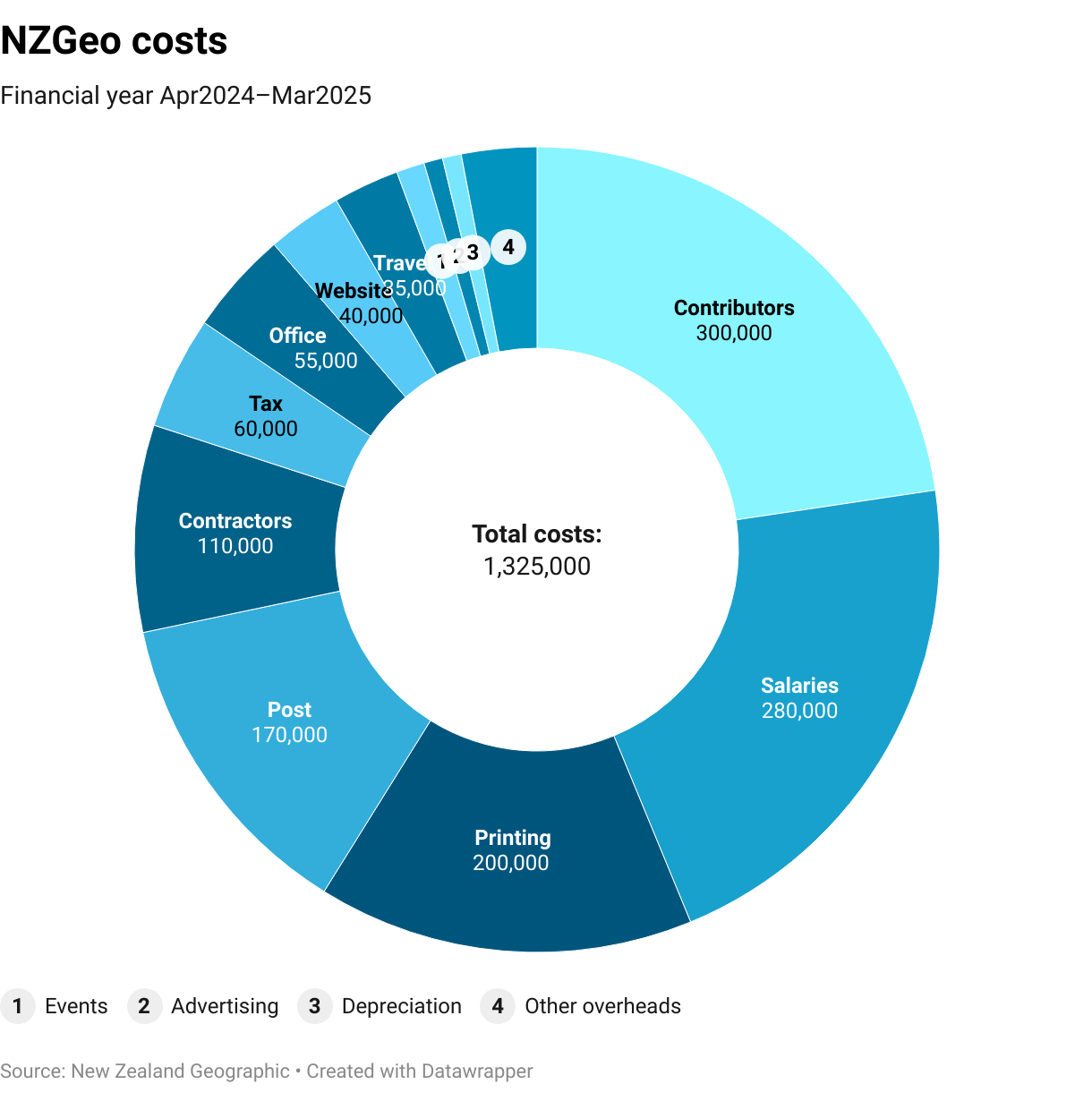
In the past year we have tightened the corset on costs too, saving $112k in direct costs and $125k in overheads.
| Account | Cost |
|---|---|
| Contributor fees (writing, photography) | 300,000 |
| Salaries (publisher, editor, admin/subs, inc Kiwisaver) | 280,000 |
| Printing | 200,000 |
| Post (mailing magazines) | 170,000 |
| Contractors (sales, design, science, dev, marketing) | 110,000 |
| Income Tax Expense | 60,000 |
| Rent, office (including opex, wifi, phones, printer) | 55,000 |
| Website hosting (including data and email) | 40,000 |
| Travel (for contributors working on stories) | 35,000 |
| Event costs | 15,000 |
| Advertising (mainly Facebook and Google Ads) | 10,000 |
| Depreciation | 10,000 |
| All other overheads | 40,000 |
| Total Costs | 1,325,000 |
Our resolution to attempt to reduce contributor travel—as much for reasons of emissions as cost—paid dividends, more than halving our travel costs. We remain committed to on-the-ground journalism, however, so there’s a trade-off here. Savings were made largely by bundling together assignments in similar locations and deferring to local contributors wherever possible.
We halved advertising on social media with few consequences. There was another whopping increase in mailing costs—an extra $20k. Part of this was driven by more subscriber copies to deliver, but also a 30% increase in postage rates from NZPost which is directing revenue from its postal service to build its courier business. (We complained to the Commerce Commission, but it was dismissed.)
The rest is bilge water sloshing back and forth, some costs up, some down. At the end of the day, despite the total collapse of our content production business, sagging advertising and sponsorship, the overwhelming support from subscribers and a trimming of costs kept air in the tyres. New Zealand Geographic slithered into the new financial year with a net profit of $145k, just a click below last year. At just 10% of turnover this is a lean trading margin, but unlike last year, it’s built of the right stuff—reader revenue. Today it’s subscriptions that power our business, creating a straight line between what our readers want and what we’d most like to deliver; high quality journalism.
If you’d like more from NZGeo in 2026, we would love to provide it. Please subscribe.
More by James Frankham