



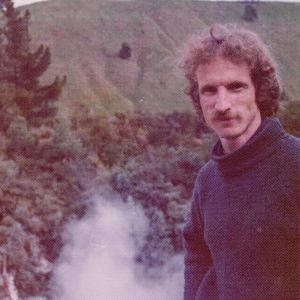

During the summer of 2002, kakapo on Codfish Island/Whenua Hou, off the north-western coast of Stewart Island, bred with unprecedented success. Of 26 chicks hatched, 24 survived, boosting total kakapo numbers to 86—the highest they have been in 20 years. For the more than 100 volunteers who watched over eggs and chicks while the mother birds foraged for food, caring for kakapo was no easy assignment. It entailed a twice-daily slog along steep, boggy tracks and nights spent alone in a tent in the forest. But nest minders such as Hamish Downer, here getting his boots well immersed in the local mud, and Sue Bolland, lifting a 24-day-old chick out of its nest-box for weighing, had only one word for the chance to take part in the restoration of the kakapo’s fortunes: priceless.
It is four in the morning, and I am sitting alone on the rain-soaked soil of an island at the edge of Foveaux Strait, hunched against the pre-dawn cold and endless southwesterlies.
I have been in the thick blackness of this southern night for six hours already, waiting for the approaching dawn to silhouette the forest canopy with patches of grey.
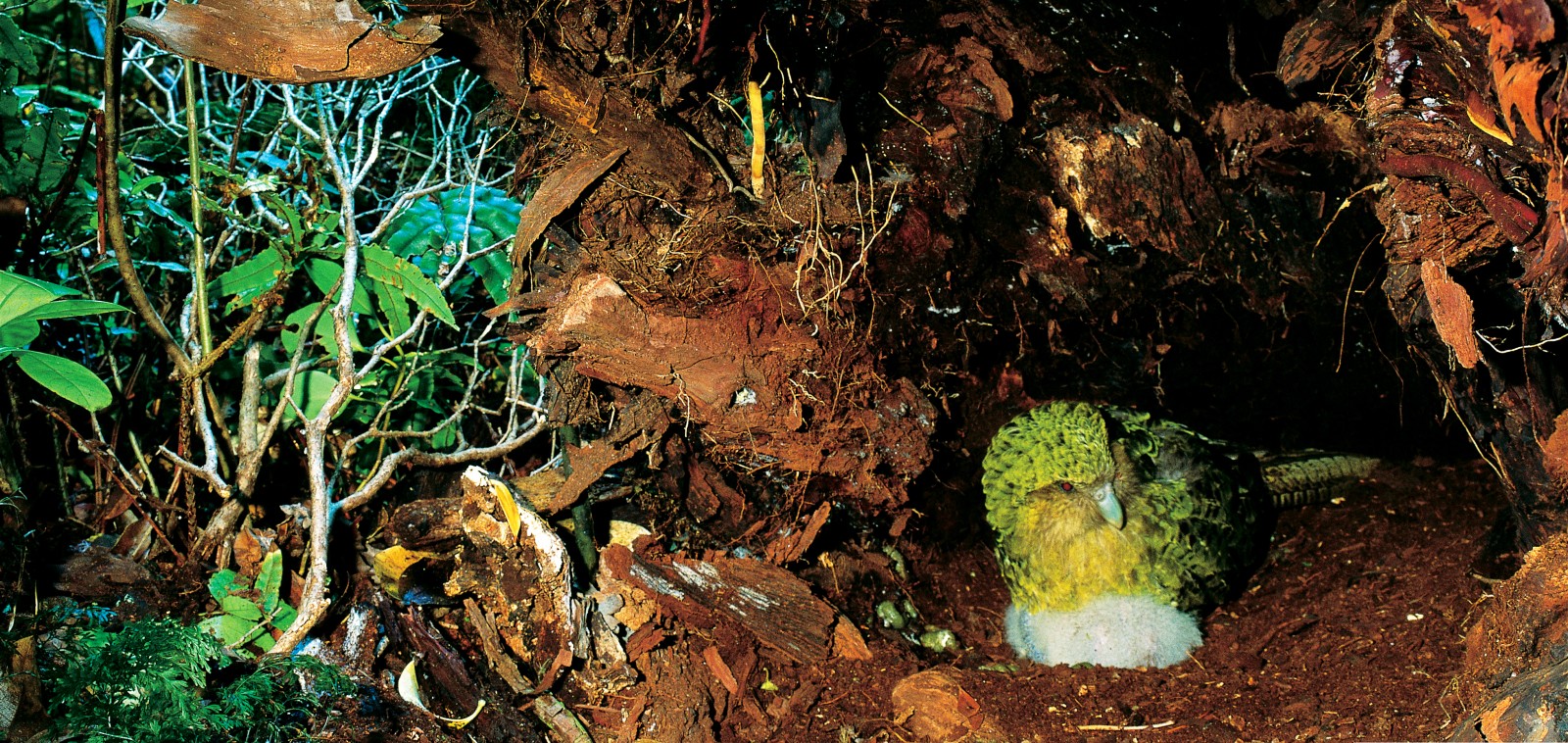
My only company lies a couple of metres away, in a tangle of rotting rata stumps and roots: a tiny grey chick which looks as cold and disconsolate as I feel. It is H2, a seven-day-old kakapo and one of the very latest additions to the embattled parrot’s population.
While I shiver in layers of expensive polypropylene and synthetic fabrics, H2 has only the finest coating of grey down for warmth and resembles nothing more than a patch of mould on the forest floor.
As a volunteer nest minder, I am spending two weeks looking after this fragile addition to the kakapo world while its mother, Heather, forages in the surrounding rimu forest of Codfish Island/Whenua Hou. Fatigued by 10 days of scant and intermittent sleep and up to four hours’ walking on waterlogged tracks each day, I find my biggest challenge is simply to stay awake.
It’s rough and it’s raw, but what I’m doing is the reality of conservation in this country. Forget photo opportunities and cuddling one of the world’s rarest birds. Saving this species requires patience, sturdy boots and getting used to rivulets of water trickling down your neck.

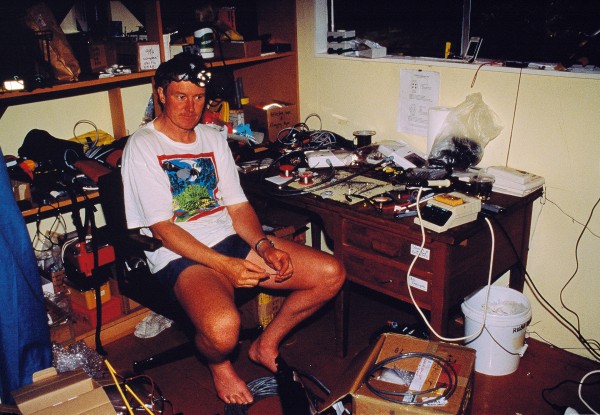
But it seems to be working. In fact, the 2002 breeding season has provided the most significant step forward for our beleaguered night parrot since 1977, when kakapo were rediscovered on Stewart Island.
Claims of pulling endangered species “back from the brink” or of “turning the tide” are often made in conservation work, but in this case the rhetoric is justified. To go from 62 to 86 birds in a single season—a 39 per cent increase in the world population of the species—is extraordinary. And it proves that the kakapo’s tenuous toehold on existence can be secured in our lifetime.
Michael Rands, chief executive of the global conservation alliance Birdlife International, called the 2002 kakapo breeding success “the best news for threatened-bird conservation in recent years.”
The positive result was, of course, primarily due to the efforts of the kakapo themselves. However, these were supported by a Department of Conservation-led intervention programme that attracted staff, volunteers, VIPs and media from throughout New Zealand and overseas.
The largest contingent was the nest minders. From January to May 2002, more than 100 volunteers were mobilised to care for each of the 26 kakapo chicks which hatched during the season (and 24 of which survived). They ranged from professional conservationists to photographers, vets, teachers and zookeepers. Some needed only to travel across Foveaux Strait from Riverton and Invercargill, while others came from as far afield as Germany, Canada and Japan.

Vincent Woo, a geriatrics psychiatrist from Canada, learned about the kakapo programme from the Internet and travelled to New Zealand especially for the opportunity to mind a nest for two weeks. Izumi Uchida, a Japanese writer and filmmaker, extended her 12-year involvement with the species, begun when she established a Japanese fundraising campaign for kakapo recovery in 1990. Karin Keith, a Wellington mother of four, waited two years for the chance to mind a nest, after hearing about the programme through her involvement with the Royal Forest and Bird Protection Society.
At times, there were 40 people on isolated Codfish Island/Whenua Hou, living in quarters that usually accommodate only a handful. As the island is accessible only by helicopter or light plane—and only when the Foveaux Strait weather permits flight scheduling was a major exercise, entailing hours of planning and long telephone calls between the island, Invercargill and DoC’s head office in Wellington.
The daily deployment into the field was undertaken in military style, with radio schedules set up between the operations controller and each of the DoC staff and volunteers in the field. Briefings were provided on everything from techniques of radio telemetry to safety when working around helicopters.
*
The primary goal for all this activity was to increase the survival rate of kakapo eggs and chicks by identifying and remedying any problem early, keeping eggs and chicks warm during the female’s absences from the nest, reducing the risk of infection in chicks and hand-rearing any chicks that got into trouble.
In practical terms, this meant using nest minders as surrogate parents when the kakapo mothers left their nests to forage in the forest at night. (Male kakapo take no part in rearing their offspring.) During the nesting period, up to 20 people at a time were assigned to maintain 24-hour surveillance of nests, backed up by an array of electronic paraphernalia, the batteries for which had to be humped into the forest on a daily basis.
One of our most useful devices was a portable heat pad—a Heath Robinson affair cobbled together from a whoopee cushion, silicone, an electric coil, a thermostat, a hiker’s pole, Velcro and string—which replicated the warmth and weight of a kakapo mother.
Our role was to get this contraption in place over either eggs or chicks if the female was away from the nest for longer than a couple of hours, and to remain vigilant so that we could remove it and be away from the nest before she returned. (Later in the season the management protocol changed, and heat pads were deployed as soon as the female left the nest.) Nest watching also meant being on hand to intervene in case of intrusion by a roaming petrel or morepork, or in the unlikely event of a female abandoning her nest.
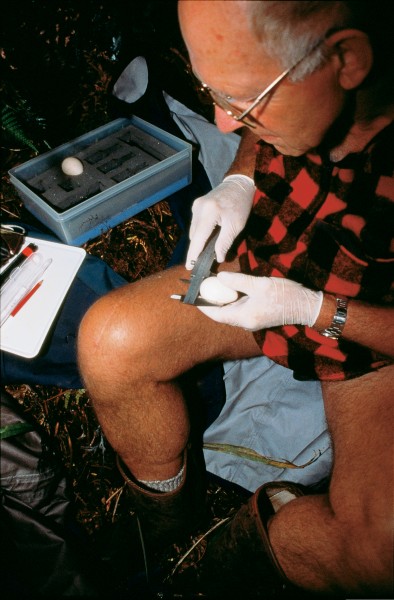
Meanwhile, DoC staff traipsed the network of tracks at night like restless wraiths, checking the viability of eggs or weighing chicks while the females were absent. Each chick was weighed and measured on a nightly basis, its growth plotted against a standardised kakapo “Plunket curve.” If a chick was not putting on weight (as happened in four cases), DoC staff changed from Plunket nurses to social workers, taking the chick from its mother for hand-raising in a brooder on the island or at DoC’s bird-rearing facility near Te Anau.
Some eggs and chicks were fostered to females which had laid infertile eggs, to distribute the burden of chick raising more evenly and to encourage successful mothers to lay again during the breeding season.
DoC even acted as a “state housing” provider, moving eight of the less salubrious nests into warm and dry plywood nest-boxes to decrease the risk of chick mortality or to make access easier for the daily inspections.
The imposition of such a strong human thumbprint on nesting was deemed necessary because kakapo hatchlings have had a high natural mortality rate in the wild, even in the absence of predators. In the 2002 season, however, the mortality rate was just over 8 per cent—two deaths among 26 chicks.
*
While daylight gave exhausted kakapo mothers the opportunity to sleep, the human mind-ers faced many more hours of portage and surveillance before they could crawl into their sleeping bags.
Each morning, the 12 kg car battery used to power the heat pad, video monitor and other electronic gadgetry had to be carried back to base along tracks with names such as Wounded Knee, Mud Wiggle, Horror and Humbug—and then a freshly charged one lugged back uphill in the afternoon.
Karin Keith admitted this part of the job was much harder than she had expected: “When I first got to the island, I couldn’t pick the battery up at all. While walking the tracks I slipped a few times and found that once I was down I couldn’t get up.
I had to take the pack off and then put it on again while sitting upright before standing up again. The first time it happened, I lay there on the ground and thought, ‘What am I going to do now?’”
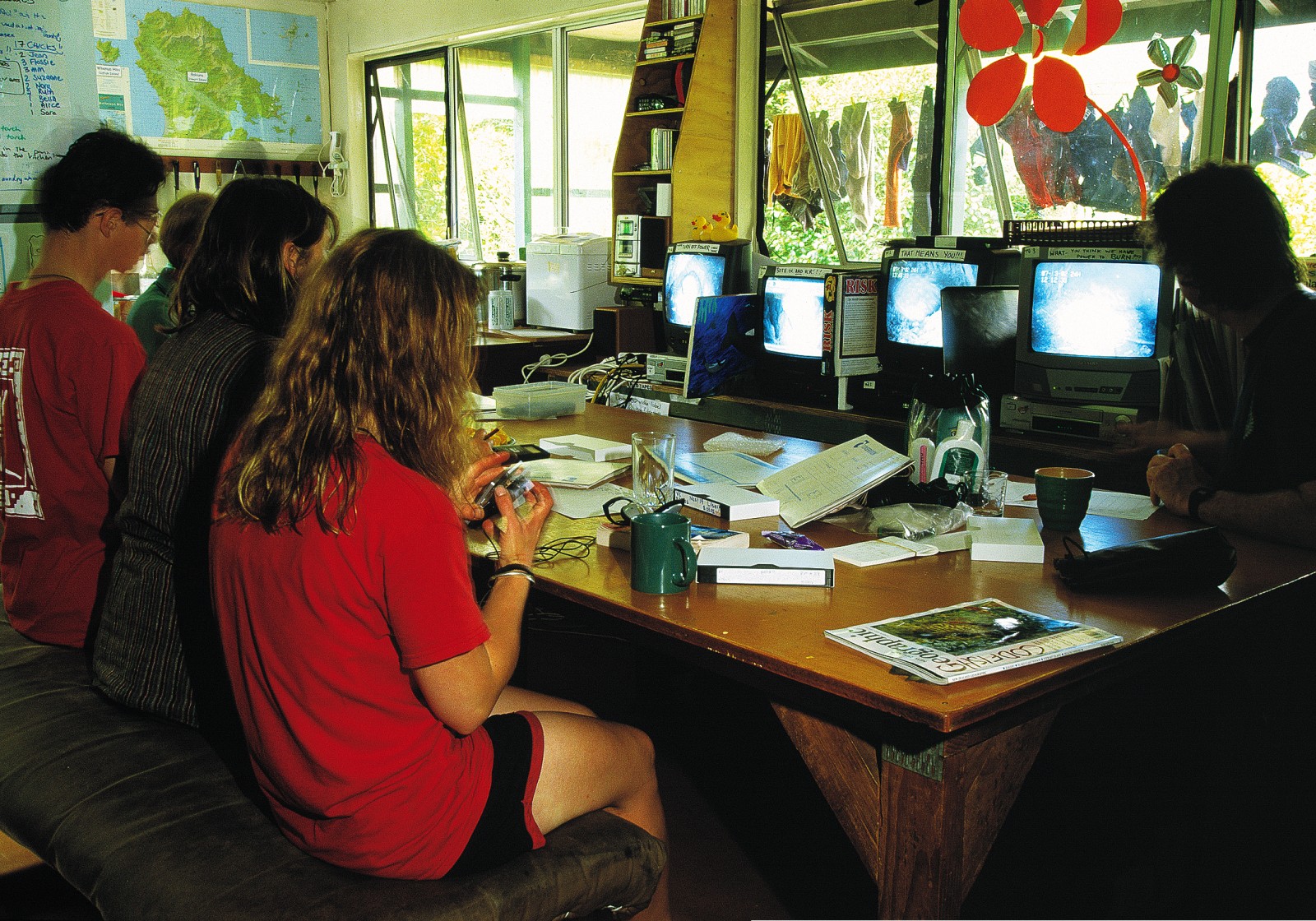
Between the morning and evening treks, nest minders had to spend up to three hours monitoring video recordings of nest activity over the past 24 hours, to build up a profile of each mother’s foraging behaviour. Details such as the total time off the nest each night, the number of foraging trips and the number of times each chick was fed were recorded and fed into a database to inform management decisions.
[sidebar-1]
Through the use of video monitoring the unwitting kakapo mums were watched 24 hours a day; the cameras ran even when the birds were asleep. Up to 61 days of activity were recorded for each of the 24 nests. Over the season, every minute of about 24,000 hours of videotape was viewed in the interests of kakapo conservation.
Such intense scrutiny took bird conservation to positively Orwellian dimensions. DoC was acting as a benevolent Big Brother, and Codfish Island/Whenua Hou had become the ultimate surveillance state.
*
During the night, our forest vigils were governed by the ding-dong of a doorbell a sound that all nest minders eventually came to dread.
Each kakapo nest had an infrared beam set up across its entrance. A break in the beam—caused by the female entering or leaving, or by an intruder doing so—triggered the doorbell, which was placed in the nest minder’s tent some 60 m away.
Ding-dong! Ding-dong! at all hours of the night came to trigger a Pavlovian response: a sinking stomach at the prospect of further sleep deprivation, cold and darkness as the minder hurried to the nest. As an experiment in behavioural conditioning, it would have been unethical. As a volunteer opportunity, it was unmissable.

On the positive side, getting dressed in the dark at 2 A.M. became easy by the end of my two weeks: I could find my clothes by smell. And even having to trudge through the mud to Heather’s nest for the third time in a night couldn’t diminish the protective instinct I developed for H2, my shivering patch of mould.
On the night H2 had hatched, I had managed a crackly midnight call to my partner, Mariam, in Nelson, mostly in the interests of keeping myself entertained. “I’m a dad! I’m a dad!” I’d hammed into the cellphone. Not amused at being woken at that hour, she’d told me to stop being an idiot and had hung up.
During the long hours I watched Heather on the video monitor in the tent (linked to an infrared camera at the nest), I found her to be a mother of discretion. On a rainy night, she would go to the entrance, look outside, then return to the warmth of the nest, busying herself with a feed for H2 or a preen instead of braving the elements.
Nothing would deter the mothers of older chicks, such as Ruth and Nora. They would be out at dusk, whatever the weather, and would stay out for up to five hours at a time. One night, the indomitable Nora was not back at the nest until mid-morning, earning the sobriquet “Bloody Nora” from her weary minders.
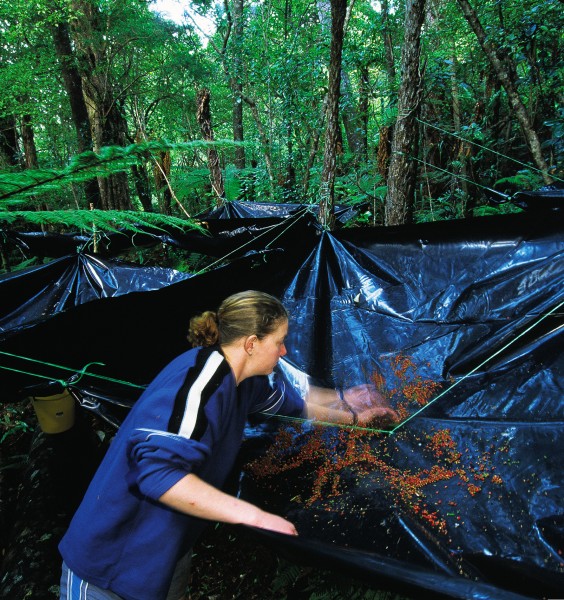
Flossie, the mother of two chicks, averaged four foraging trips a night during her three-month nesting period. During April, she was away from the nest for more than sevenand-a-half hours a night, gathering an estimated nightly haul of 720 g of food—approximately 7200 rimu fruits—to feed her brood.
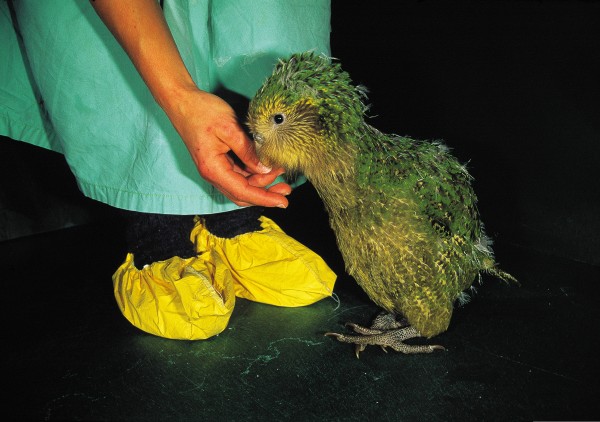
For a heavy, flightless bird, getting to a tree-borne food source is not easy. It entails stomping through the undergrowth and climbing high into the canopy in order to reach the fruit. On Codfish Island/Whenua Hou, the often wet and windy weather conditions are an additional burden.
Flossie’s dedication to her chicks affected Izumi Uchida deeply. “She had a beautiful nest among the roots of a rata tree—so archaic, so ancient. I felt I was watching a vulnerable drama, yet there was hope as well for this very helpless bird. The whole thing was visible in front of me. It was wonderful.”
Hand-raised Hoki took to mothering less readily. After a fostered egg was placed in her nest to replace her dead egg, she rolled it around and played with it for 20 minutes before accepting her new role—much to the anxiety of DoC staff watching on the video monitor.
[sidebar-2]
Already a celebrity as the subject of a book, Hoki seemed to possess a Hollywood temperament: a certain unpredictability which had a painful consequence for nest minder Vincent Woo. “One night when I was at the nest she came up to me, calmly investigated my shoe and then clamped her beak on my Achilles tendon,” Woo recalled. “It hurt!”
Seized on the one hand by the realisation that he was being mauled by New Zealand’s most famous bird, and on the other by the fear that he might inadvertently squash her, Woo gingerly raised his leg, hoping the bird would slide off. “But instead she locked her feet on my ankle and proceeded to bite her way up my calf.”
Woo was saved by a passing DoC officer, but says he now feels privileged to carry a permanent mark of Hoki’s attention.
*
Being an intimate observer of kakapo behaviour was privilege enough, but living on a predator-free nature reserve made the whole experience even more special.
A massive aerial poison drop over the 1396 ha island in 1999 eradicated rats, dramatically improving the chances of successful kakapo nesting by eliminating the risk of predation and reducing competition for food. The removal of rodents also lifted the biodiversity of the island’s entire ecosystem.
The night-time sounds of muttonbirds crashing through the forest canopy, male kakapo booming to attract mates, and thousands of petrels and shearwaters murmuring and wailing as they returned to their nesting burrows on the forest floor gave the island a vibrancy quite lacking in the predator-induced stillness of mainland forests.
“The noise of all those seabirds coming in sounded like Formula One racing cars on the starting grid,” said DoC staffer Herb Christophers. “It was just stunning.”
During the day, kaka chattered in the tree-tops and yellow-eyed and Fiordland crested penguins padded through the forest to and from their nest sites. Fernbirds gave their sonar-like pinging calls, and bellbirds filled the forest with music. At night, the skittering and slithering of innumerable native invertebrates hinted at the fundamental shift in island ecology that was taking place.
For me, these goings-on gave a sense of being in the tropical rain forest of Southeast Asia, certainly not the forests of southern New Zealand. The restoration of the island is indicative of the comprehensiveness of the entire kakapo programme, where nothing is left to chance, and an unprecedented level of audacity and inventiveness is being employed in the interests of these unique birds.
Indeed, in the long hours of contemplation that nest minding offered, I began to wonder at what point kakapo could start to be considered artefacts of human endeavour rather than truly wild creatures.
Despite all our interventions, though, the kakapo adults remained one step removed most of the time. Their movements were tracked at a distance by radio receivers, and any manipulation of nests was undertaken only while the females were away. The birds got on with their lives, largely oblivious of the frantic activity around them. They were accommodating, but remained aloof.
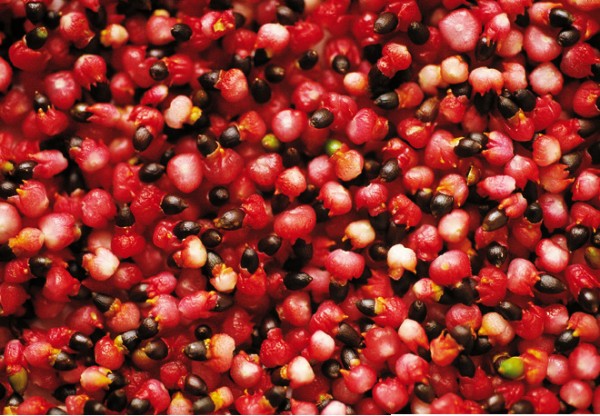

In fact, I only ever met Heather in the flesh once, while walking back to the tent one night to make a radio report. She was clinging to the outermost branches of a young rimu, being buffeted in a south-west gale while stuffing hundreds of rimu seeds into her crop.
With her owl-like face lit up in the fading beam of my headlamp and her plumage glistening with moisture, she seemed sublimely unaware of the vast human machinations directed towards guaranteeing her well-being.
Standing in the darkness, face to face with one of evolution’s eccentric survivors, I felt exhilarated that her breeding purpose was being fulfilled—for the first time in her life.
More by Andrew Macalister
More by Gideon Climo and Don Merton