Euleptorhamphus viridis (more…)
More by Skye Wishart



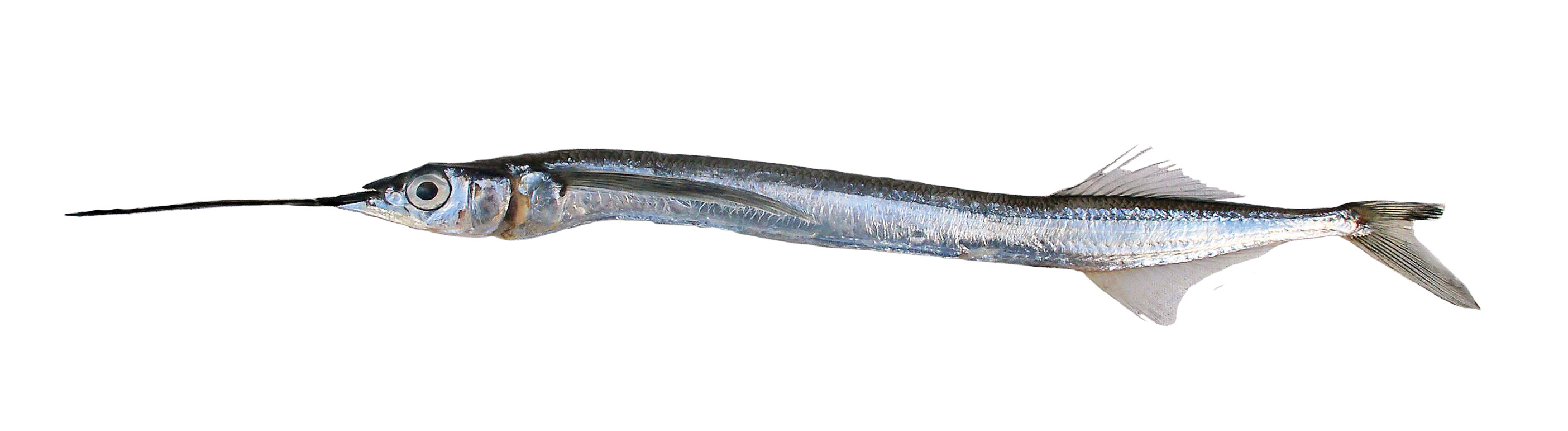
Elusive creature
Related to the piper, flying fishes, sauries and needlefishes, the ribbon halfbeak is found in tropical and subtropical waters of the Indian and Pacific Oceans. Though it lives in the Kermadecs, it had never been photographed there—until April this year, by photographer Edin Whitehead.
Dried out
The first time the ribbon halfbeak was seen in the Kermadecs was in 1911, as a dried-up, foot-long specimen that the Bells, the most famous settlers of Raoul Island, brought with them when they returned to New Zealand after a hurricane destroyed their farm. At the time, it was called Euleptorhamphus longirostris. It has been occasionally spotted since then.
Taking flight
The ribbon halfbeak can’t glide through the air several hundred metres like the flying fishes (which have enlarged pectoral and pelvic fins to glide and a powerful tail to flick the surface and stay aloft) but it still gets some air in a very unique way: it twists the back half of its body 90 degrees so that its dorsal and anal wings become a horizontal tail wing.
More by Skye Wishart
Subscribe to our free newsletter for news and prizes
3
$1 trial for two weeks, thereafter $8.50 every two months, cancel any time
Signed in as . Sign out