







Mariah Blake, Penguin Random House
In 1938, a young chemist working on developing new refrigerants accidentally created waxy white flakes instead of gas. The flakes didn’t melt, didn’t react with anything, were extremely slippery, and couldn’t be dissolved, even by concentrated sulfuric acid.
Eventually, this lab mishap got a name: Teflon. It became a billion-dollar-a-year business for the chemist’s employer, DuPont, and ushered in a class of “forever chemicals” that are almost certainly in your bloodstream and mine. And not in a good way.
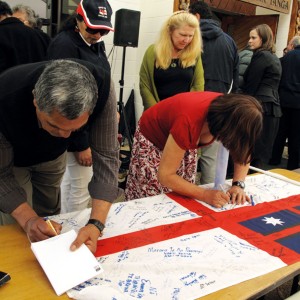
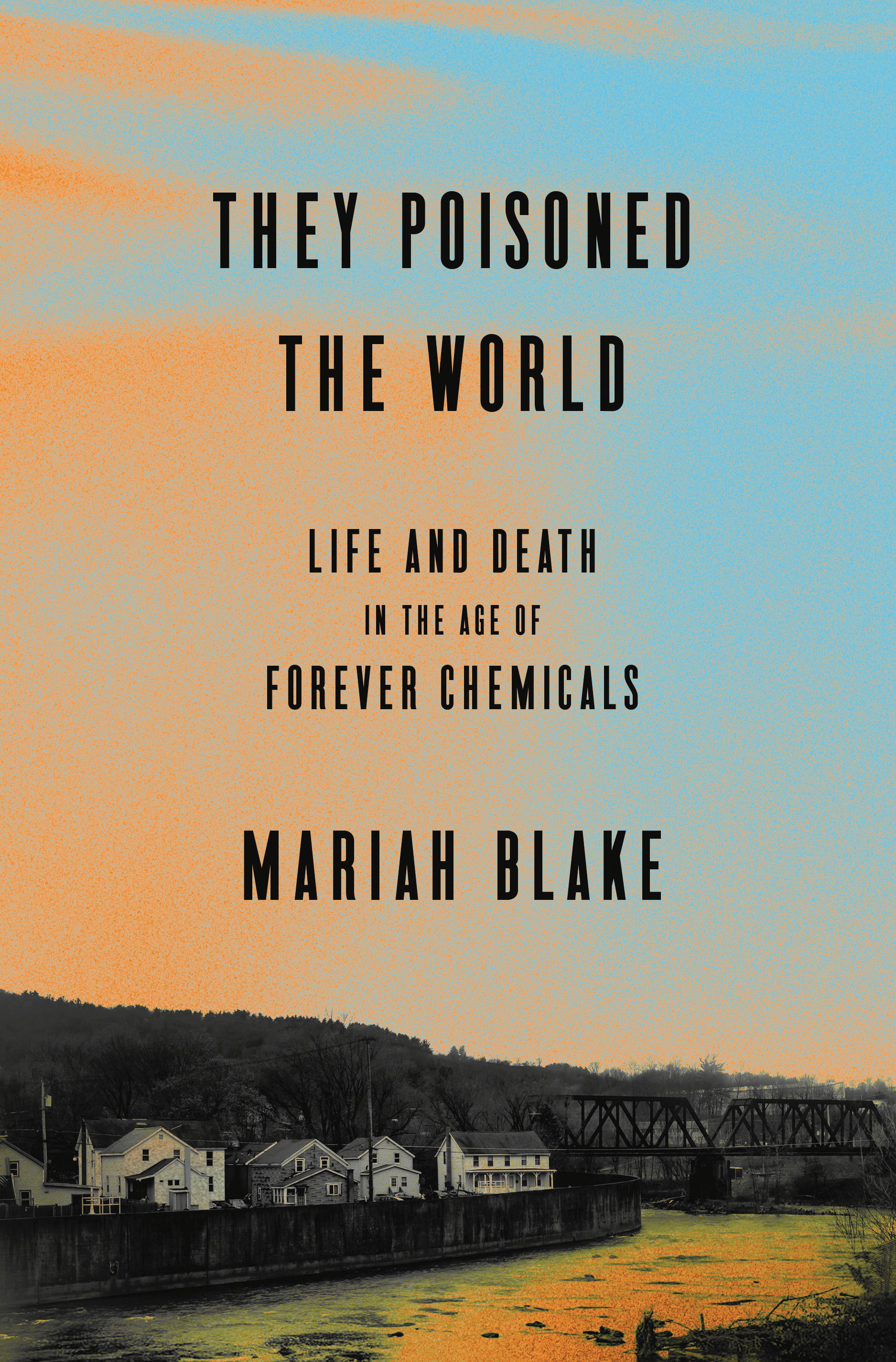
In They Poisoned the World, US investigative journalist Mariah Blake reveals how for the better part of a century, the companies that made the chemicals played cat-and-mouse with ordinary people trying to uncover the truth. The narrative follows a small-town insurance underwriter in Hoosick Falls, New York State, as he attempts to figure out why so many of his relatives and neighbours are dying from rare diseases. Galvanised by his father’s untimely death in 2010, he begins to connect people’s health problems to the biggest employer in town: a factory producing fabrics coated in PFAS, or “perfluoroalkyl or polyfluoroalkyl substances”.
These are chains of carbon atoms with fluorine atoms dangling off them, and they’re “forever” because the link between the carbon and fluorine atoms is one of the strongest bonds in chemistry.
Once created, PFAS don’t break down: they accumulate. They’re linked to cancers, thyroid disease, infertility, obesity, immune system problems, pregnancy complications, and neurological issues. DuPont has known about the chemicals’ devastating health impacts since the 1940s; the public began to hear about it in the early 2000s. As Blake describes, regulation is only just beginning; the chemicals are too useful, their manufacturers too powerful.
You are, right now, surrounded by PFAS: they are in clothing, carpets, pizza boxes, cookware, cosmetics, paints and printer ink, among a host of other household products. They are in dust and water and on apples in supermarkets. Their durability is what makes them useful—as well as the fact that they’re resistant to water, oil, heat and stains.
How is it that chemicals known to be so destructive to life—and so permanently polluting—are still being produced? DuPont invented the tactics that tobacco companies would later use to challenge research connecting their products to disease.
“It was a DuPont-funded scientist,” writes Blake, “who first articulated the principle that now forms the bedrock of our system for regulating potentially toxic substances—namely, that they should be presumed safe until proven otherwise.”
In New Zealand, PFAS contamination was discovered around Defence Force bases starting from 2017. It came from PFAS-laden firefighting foam used from the 1970s to the early 2000s. Groundwater near the Ōhakea airfield was so badly polluted that a new piped-water scheme was built for residents in 2022. That foam is now banned—and New Zealand will begin banning cosmetics containing PFAS at the end of 2026. But, as the book makes clear, we’re at the start, not the end, of this particular battle.
More by Rebekah White