Scientists are now spying on bird colonies via satellite. (more…)
More by Skye Wishart



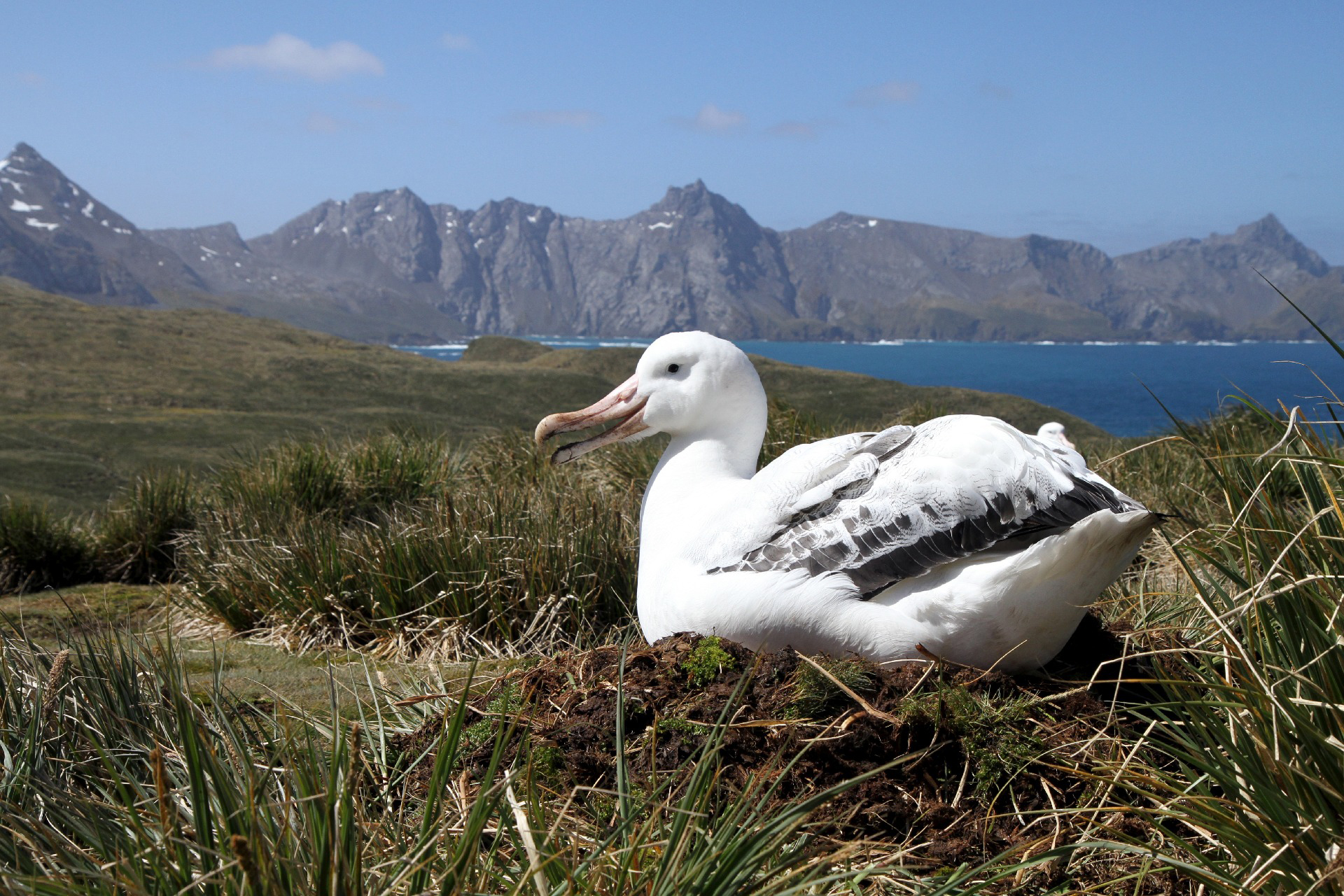
A team from Canterbury Museum and the British Antarctic Survey positioned a satellite named Worldview-3 over two groups of islands near the Chathams to count two albatross colonies that hadn’t been monitored for more than a decade due to their isolation.
The satellite, originally developed for the United States military, can detect objects at least 30 centimetres long. The northern royal albatross, at 155 centimetres long, appears as a thick white dot in the images.
Study author and Canterbury Museum senior curator Paul Scofield says using satellites to monitor wildlife will become more common as the resolution improves.
“We tried to do this 10 to 15 years ago, but the technology wasn’t available.”
Satellites offer a clear advantage over drones, which are loud, and don’t work in high winds—“95 per cent of New Zealand’s coastline”—as well as rain, fog or low cloud.
Scofield sees potential for satellites to locate undiscovered breeding colonies, such as that of Beck’s petrel, a seabird so rare it once went unrecorded for 70 years. It is suspected to breed on remote islands off the coast of Papua New Guinea.
The team will next use the satellite to view Hutton’s shearwater colonies high in the Seaward Kaikōura Range, to gauge the effects of the November 2016 earthquake on the birds.
More by Skye Wishart
Subscribe to our free newsletter for news and prizes
3
$1 trial for two weeks, thereafter $8.50 every two months, cancel any time
Signed in as . Sign out