Rule Britannia

Digging into placenames inescapably pushes us into our own colonial history. The colonists came seeking a new and better life, but Britain was still home. Old patrons and old heroes remained. Britain hadn’t made life easy for the New Zealand Company, but on the muddy shores of Port Nicholson the company’s Principal Agent, Colonel William […]...

The time of the crow

With the advance of autumn the constellation Corvus, the crow, soars almost directly overhead. Of all the 88 constella­tions, Corvus is one of the few in which the pattern of stars is recognisably related to the named object, in this case a crow flying east to west. Appropriately, the bird of ill omen brings the […]...

Everest update

While mountaineers Rob Hall and Gary Ball prepare to strike for the summit of Everest, a Second New Zealand expedition is waiting for an official go-ahead to cross the Tibetan border. Both expeditions, spon­sored by New Zealand Geographic, are attempting something new in Everest mountaineering history. The Ball-Hall team has joined with two sherpa climbers Fincho Norbu […]...

How aurorae happen

On the night of Monday March 13, 1989, New Zeal­anders were treated to a spectacular display of the Aurora Australis or “south­ern lights”. Many parts of Australia also witnessed this breath­taking display which resulted from a large solar flare occurring a few days earlier. Solar flares, which last for about 20 minutes, are caused when […]...

Big berg tells important story

A supergiant iceberg floating in Antarctica’s Ross Sea is providing scientists with valuable new data on how icebergs form and the direction of currents in Antarctic waters. The tabular berg, known as B-9, broke away from the eastern part of Ross Ice Shelf in October 1987 and has now drifted more than 1000km around eastern Ross […]...

Hector’s dolphin gets a sanctuary

An area around Banks Peninsula in Canterbury has been declared New Zealand’s first marine mammal sanctuary. The former Minister of Conservation, Helen Clark, accorded special status to these waters in December 1988 to provide protection for the local population of Hector’s dolphins. The diminutive Hector’s dolphin is unique to New Zealand and is thought to […]...

Mites lead in gorse attack

Gorse is on the DSIR’s hit list. Since March of this year, the Entomology Division of the Department of Scien­tific and Industrial Re­search has been waging biological warfare on the plant that Dr Richard Hill, the scientist in charge of the project, calls “New Zea­land’s commonest and most costly weed”. Imported gorse spider mites have […]...

Top of the class!

Thank you, New Zealanders, for your overwhelming support. We now have 7000 subscribers — twice as many as our target — and all the shop copies we printed have been sold. Response to the first issue has been fantastic. Some of the scores of letters we have received from readers are printed on pages 7 […]...

Kauri

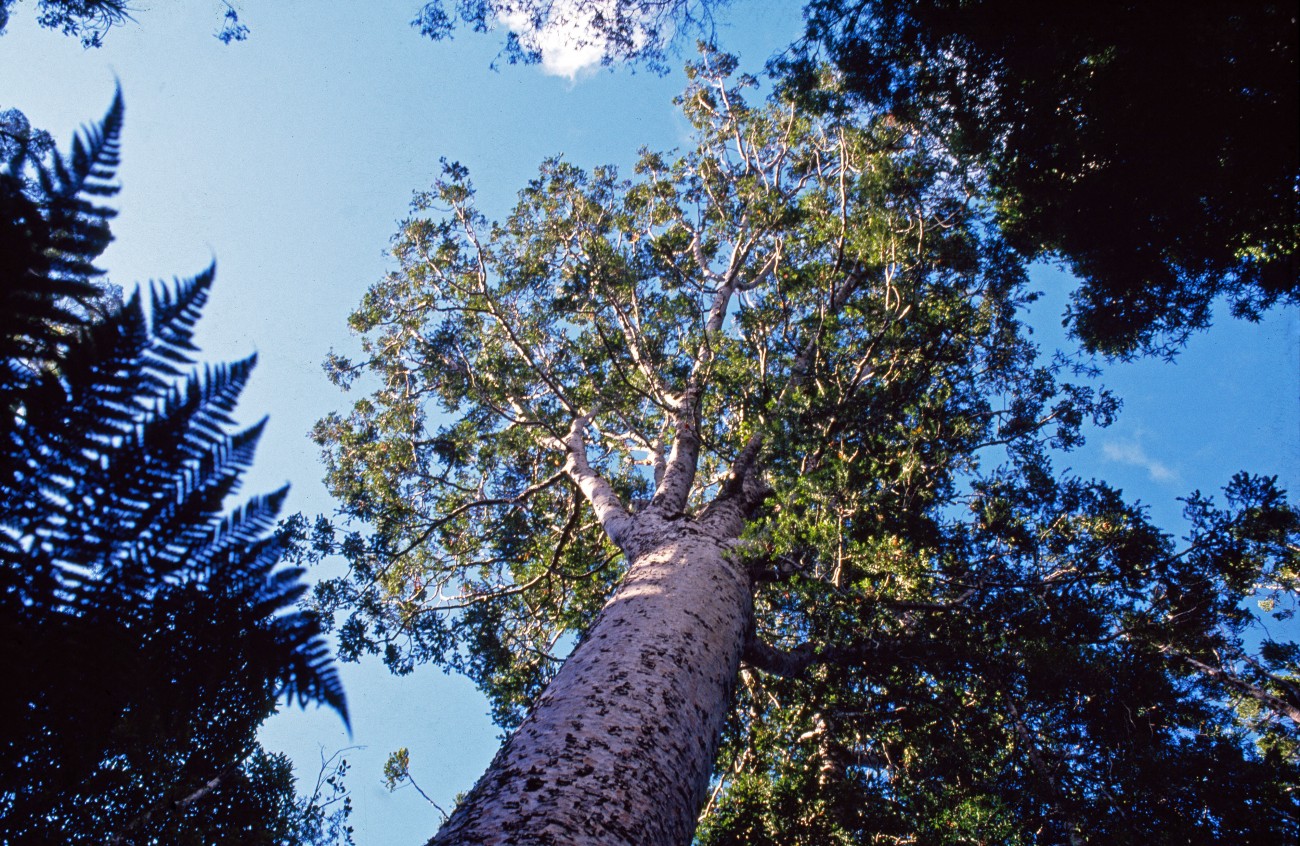
The massive pillars rise out of the hillside as though they have always been there, sur­rounded by a reckless litter of leaf and bark; as though their powerful boughs, draped with hanging plants, have always held the sky away from the land....

Minginui’s last stand

On Waitangi weekend, 1989, the tiny central North Island town of Minginui was at the centre of a massive military operation. Troops and artillery flowed into the town in a last-ditch effort to quell a (mock) rebel uprising. The townspeople, mostly spectators in the army drama,had reason to reflect on the significance of the clash: in many ways Minginui itself is facing its darkest […]...

The amazing bee

“How doth the little busy bee, Improve each shining hour…” observed hymnwriter Isaac Watts in the 18th century. Bees are remarkable creatures, and they have captured our fascination since ancient times. Indeed, their social organisation and language skills can make them seem almost human....

New immigrants

For the last 25 million years New Zealand’s shores have been receiving a constant influx of Australian immigrants: plants and animals which have been blown across the Tasman by the prevailing westerly winds. Most successful among the travellers have been the birds, and their continuing arrival provides a bright spot on our often bleak ornithological […]...

Last of the lighthouse keepers

Automation has brought to an end the tradition of lighthouse keeping in New Zealand. By mid-1990 the switch will be complete and the manned lighthouse will be no more. Tony Reid visited four of the remaining keepers to discover what draws these people to their unique and seemingly romantic way of life....

SALUTE

Tony reid describes himself as “un­ashamedly urban in background, tastes and living skills.” Under­standably, the idea of visiting light­house keepers in some of New Zea­land’s wildest and most remote locations caused the former Listener editor some apprehension. “I was protected by luck and an Austrian photographer named Arno Gasteiger,” says Tony. “While the weather forecasts […]...

Northland’s summer that wasn’t

As rumours of gumboot shortages, washed-out highways and damp cricket matches drifted down the island, it finally dawned on sun-dazzled Wellingtoni­ans that the North was not enjoying the glorious summer weather that they were. Among the many ex­pressions of sympathy that flowed north was the suggestion that the 1990 Commonwealth Games be transferred to Wellington, […]...

Magazine

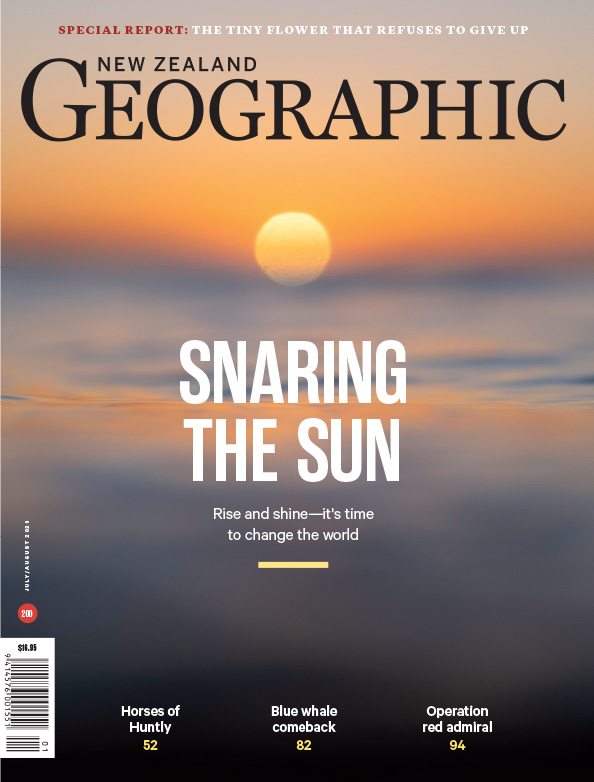
Issue 200

Jul - Aug 2026

Solar power
Horses of Huntly
Forget me not
Whaling
Red admirals

Issue 200 Jul - Aug 2026

Trending

Flora Feltham wrote an early version of our cover story when she was living on Wellington’s predator-free reserve Mana Island with her husband, then a DOC ranger. The couple spent two years on the island, often alone, spanning Feltham’s first pregnancy and 10 months of their baby’s life. An incredible honour, she says, but it […]...
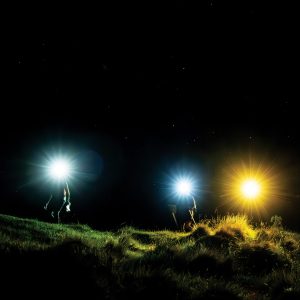
A diabolical gamemaker scatters 85 flags across the Pisa Range. He assigns each flag a certain number of points. Some are buried in brambles, others hidden in gorges. Some, fiendishly, will lead you away from fresh water. You have 24 hours, and a map. Go....
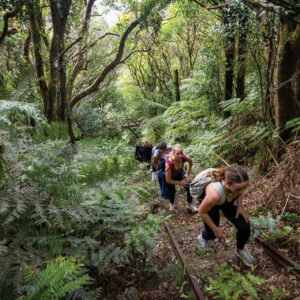
Outdoor education is at a crossroads....
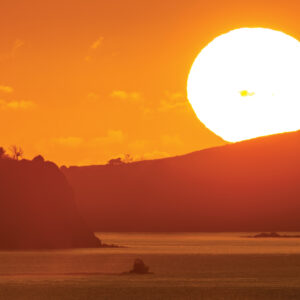
The age of fossil fuels is ending, and the world is entering the era of solar power. What matters now is how fast we make the shift....

Archive

×

Subscribe to our free newsletter for news and prizes