In 1931, during the world’s worst economic depression, New Zealand’s largest earthquake of the 20th century shook the centre of Napier to rubble. Fires then burned much of what remained. Out of the ashes, Napier’s citizens built what they hailed as “the newest city on the globe,” modelled on the latest architectural fashions: Stripped Classical, Spanish Mission and, […]...
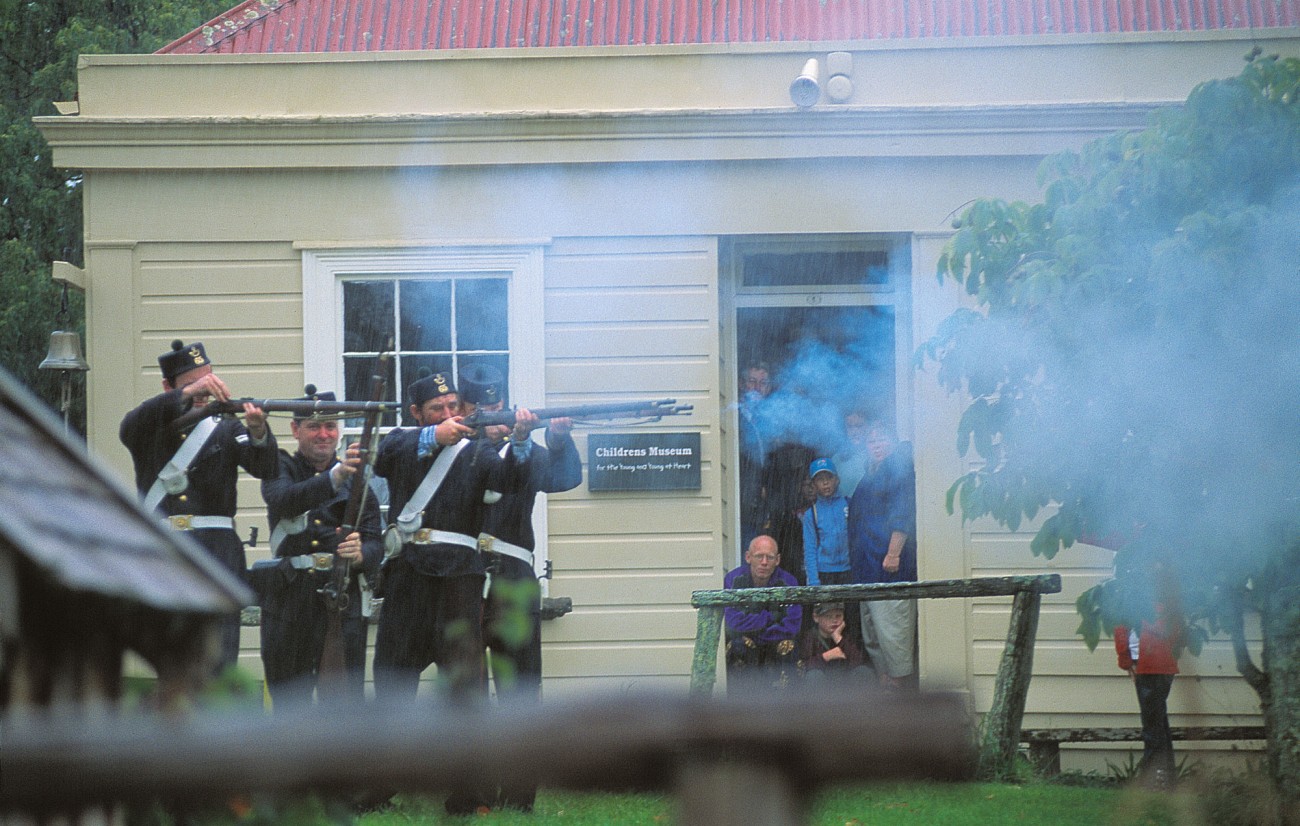
The methodist minister is declaiming before his fold—“We think of those in England, Scotland and, yes, even in Ireland, who sing the same hymns as we on this Easter Sunday. . .” —when suddenly, at our backs, there is the scuff of coarse fabric and a clatter of boots on the wooden floor. Three Red Jackets […]...
The worst experience of the Second World War for New Zealand Red Cross nurse Mona Plane was caring for the survivors of Japanese POW camps. “On one stretcher there seemed to be just a skeleton,” she recounted, recalling the day the hospital ship Oranje delivered a cargo of emaciated human figures to the naval hospital in […]...
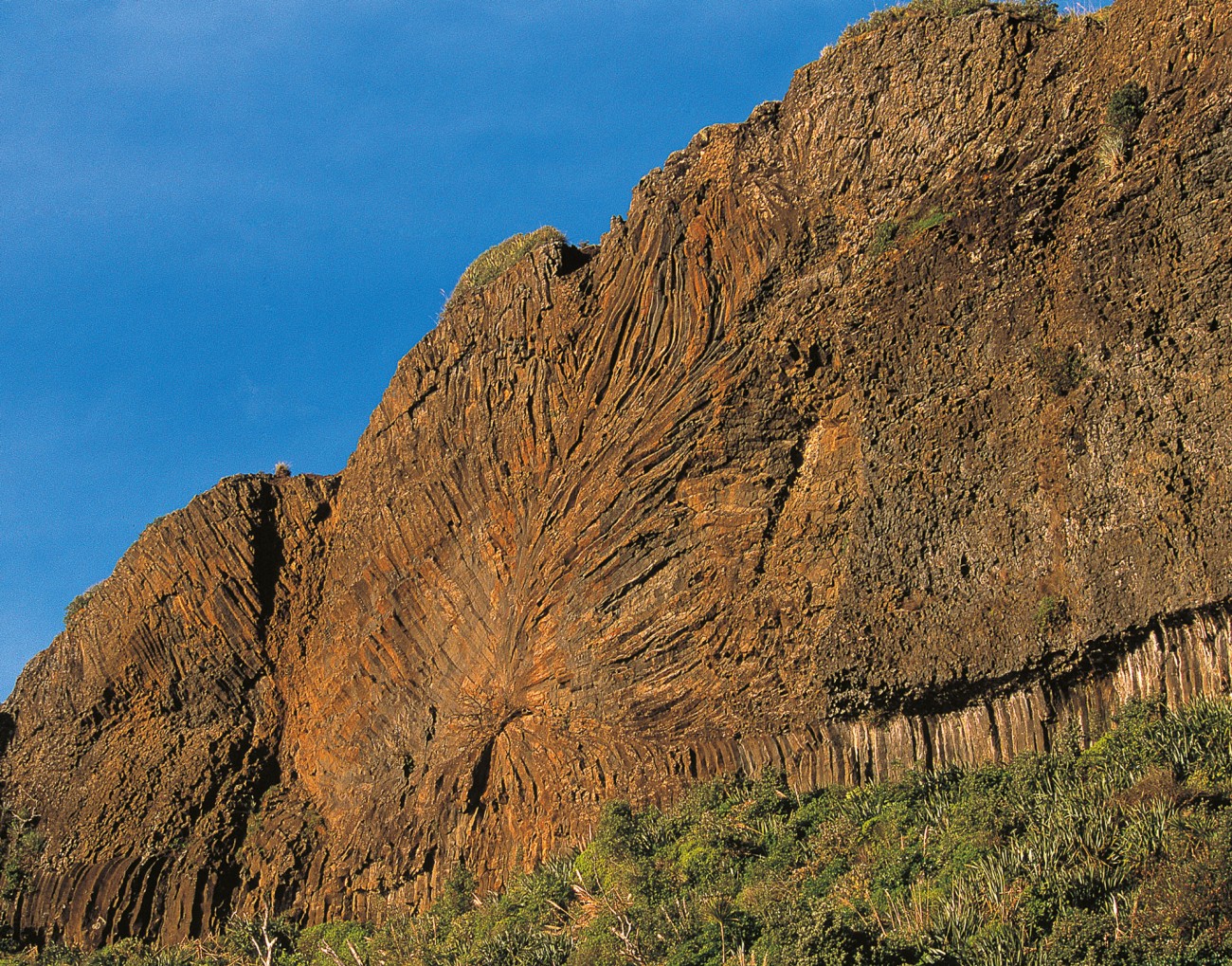
The Spectacular pillow-shaped rocks at Muriwai, on Auckland’s west coast, are an example of a volcanic product that is infrequently seen yet occurs in 70 per cent of the Earth’s crust. Pillow lavas are masses of interconnected tendrils of rock, looking something like Medusa on a bad-hair day. They result only when molten rock—at a searing […]...
New Zealand’s offshore and mainland islands are well known as sanctuaries for endangered plants and animals. But now there’s a new twist: the adoption of traffic islands to preserve rare plants.In 1997, Hutt City Council, in partnership with Excell Corporation, decided to turn Petone Esplanade, one of Hutt City’s busiest roads, into a haven for threatened […]...
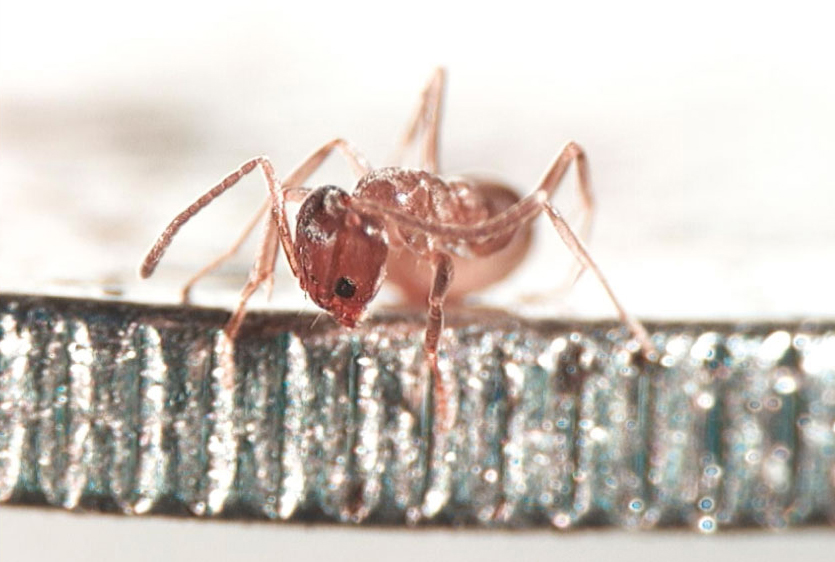
It may be small and seem like nothing more than a household nuisance, but the Argentine ant, which has recently established itself in New Zealand, has become a threat not only to the horticultural industry, but also to some indigenous species. At 2–3 mm long, Linepithema humile would fit in the eye of a needle. Yet […]...
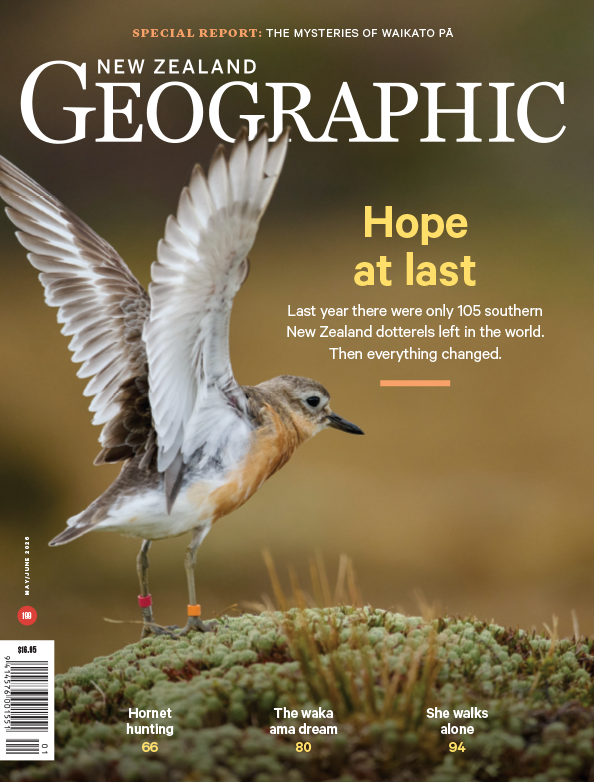
The fury of southern South Island seas is a daily hazard for the hoiho, or yellow-eyed penguin—a plucky bird which has become a New Zealand conservation icon. Although, like humans, the birds often seem hesitant to take the plunge, their food lies far out to sea and it takes extreme conditions to keep them ashore—and hungry—for the day. Despite […]...
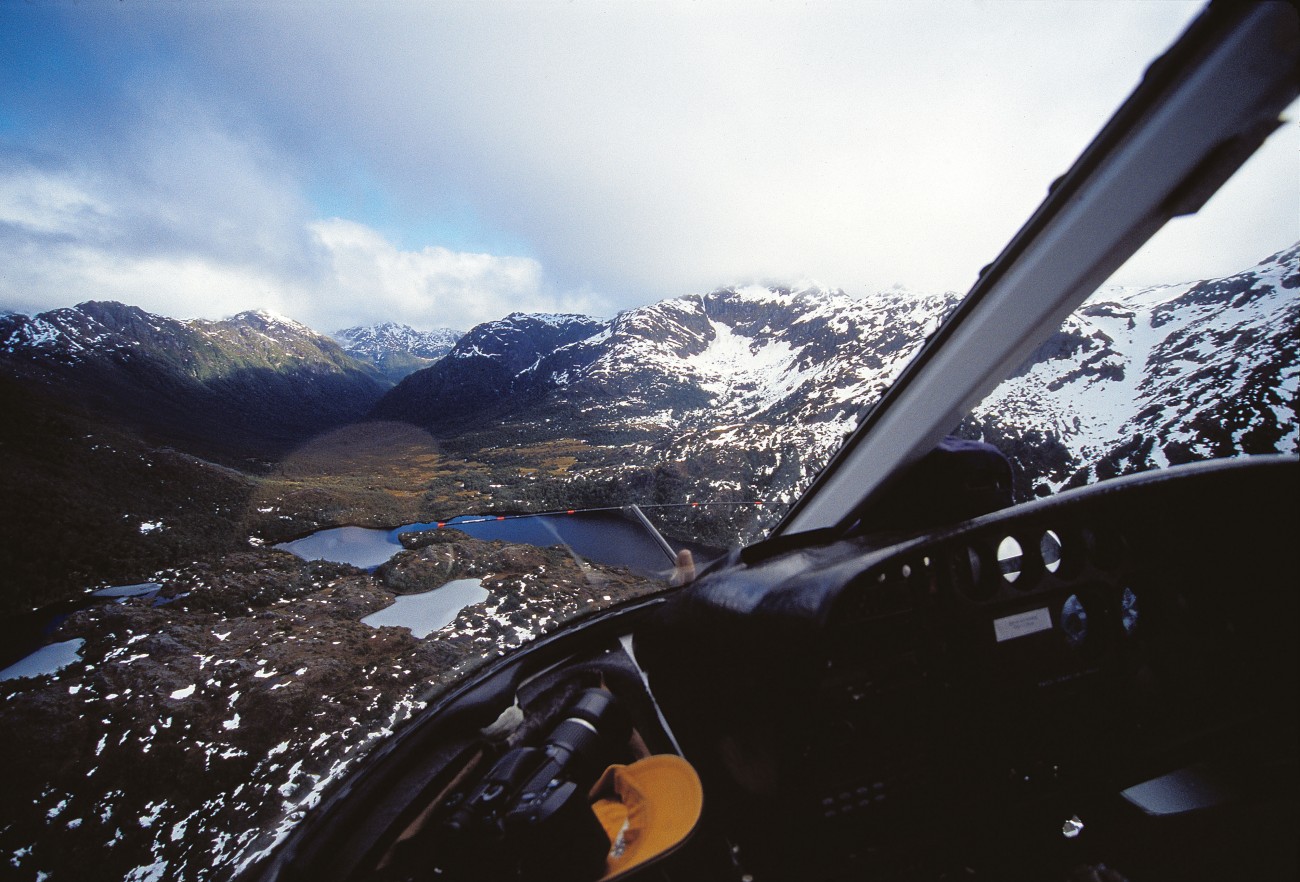
A helicopter flies over the Kakapo Lake area of the Cameron Mountains as it heads towards the drop-off point for geologist Ian Turnbull. He will spend a week recording and sampling the rocks inland from Fiordland’s West Cape as part of a project to produce new geological maps of the whole country...
Most New Zealanders know that Nelson-born Ernest Rutherford won a Nobel Prize for splitting the atom. Less well known is the fact that a man born in rural Wairarapa shared a 1962 Nobel Prize for an equally pivotal scientific breakthrough: the discovery of the structure of DNA. In 2003, the 50th anniversary of that discovery was celebrated—with Maurice Wilkins taking […]...
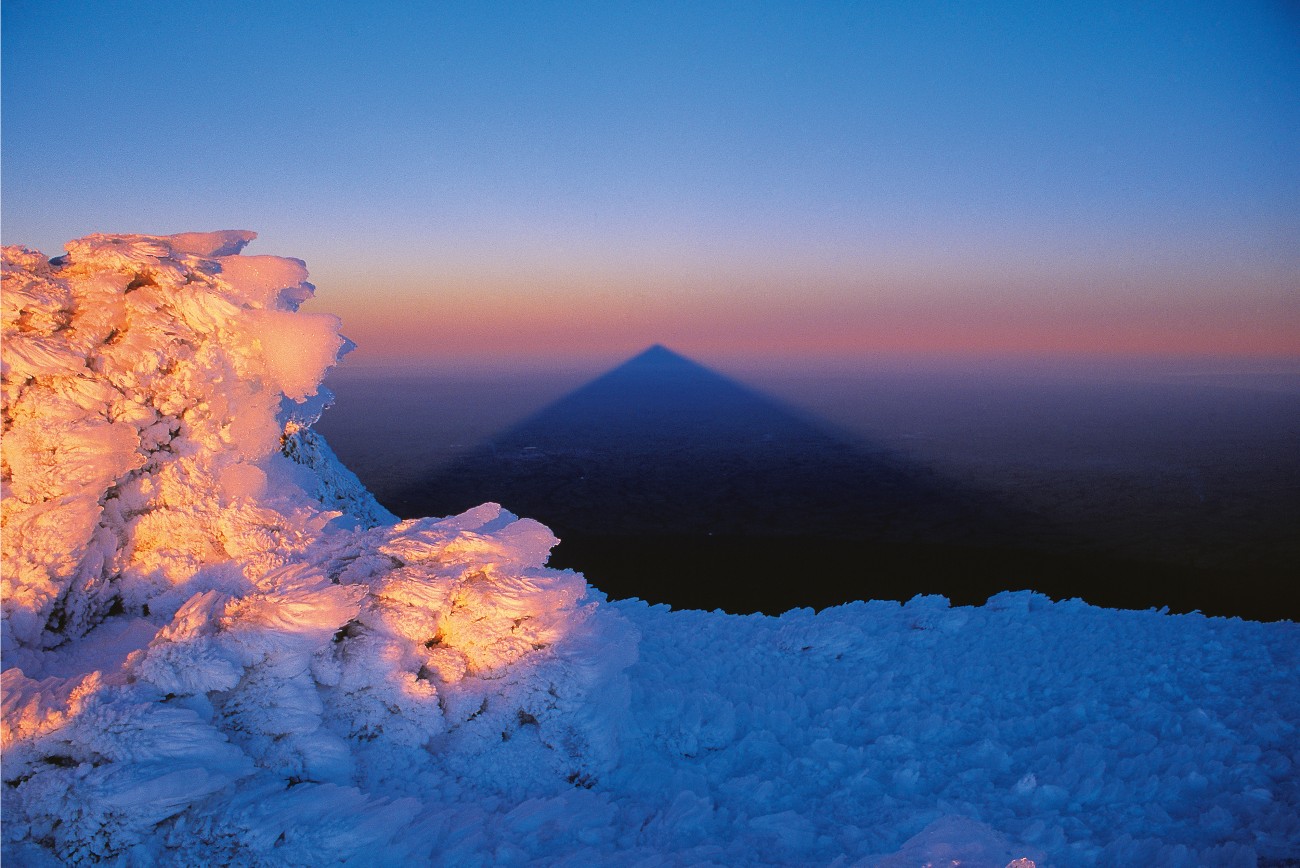
For years the mountain was no more to me than a waypoint on the flight to Auckland, and an invisible one at that. The view was always obscured by cloud, or it was night. The nearest I came to seeing it was late one afternoon. We flew right over the top. I cursed the flight path. […]...