


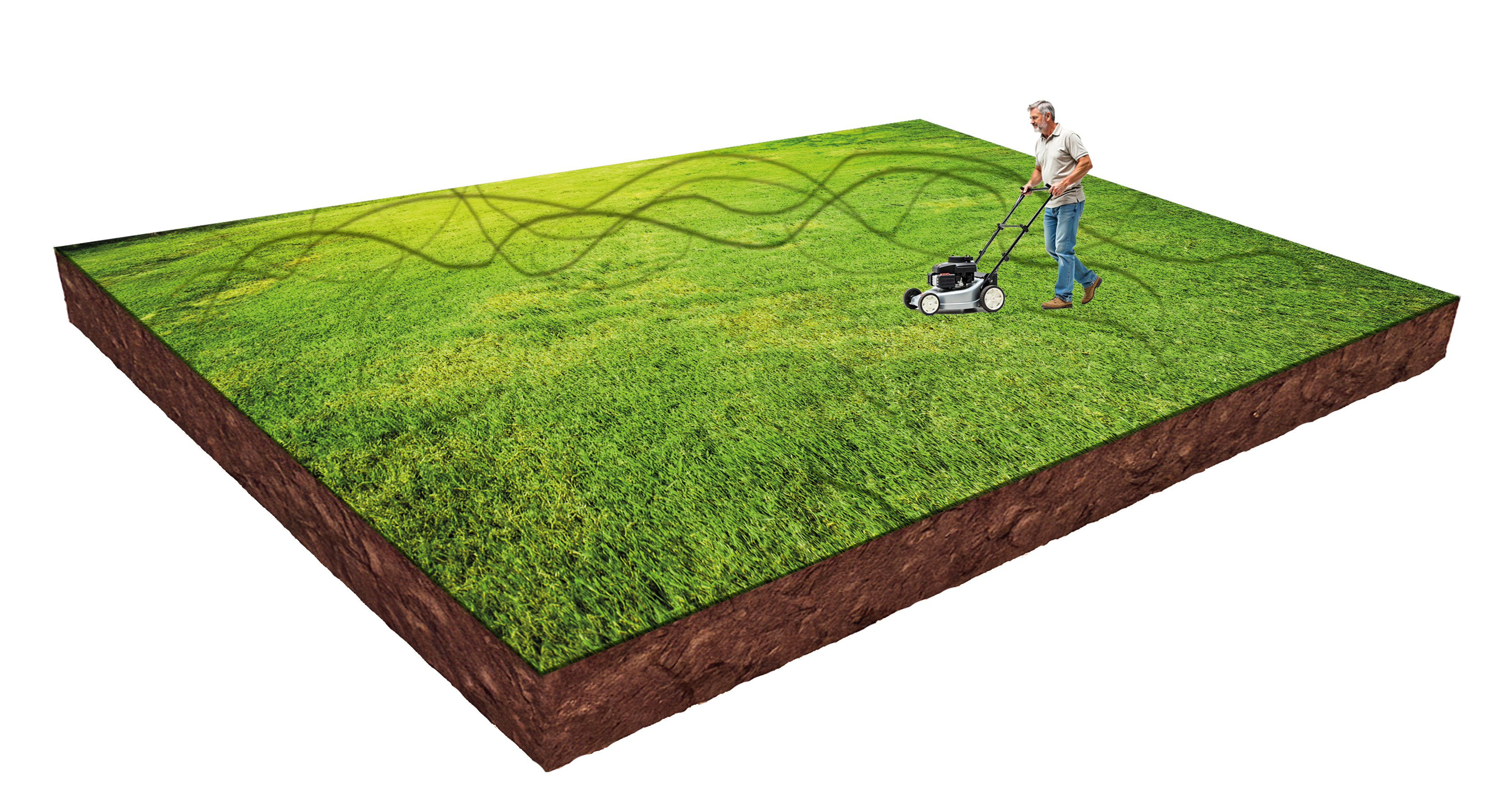
Mowing a blob shape into a field can dramatically help insects, research has found—and it’s better for pollinators than leaving a long verge alongside a mown area.
Belgian scientist Laurian Parmentier has long been thinking about the best ways to manage grasslands—paddocks, parks, nature reserves, golf courses, or lawns. These are important insect habitats, and mowing particularly affects bees and butterflies. Could there be a better way to mow?
After considering the lack of straight lines in nature, Parmentier wondered if mowing in an amoeba shape might foster insect life better, as freshly mown parts wouldn’t be too far from areas with longer growth.
Trialling the system in a three-year study, he asked some farmers to mow normally, while others mowed a carefully mapped blob corresponding to the same total area. The key: mowing a different blob every time, leaving some of the previous blob to grow. This is a challenge, says Parmentier, because the human inclination is to follow existing patterns. “So you have to really cut into the previous line, and just drive as if nothing has happened before,” he says.
Parmentier’s system results in grass of different heights, which creates a range of different habitats for insects (and a layered-haircut look rather than a buzz). After two years, he was already recording benefits: more bees and butterflies on the blob-mown fields, with a 50 per cent increase in solitary bees, which do much more of the work of pollination than honeybees.
Letting a verge grow long doesn’t have the same impact, a previous study of Parmentier’s found, because insects flourish in the variety of grass heights.
The study potentially contains lessons for New Zealand: the vast majority of native bees are solitary bees, and the country has the fifth-highest proportion of pasture in the OECD, at 40 per cent of the total land area. (Belgium comes in 18th.)
Parmentier acknowledges that his approach is radical, and that some mowers may need to shed their inhibitions before they give it a go. He has a recommendation for that, too: “In Belgium, we say, first you drink a couple of good Belgian beers and then you start.”
More by Rebekah White