




Here lies Endurance

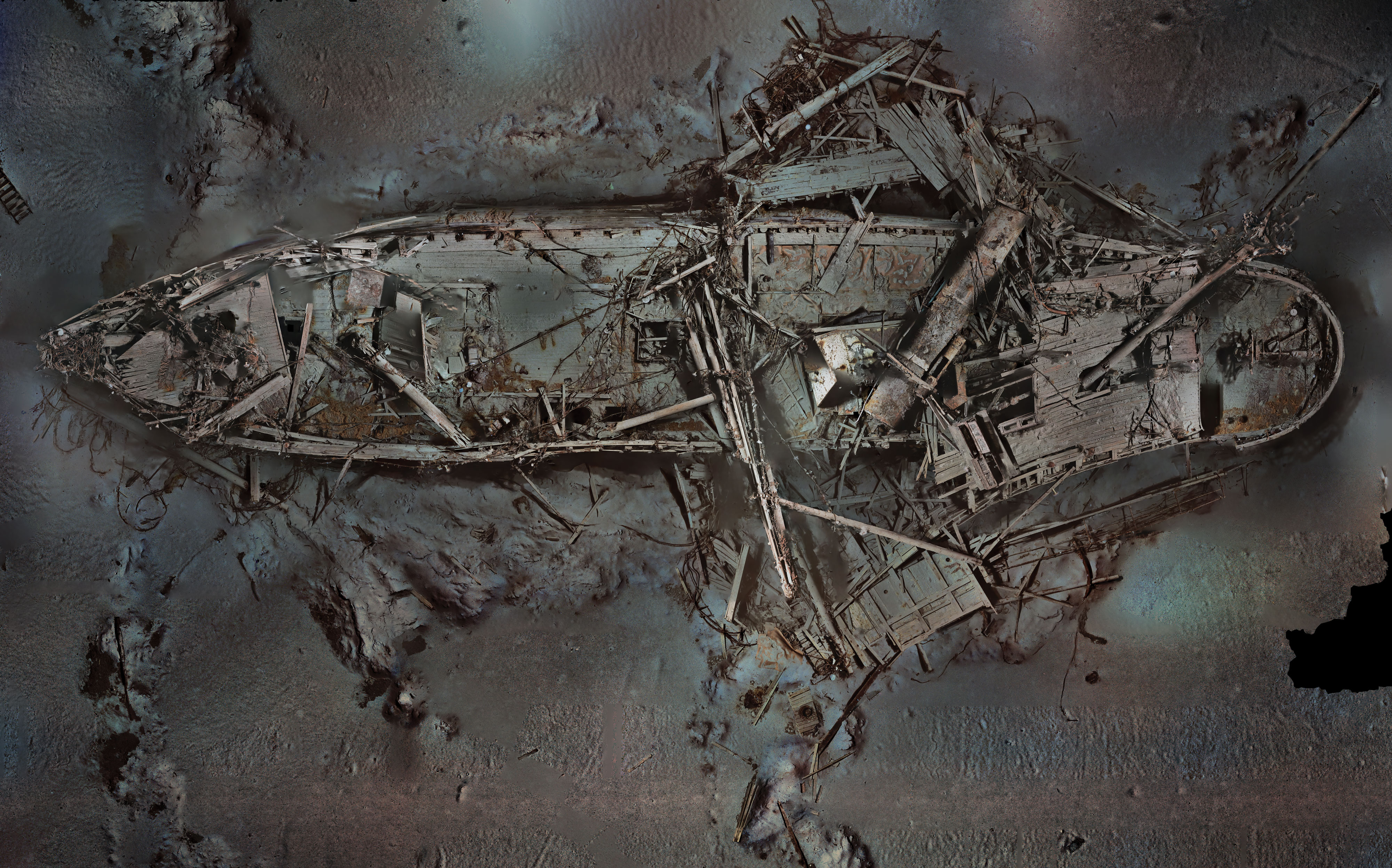
Preserved beneath three kilometres of frigid saltwater and up to five metres of floating sea ice, Sir Ernest Shackleton’s legendary ship “looks like it sank yesterday”, says Nico Vincent, an expert in ultra-deep-sea salvage who helped produce this remarkable new mosaic image.

Vincent was part of the Endurance22 team that discovered the wreck in 2022. This image, as well as a series of 3D videos, was made by stitching together some 25,000 digital scans captured by underwater robots fitted with optical laser scanners—the first time the technology had been used at such a depth.

The image shows Endurance was aptly named. After 106 years at the bottom of the Weddell Sea, black paint has come off her hull but her bolts still gleam, and artefacts from her last journey to the ice are intact, scattered across her deck.
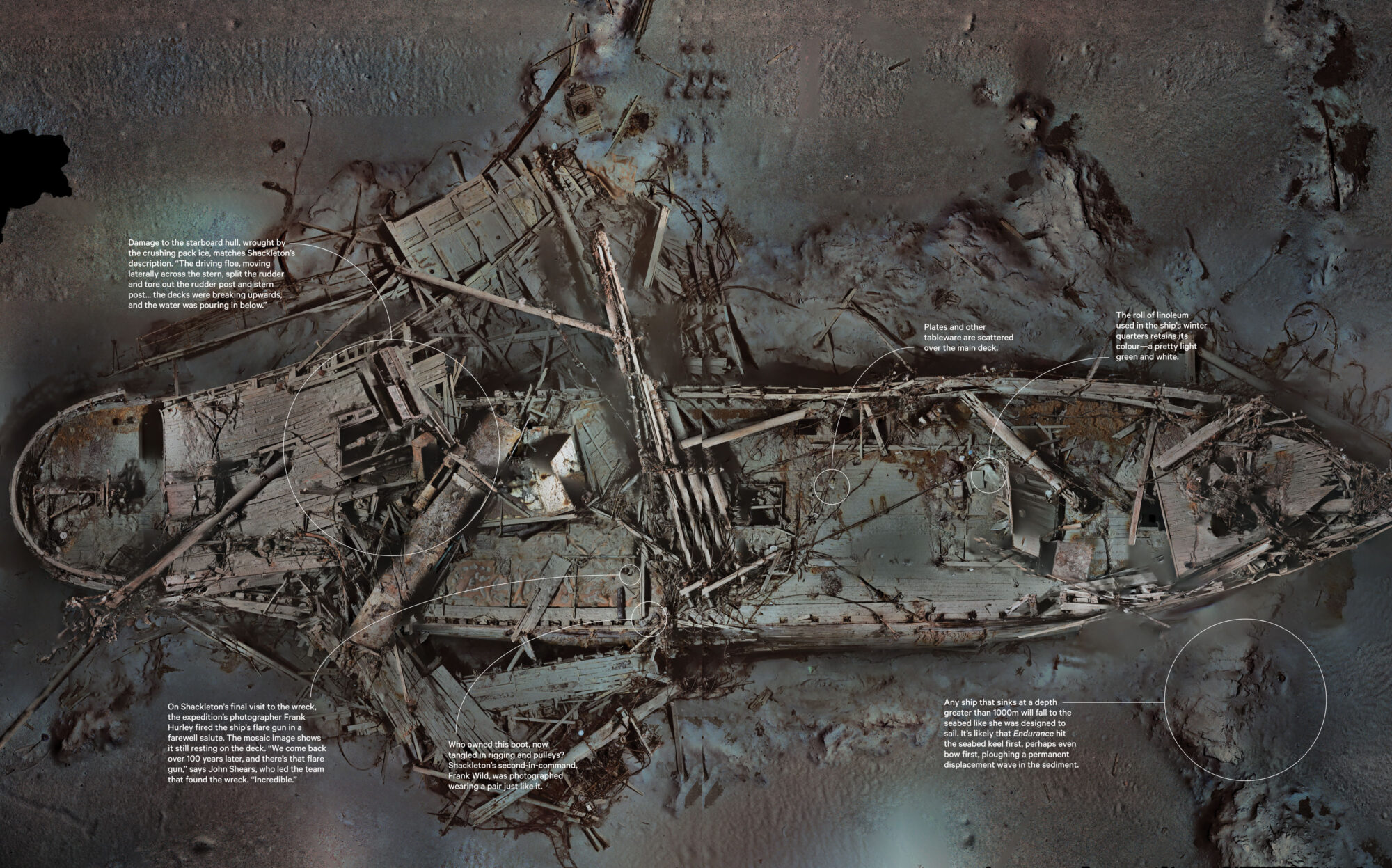
It was pack ice that sank the 44-metre ship in November 1915, squeezing and shunting her until she opened to the sea. And it was the icy water that preserved her: such cold is no habitat for the organisms that break down wood on the seafloor.

“I have found a lot of wooden wrecks in my career,” says Vincent. “This is the first time I have seen one intact.”

Famously, Shackleton and his crew were forced to abandon the ship after many miserable months trapped in the pack ice. They made it to Elephant Island, but knowing they wouldn’t last long there, Shackleton and five others set off in a small boat to find help at a whaling station on another island: South Georgia, 1300 kilometres away. All 28 men survived.

Preserved beneath three kilometres of frigid saltwater and up to five metres of floating sea ice, Sir Ernest Shackleton’s legendary ship “looks like it sank yesterday”, says Nico Vincent, an expert in ultra-deep-sea salvage who helped produce this remarkable new mosaic image.

Vincent was part of the Endurance22 team that discovered the wreck in 2022. This image, as well as a series of 3D videos, was made by stitching together some 25,000 digital scans captured by underwater robots fitted with optical laser scanners—the first time the technology had been used at such a depth.

The image shows Endurance was aptly named. After 106 years at the bottom of the Weddell Sea, black paint has come off her hull but her bolts still gleam, and artefacts from her last journey to the ice are intact, scattered across her deck.

It was pack ice that sank the 44-metre ship in November 1915, squeezing and shunting her until she opened to the sea. And it was the icy water that preserved her: such cold is no habitat for the organisms that break down wood on the seafloor.

“I have found a lot of wooden wrecks in my career,” says Vincent. “This is the first time I have seen one intact.”

Famously, Shackleton and his crew were forced to abandon the ship after many miserable months trapped in the pack ice. They made it to Elephant Island, but knowing they wouldn’t last long there, Shackleton and five others set off in a small boat to find help at a whaling station on another island: South Georgia, 1300 kilometres away. All 28 men survived.

3 FREE ARTICLES LEFT

Subscribe for $1  | 

3 FREE ARTICLES LEFT THIS MONTH


Keep reading for just $1

$1 trial for two weeks, thereafter $8.50 every two months, cancel any time

Already a subscriber?

Signed in as . Sign out