

Homecoming

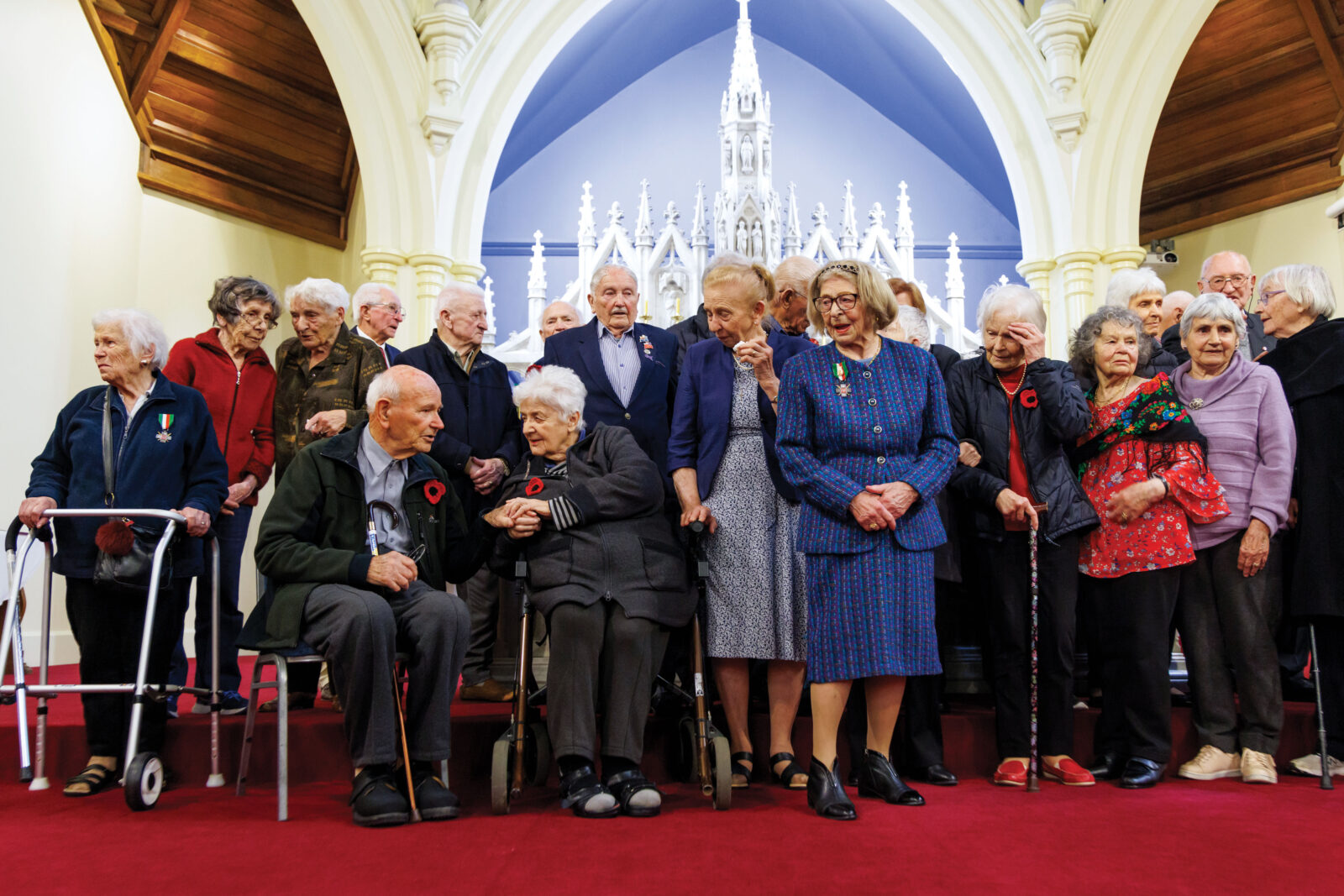
Eighty years ago, during World War II, hundreds of Polish children found safe harbour in Pahiatua. In October, the surviving children, now in their 80s and 90s, gathered to honour their lives here—and piece together those they left behind.

Here is a story about Józef Zawada. In 1939, when he was six, he was ordered onto a train with his parents and his two brothers and sent north to Arkhangelsk, in the Arctic Circle. When the train paused, his father jumped out to search for food. As the train took off, his father managed to board, but became trapped between the carriages where he clung on, and froze to death.

Here is another story about Józef: by the time he was eight, he was in Persia (now Iran), and his mother and younger brother were dead, too.

And here is another: when he was 11, he arrived in Pahiatua.

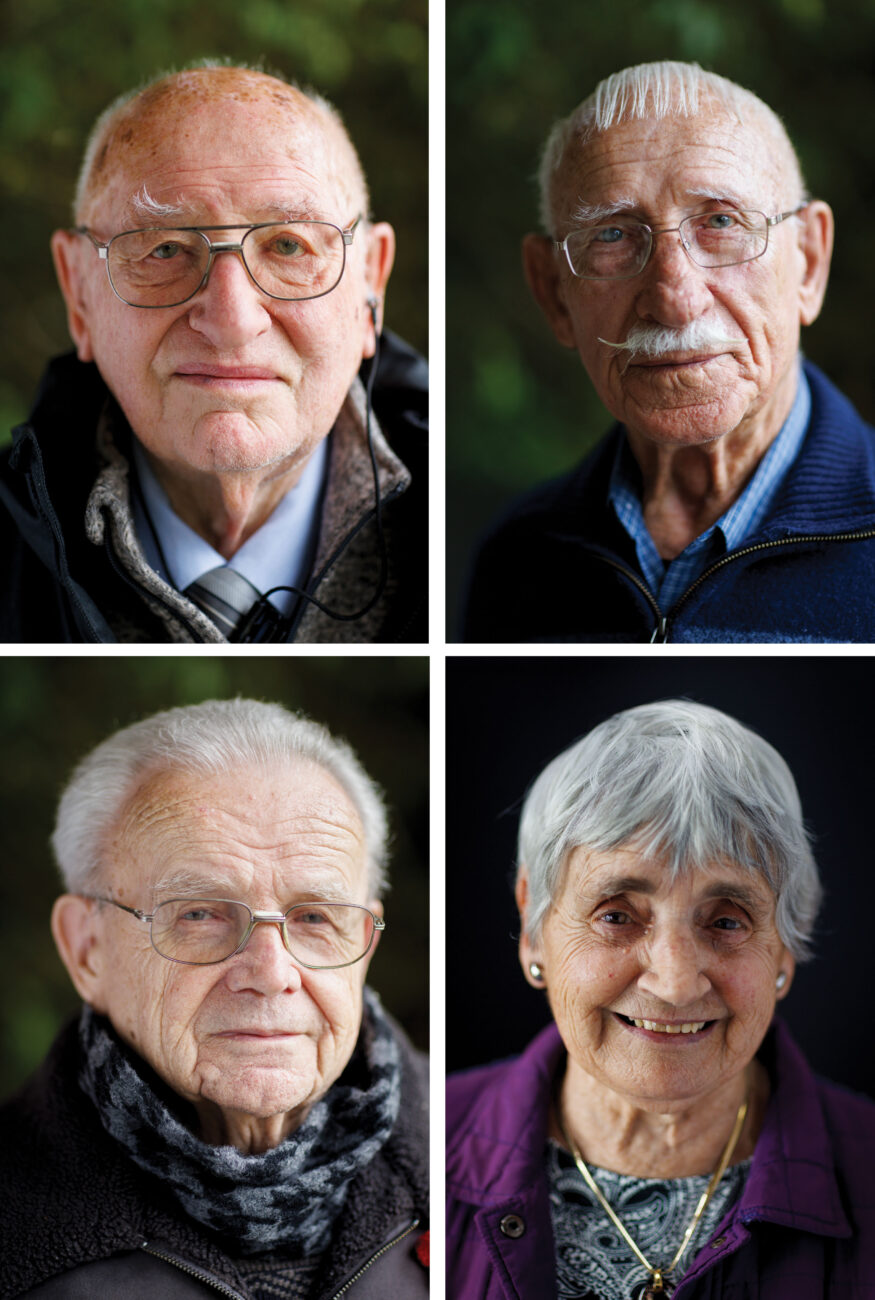
Four of the original children, clockwise from top left: Józef Zawada, Mieczyslaw Markowski, Frania Węgrzyn and Stanislaw Manterys.

This is a reunion, and so stories like Józef’s are ambient. In some ways, they are the point. At a long wooden table in a community hall in Pahiatua, people trade photo albums, books, names, anecdotes. They huddle over photographs, trying to identify faces. There are many families here today, but they are also one sprawling, incomplete family; the refugees meet up every so often for reunions that the whole town pitches in for. Many come not for the ceremonies or the Polish dumplings, called pierogi, but seeking closure, or relief. Some lack entire family lines and fill the space with the accounts of others.

We can trace all of these stories back, the fragments as well as the fulsome histories, to a great current of dread and a regime that swept across Europe 85 years ago.

*

Poland has for centuries been carved up, invaded, annexed, erased. In 1939, just before instigating World War II, Nazi Germany signed a non-aggression pact with the Soviet Union and between them the former foes sliced up Eastern Europe, including Poland, which was cleaved in two. The Soviets seized the east. Millions of Poles came suddenly under Soviet authority, either by residence or having fled east as refugees from the Nazi-occupied west. These Poles were deported in waves, an estimated 1.5 to 1.7 million of them in the space of a year.

It was only in 1990, just prior to the collapse of the Soviet Union, that undisclosed records and buried truths from this time began to unspool, including what became of thousands of Polish children expelled from their homes many decades earlier.

Girls and boys lived in separate zones at the camp, but often met up after they left to start work or further education. Many went on to marry and have children, and kept in touch with other Pahiatua families—together building up a strong and tightly interwoven Polish community in New Zealand.

The Soviet secret police had arrived armed at Polish homes in the night, rapping on the door unannounced or entering without warning to haul sleeping civilians from their beds. The fortunate were given an hour to gather belongings for their departure, wrapping themselves if they could in thick layers of clothing before being marched outside into the snow and bitter cold, ordered onto sleds and then into cattle cars and transported by train to Siberia to what we know now as The Gulag. The journey lasted weeks. The carriages were in poor condition, overcrowded and with no means of sanitation. Sometimes, a woodburner stove provided heat against the icy draughts; sticks to feed it were fetched by those daring enough to dash into the forest during a pause in travel. Guards threw meagre rations of bread into the compartments. Scores died on the journey from hunger, disease and exposure: it was 45 degrees below zero, a cold unlike any the Poles had experienced. Some gambled escape and were never heard from again. When the trains reached Siberia, the survivors were dispersed into the forests, lead and diamond mines, collective farms and forced-labour camps where they were put to work. Untold thousands could not, eventually, withstand the harsh conditions and requirements set before them and many froze to death, with their bodies claimed by unmarked graves of snow.

But in July 1941, an extraordinary blindside: Germany abrogated its pact with the Soviet Union and invaded. Moscow was forced to align with the Allies. The captive Poles were, quite suddenly, free.

Thousands left the camps and crossed the distant plains of Russia on foot, without homes to return to. Many did not survive; mothers lost in forests of snow were discovered by their children turned to ice; many were so lacking in vitamins their vision was ruined; many were too malnourished to withstand the Arctic raw. Most had mouths of teeth so decayed they loosened and shattered as they spoke. Motherless children walked for months and were followed by famine, disease and the death of their siblings. Those men who were able—albeit frail and exhausted—headed to enlist in the fomenting army to fight alongside the Allies. The others continued south toward a dim, unpromised future.

The Soviets and the British had invaded Persia and it was here that they evacuated some 120,000 of the Poles, mostly women and children.

“Two things stand out like huge beacons on my life’s horizon,” wrote Jozef Zawada in a speech at the 50th reunion, when this group were in their 50s and 60s. “The first is patriotism—love for Poland—which has been so unshakeably implanted in us… The second beacon is the life-long bond of belonging to that group of Polish children which arrived in New Zealand in 1944.”

Old cargo vessels took the refugees across the Caspian Sea to northern Persia—another harrowing journey. As people died, their bodies were disposed of overboard. Survivors were skeletal and half alive. Some fathers joined the crossing to ensure their children’s safe passage, before departing to rejoin the reserves stationed across the continent. The arrivals were processed and disinfected at the port city of Pahlavi, now Bandar-e Anzali, their small heads shaved for lice. Then it was onto trucks, and inland to refugee camps. Persians threw objects at the children, which the youngsters mistook for stones so were afraid, before realising the items were sweets. Some Polish women who arrived as caregivers married locals, or took work as translators, tailors and nurses. Many more died, leaving behind children who had to advocate for themselves. Polish cemeteries were tended by Persians. Records chronicle the hospitality, the sun, the health, the oranges. For two years, the Poles were offered asylum, diplomatic wheels turning all the while.

Years after their horrors began, thousands of children and caregivers left once more, for British colonies selected as new homes on their behalf, including Mandatory Palestine, Lebanon, British West Africa and Mexico (which, notably, took thousands of Polish refugees, the greatest share). The United States and Britain accepted none.

And on the evening of October 31, 1944, a troopship docked in Wellington, carrying returning New Zealand soldiers as well as 733 Polish refugee children and youths, mostly orphans, and 105 adult caregivers, as far now from Europe as could possibly be imagined.

It was a warm night, remembers Stanislaw Januszkiewicz, now 88. To an eight-year-old, the lights of the houses glittering in the dark hills looked like a Christmas tree.

It was, he says, wiping his eyes, “unbelievable”.

*

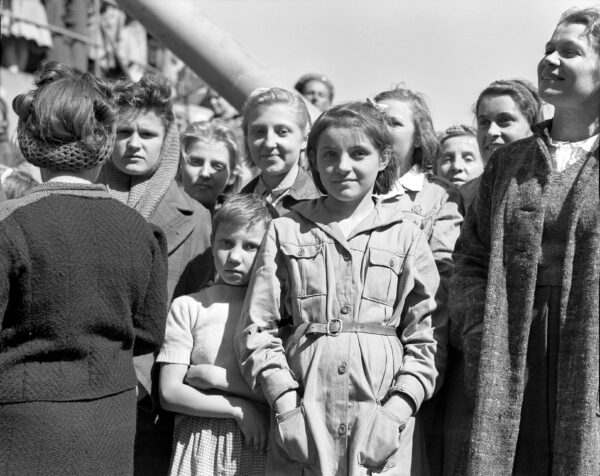
Cheering throngs lined the docks of Wellington Harbour, waving white handkerchiefs toward the disembarking veterans, the servicemen rushing into the arms of their loved ones. Then the Polish children descended the planks. The milk-fed New Zealanders were unprepared for the sight of hundreds of orphans with shaved heads and poorly fitted clothing cautiously regarding their new surroundings. The children arrived with few belongings and without items or photographs to remind them of their homeland or their parents. The crowd, initially subdued, moved to welcome these stunned arrivals on this strange new island. They have kept their pride, a reporter enunciates in the distinct British inflection of the time over flickering footage of the scenes, “but their traditions have been reduced to a will to live, a bravery, a simple gratitude for food and shelter”.

Polish historian Barbara Scrivens observed that the children were unused to seeing smiling faces. “They knew adults as serious”, she writes. “All but the youngest of them had intimate knowledge of hunger, extreme deprivation and death.” Scrivens cites a journalist for the Evening Post who, assessing their pale skin, approvingly remarked that the arrivals “were very much like New Zealand children. Yet there was a pitiful difference, and it lay in the fact that although they played about or watched visitors inquisitively, they made hardly any noise and spoke to each other in such soft, low voices that one was not even conscious that they spoke a foreign language.”

From the docks the children and their caregivers were bundled into trains that raced through the countryside. The children drank milk and held sweets in their palms. All along the line people gathered at stations, leaned against fences, or sat in parked utes, waving.

At Palmerston North, people pushed flowers through the windows and local children handed out ice cream and fruit. Stanislaw’s voice cracks at the memory. “Like heaven,” he says. “Nobody does that.”

Inside, the Polish children looked at comic books or stared out the window, the frozen white of Siberia, decimated and haunted Europe, the dry ochres of Persia, all yielding to the overwhelming green.

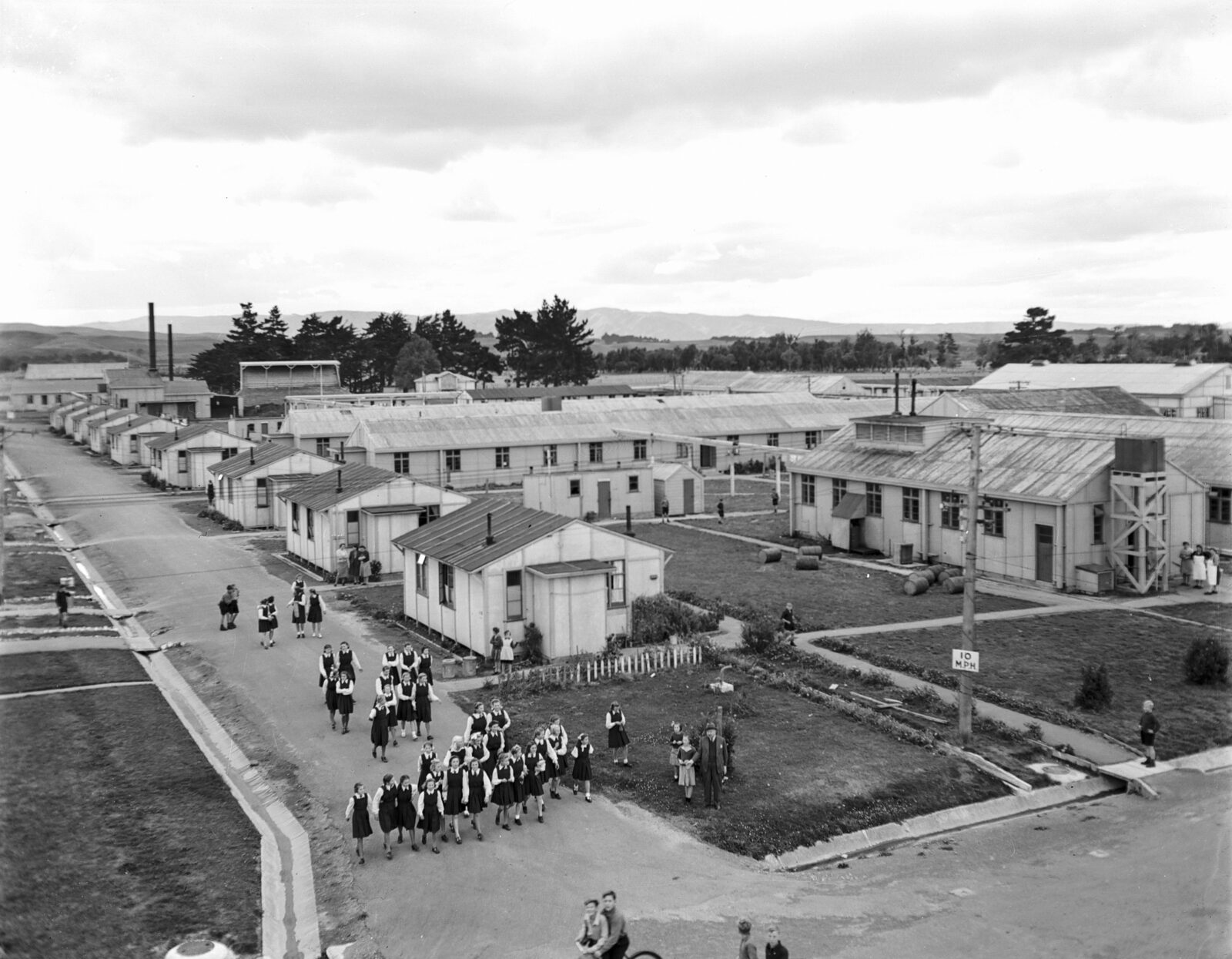
At Pahiatua, the children were piled into army trucks and transported to a former internment camp. They saw the watchtowers first. “Like a prisoner-of-war camp!” says Stanislaw. “We thought, ‘My god, we’re back where we started.’” (The next day, a bulldozer dealt to the towers.)

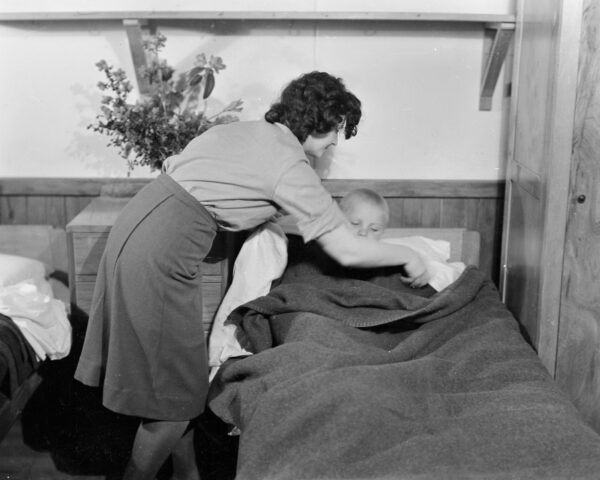
Once reassured, the children ran to their barracks. Inside, on tables next to their tidy rows of beds with their clean, ironed sheets, were vases of flowers. This was their home for the foreseeable future and a safe bookend to their years of exile. Here, they would be immortalised as Pahiatua’s Polish children.

*

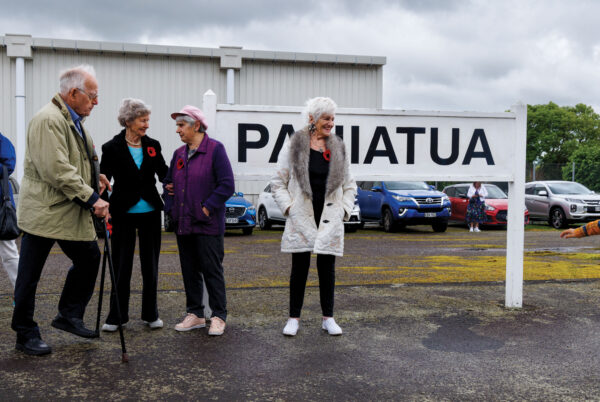
Today, a similar welcome is laid out for the return of the surviving refugees, now fewer than 30 in number and in their 80s and 90s. Pahiatua is poised to receive hundreds of guests for this reunion. From the railway station, a procession of cars and a bus depart, heading into town, past the gleaming Fonterra processing facility, past a sign reading Welcome Home Polish Children of 1944, past red and white balloons and flags tacked onto fences and a piece of plywood spraypainted with hearts and Welcome Home. Streams of uniformed children crowd the footpaths, screaming, cheering, waving streamers. A family assemble on the edge of the street in traditional Polish costume. A van painted red and white parks alongside cars draped in Polish flags and displays.

The town is bedecked. The crowds chant, “We love you”, and wave to the convoy slowly making its way through town on the same route it did all those years ago, only this time the children, now elderly, are not merely welcomed but welcomed home.

*

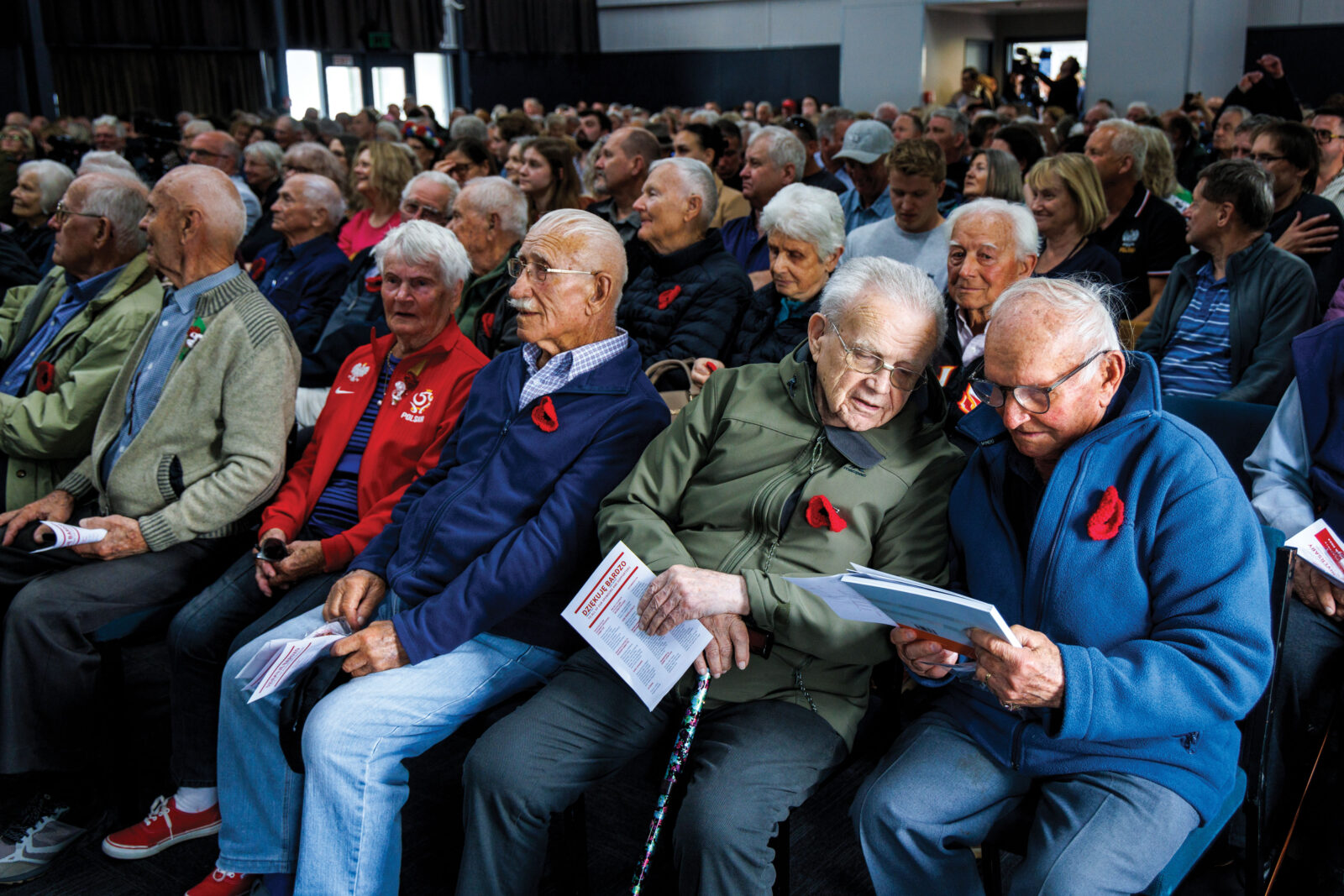
On Friday afternoon, Tararua College hosts a range of performances in its hall. First, there is a pōwhiri, and Richard Daymond, the college’s head of Māori, addresses the surviving refugees directly. They are sitting in the front row. “We call you our kaumātua, our elders,” he says. “We grew up hearing your stories. It is an honour to acknowledge our two countries and our different people.”

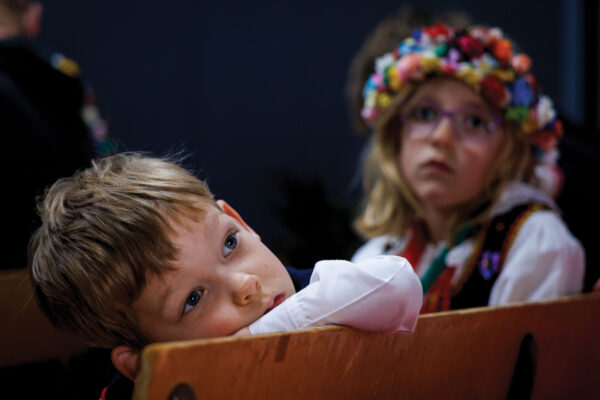
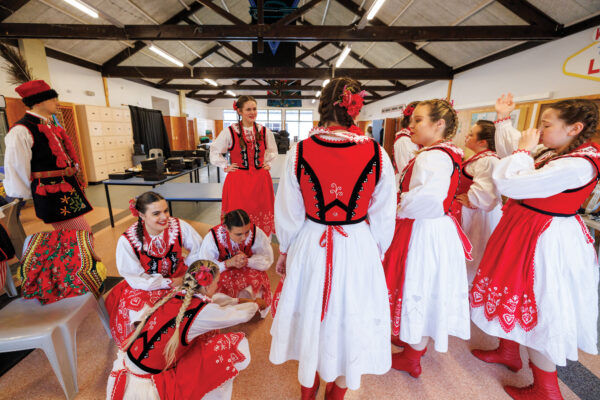
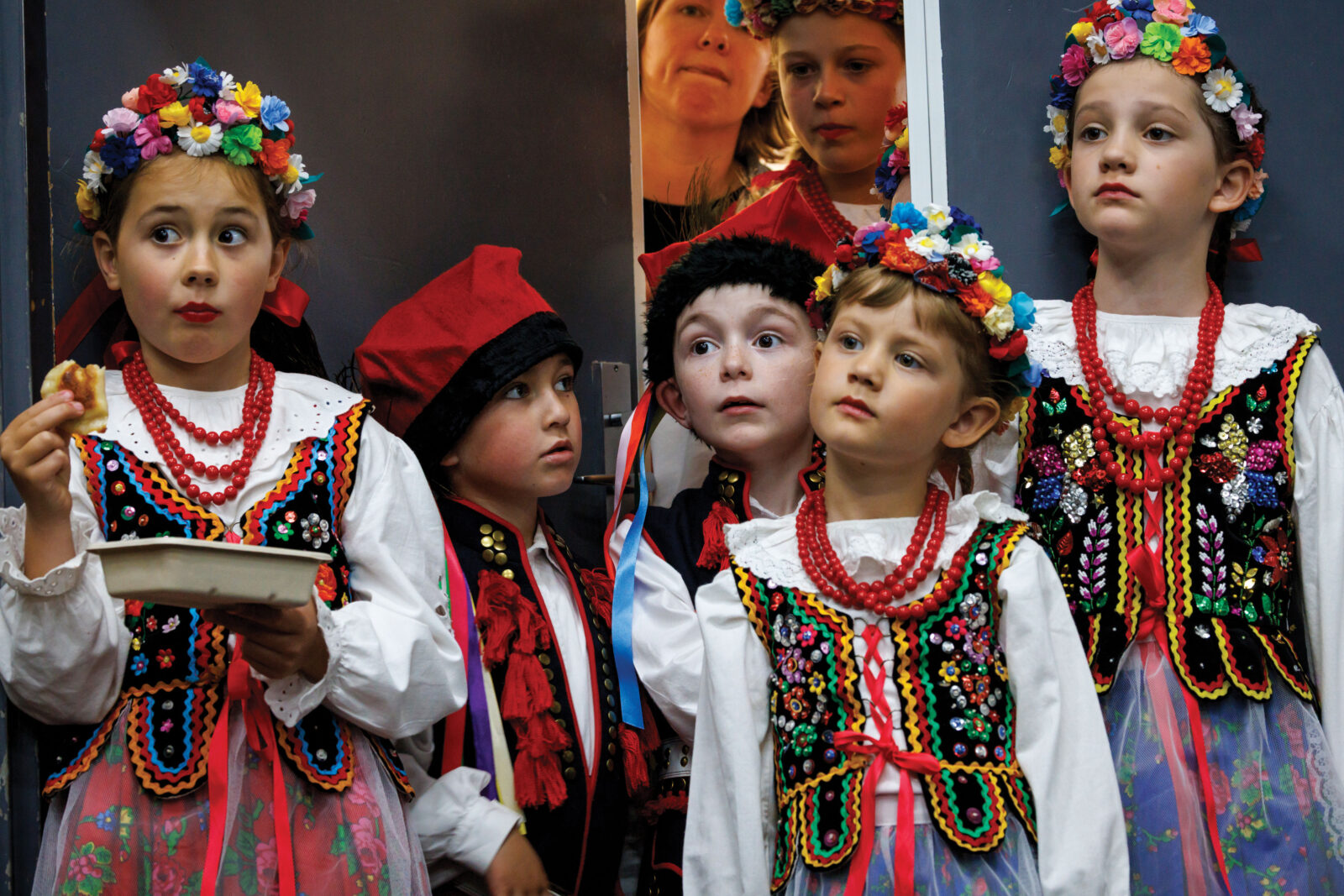
Dave Dobbyn performs ‘Welcome Home’ and ‘Loyal’. St Anthony’s School pupils present a touching play and Polish folk dancing is performed by children in their national costume, the girls in lace-up red leather boots and billowy embroidered skirts.

Antony Trukawka, seated to my right, is the son of one of the original children, Jan. His father was born in 1931. When he was 18, he moved to Greymouth with a handful of other youths from the camp to work as a coal miner. He married a New Zealand woman, had three children, built a house, and in 1967, he was killed in the state-run Strongman coal mine at Rūnanga. Nineteen men died. An inquiry later found that safety regulations had not been followed. Antony carries a photo today of his father’s Polish passport. “I’m 64. When your dad dies at six you lose…” Antony composes himself, clearing his throat. “I’ve lost my whole history.”

His father’s parents, in Poland, wanted the family to go and live there. “They were very poor, they couldn’t afford to come out.” His mother didn’t maintain the Polish side of her son’s heritage.

There are many gaps in his knowledge, Antony says. “We don’t know the story, that’s why we come to these events.”

*

Let us return to the story of Józef. He has a quiet nature and a melodic accent; he has spent his life with books and thinks in two languages. His house, on a quiet street in Lower Hutt, is considered an extended library for the Polish community. People drop off all sorts of records for his safe keeping and his nous. Józef and his peers consider themselves fortunate they ended up in New Zealand; those who went back to Eastern Europe endured years of hardship and poverty.

He is an informal historian, having been heavily involved in the documentation, archiving and preservation of the Polish children’s history, which includes the book New Zealand’s First Refugees: Pahiatua’s Polish Children, which he and his late wife, Stefania, were instrumental in assembling. He has been involved in all facets of the Polish community in New Zealand, including earlier reunions. At 91, such responsibilities are behind him.

After Pahiatua, Józef was shipped out to St Kevin’s College in Oamaru, and ended up working for Dulux Paints. Many of the Polish refugees stayed close with one another, often marrying, after they left Pahiatua. Józef, too: Stefania was one of the child refugees. She went on to lecture in English and Russian at Victoria University.

Jennifer Hanson has been learning Polish dancing since she was three, and now teaches a weekly class in Wellington.

After Stefania’s family were deported, her parents placed their children in an orphanage close to where the Polish army was forming—it was a safer option than staying together. Her parents were then imprisoned for years.

Around 1949, free again, they discovered their children were alive and in New Zealand. But they were unable to get to them until 1959, several years after Joseph Stalin’s death, when his grip over the Soviet Union had subsided. They were permitted to come to New Zealand for a year. They remained their entire lives, and are buried at a cemetery in Lower Hutt.

For the Pahiatua children, such older people were important building blocks of community.

Conrad, one of Józef and Stefania’s four children, describes his friends coming around to his house when he was growing up, pulled by the food being made inside. Friends loved his grandmother’s handmade pierogi and honey biscuits. She made everything from scratch, and tended an enormous vegetable garden that supplied the bulk of her cooking.

The family were also involved in setting up a Polish dance group, says Conrad. He and his siblings, like many of the descendants here today, grew up feeling deeply tied to the Polish community. Over the years, the shared trauma was somewhat leavened by that “pride and strength”.

The older generations love to watch the children dance, Jennifer Hanson says. “I think they’re just so proud, and they’re so happy—to see that the community is being continued by these younger ones.”
The littlies are often drawn to Polish dancing by the sparkly jackets, Jennifer Hanson says—but over time, performing at celebrations and events, the dance becomes a joyful and meaningful connection to culture. The young people pick up an understanding of history, language and community. “You can see and hear and feel a lot of the Polish culture through music.” Left to right, in all their finery: Tamara Borrie (eating pierogi), Alexander Fitzwater, Felix Schulz, Adela Paku, and Natalia Paku.

Like kids everywhere, the younger people were watching their parents. And as those adults stuck together, so did the young people, hanging out at high school, often marrying one another, celebrating birthdays and milestones together, singing.

The shoring-up of community went both ways: Brian Belczhcki, the son of one of the original children, says there’s a sense among Poles who immigrated much earlier that the refugees revitalised Polish culture here. He describes a specific song sung at funerals, which the older ones would sing slowly. “These kids came along and said, ‘Why are you singing the song like that? It’s a party song—it goes this speed.’”

But back to Józef. When his children were small, Józef lost everything, including the family home, through a bad investment with an unsavoury character. Starting again from scratch, it was the Polish community that whipped around to help them pull together a deposit on a new house. His friends were builders, electricians. Józef had lent his friends money over the years; what goes around comes around, he says. He paid the mortgage just before his retirement.

*

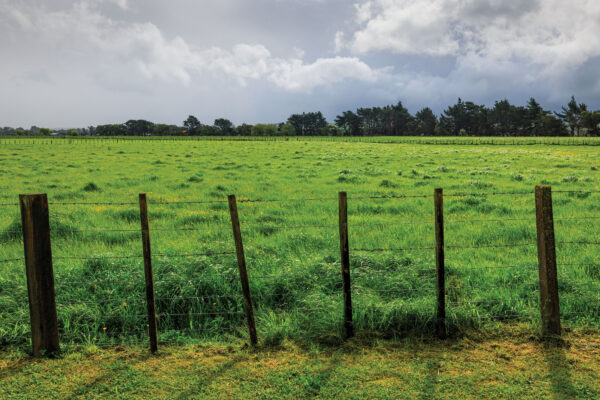
Toward dusk, we are transported on buses to the former site of the children’s camp. The farmer who owns the land has allowed us to travel across it. Many on board wish to disembark to breathe the air and feel the ground, to trace with their minds the structures where they once slept and ate. But we are forbidden from doing so. The blue ranges in the distance stand like a shadow.

Back on State Highway 2, the buses pull into a rest area where four new information boards are being unveiled. It’s difficult to see through the crowds. The plaques describe the origins of the camp—it was built on the town racecourse, a place to intern New Zealand’s “enemy aliens”, mostly Germans, Italians and Japanese, who were taken from their homes and required to work for paltry pay. A line from a famed repeat internee, German national George Dibbern, is inscribed on one of the plaques: “What was done to us we may forgive. But how can we forget what they did to themselves by interning us.”

The camp itself is gone now, but the Pahiatua children managed to build something more enduring.

When the Polish children, most of whom were Catholic, arrived at the camp, they carried stones from the Mangatainoka River to build a tiny chapel at which to worship. It endured some 30 years, then in 1975, the remaining stones were brought here and tucked into the plinth of a white marble sculpture that looks to me like an embrace.

After the ceremony, a sprawling family of at least 30 pose for photographs on the lawn. They’re in matching t-shirts; they have flown from all around the world to be here today. Some are meeting one another for the first time. In that regard it’s a happy occasion, says Jonathan Biesiek, who is hosting relatives from Chicago, San Francisco, France. But like many people I speak with at this reunion, while they watch their children dance, this family are also watching Ukraine, and Gaza, and seeing the start of a familiar, traumatic story.

*

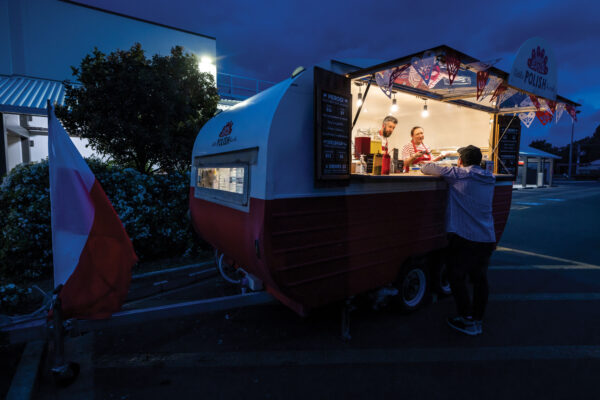
The Little Polish Kiosk is parked up at the supermarket. Aneta Naylor runs the business with her husband, feeding bustling queues over the weekend. Aneta’s babcia, or grandmother, Jadwiga Świerczyńska, was one of the original children. She was a talented seamstress, and now, when Aneta makes pierogi, she wears the aprons Jadwiga lovingly sewed for her.

In the queue, in soft drizzle, I meet Melissa O’Gorman. She is showing photos of her mother to a couple standing next to me.

Tekla Jablonska was born in 1933 and grew up on a farm that shared a border with the Soviet Union, where she was one of 13 children. In 1940, the Jewish family were deported. The Soviets arrived around 3am, breaking the door to gain entry. The family were told to get dressed and get out. They were instructed as to what they could take with them; they took some blankets. Outside, it was snowing. The family’s dogs barked incessantly, and were shot. The family were transported by horse and cart to a train with no windows or food. Tekla—her mother anglicised the name to Teresa—chronicled her memoirs over four A4 pages.

“When we arrived in Siberia, it was snowing hard. We hug around mum’s legs because we were frightened. Dad couldn’t work so we couldn’t buy food”.

Right: Józef Plewińskí, Maria Wypych, Frania Węgrzyn and Teresa Maggs.
Aneta Naylor, the granddaughter of one of the refugees, runs a business making pierogi, traditional Polish dumplings—potato and cheese, just like her Nana made. “I guess I’m channelling my inner Polish-ness,” Aneta says.

They were given a house with no doors or windows and a straw floor. Her baby sister starved to death. “I remember her crying, then one day no more crying.” Her parents died of starvation shortly after. Teresa and her remaining siblings ate grass and stole food to survive, she writes. “My brother would get rabbits and dogs, anything we could find. He had to skin the animals and bury the bones and skin in the bush because we couldn’t be seen with any food otherwise we would be shot.”

Eventually, the little girl was taken to Persia. She remembers being in hospital with malaria, tuberculosis, tapeworms and boils. When she arrived in New Zealand at 10 years old, with her sister Anna, she thought it was paradise. She was placed in another hospital in Pahiatua. “I was so malnourished and thin I couldn’t eat,” she writes. “My teeth were terrible and I had gum disease”.

At about 15, she was sent to a farm in Waipukurau to work. “I felt like a slave on that farm. The farmer got friendly with me”. She moved to Wellington, living in a hostel with other Polish girls. She remembers cleaning and polishing floors and, during that time, at 18, meeting the man she would marry, who was significantly older than her. In her abridged memoirs, she finishes by writing that she married a Greek man, and has seven children: “I am happy. I have children, grandchildren and great grandchildren.”

Melissa was her mother’s minder until Teresa’s death in 2020, at 87. She struggles with the fact her mother, who had autism and a razor-sharp memory, didn’t receive the help she needed. “I feel like Mum got the short end of the stick. She got no education. She lost her ability to speak and understand Polish, and her English was poor, too. She never came to parent-teacher interviews, she didn’t want to be a spectacle. What I see now is her feeling inadequate; she couldn’t really connect with people.”

For Melissa, hearing other Pahiatua children and their descendants recite happy, successful lives was emotionally challenging. “I felt they had more fulfilling lives. She [her mother] didn’t receive any support, counselling or financial assistance. She lost everything: her land, identity, culture, her real name. She came to a country she didn’t know, married into another culture that dominated our lives. I think she was a very strong woman, to get through what she went through.”

At one point, Melissa says, Teresa went to stay with a family in Napier, who wanted to adopt her. Teresa refused. “I think she thought that meant she wouldn’t be Polish anymore.” The mother gave her a box of jewellery. Back in Pahiatua, the other girls stole it. Another time, Teresa got a hiding after sticking up for her sister Anna who was being teased, Melissa says.

“When we were at Pahiatua museum, a woman in her 60s was saying, ‘Wow, they came here and had a really good life.’ I looked at her and said, ‘Actually, it wasn’t all like that.’ And she snapped at me and said, ‘Well, I suppose there were so many of them they had to be kept in line.’ I just walked away.”

*

Melissa doesn’t know what became of her Aunt Anna. Teresa possessed no photos. Melissa says that when she was growing up, money was always tight, and her parents experienced profound prejudice. Her father worked on the railways and was offered a promotion, which he declined because the racial taunts were too much. He died when Melissa was small, and her mother eventually secured a Housing New Zealand house. They’d wake in the morning to find eggs stuck to their windows, the plants in her mother’s garden ripped up—acts designed to signal that as foreigners, they were unwelcome.

While the reunion is a celebration of survival, there is a pervading sense of melancholy for the many whose stories don’t neatly fit a joyful narrative.

Melissa came to Pahiatua with her husband and sister and her two children. She says she feels lost at times. She expected the reunion might help her understand more comprehensively what her mother went through. Instead, she felt quite alien. Her mother’s experience did not match those she spoke to, and the reunion was upsetting for her. “I felt there wasn’t space for the unpleasant, painful stories. I thought, I’m sitting here watching dancing and singing, and that’s nice, but they need to speak the ugly side. The ugly side has stamped so badly on my mum’s head that us kids grew up with it.

Mum brought us up in a very military style, with no sentimentality. She was very difficult. We got it. The war doesn’t end at Pahiatua. It continues on when people have children.”

When Teresa was placed in a rest home in her later years, a scan of her brain revealed large areas that were blank, Melissa says. “They said she had been very traumatised from the war, and due to that she had lost parts of her brain in her frontal lobe. It was just not there, black. Trauma changes everything, how you think and feel.”

When Teresa died, she was cremated. Her ashes are at the home of Melissa’s sister. The family can’t afford to buy a headstone or a memorial plaque. Nor does Melissa’s father have one; her mother couldn’t afford it, either.

So here, instead, is a story about Teresa. Melissa remembers her mother drawing beautiful pictures for her when she was small, of little houses that reminded her of Poland. “She’d make me dresses out of her old ones,” she says. “She crocheted me a little jacket. I still have her sewing box. I pull it down sometimes and have a cry.”

Eighty years ago, during World War II, hundreds of Polish children found safe harbour in Pahiatua. In October, the surviving children, now in their 80s and 90s, gathered to honour their lives here—and piece together those they left behind. (more…)

3 FREE ARTICLES LEFT

Subscribe for $1  | 

3 FREE ARTICLES LEFT THIS MONTH


Keep reading for just $1

$1 trial for two weeks, thereafter $8.50 every two months, cancel any time

Already a subscriber?

Signed in as . Sign out