

After the flood

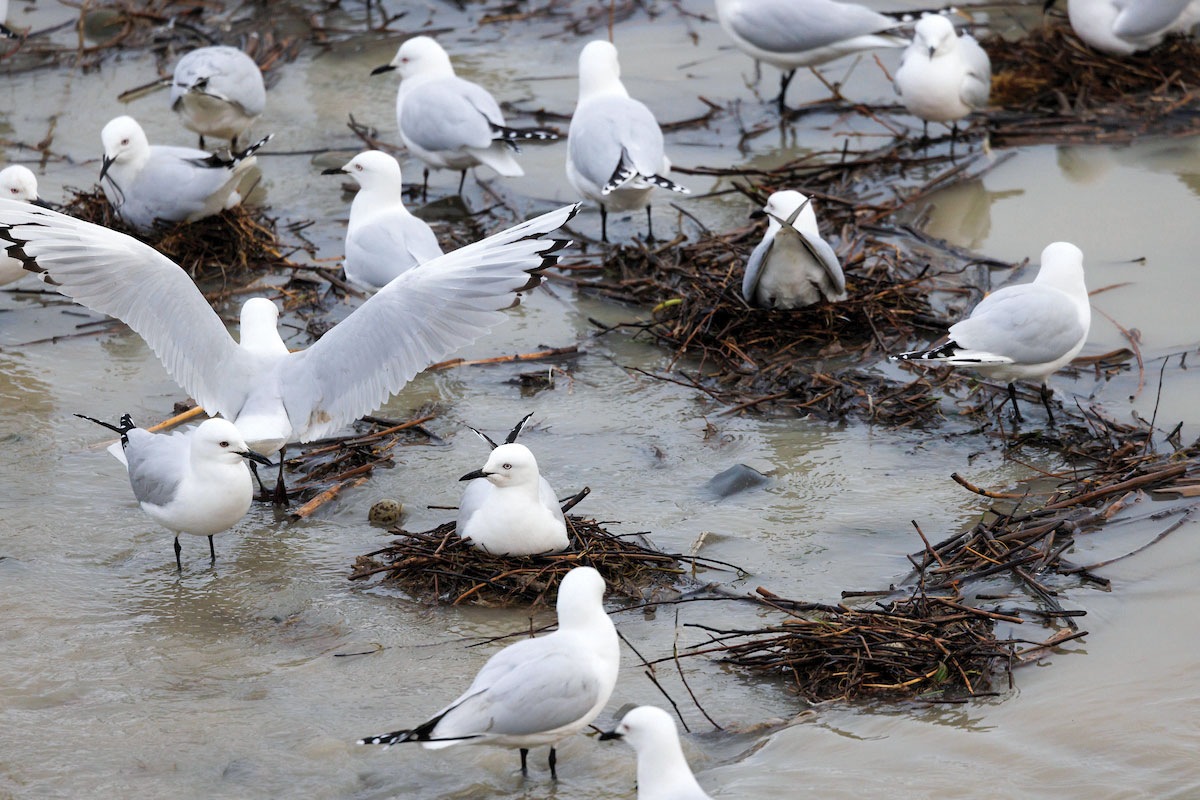
In the spring of 2018, for a feature we published in Issue 155, Richard Robinson photographed endangered tarāpuka, black-billed gulls, busily raising chicks at the Hakatere River near Ashburton. He dropped in on the colony again in early October, wondering how they’d come through the floods that had left 50 homes in South Dunedin red-stickered.

The birds nest on the flats of a braided river: floods have always been a part of their story. But historically, the floods tend to hit during winter. This time, the waters rose when the breeding season was cranking. The colony was swamped.

“Heartbreaking,” Robinson says. “Straight away I could just see eggs out of the nests, washed away, on the stones.” Other nests, which had been built on lower ground, were gone completely. He couldn’t see a single chick. The adults seemed intent on staying put: some sat on nests that rose like islands from the flood, others were rebuilding, bickering, courting. It was the second flood this breeding season. And soon, the birds may have yet another threat to contend with.

Right now, Robinson is one of many New Zealand Geographic contributors deeply worried about the new, devastating strain of bird flu swooping our way. Robinson’s photographs of the Bounty Islands open Bill Morris’s feature about the virus, on page 34. With the flu already brewing in Antarctica, these subantarctic islands, so chocka with life, could be hit hard—and function as a handy stepping-stone to mainland Aotearoa.

Robinson is thinking of the black-billed gulls, and the red-billed gulls he showcased a couple of issues back. He’s thinking of our albatrosses, our penguins and fairy terns, our sea lions. “These animals, the populations are so stressed already. This could really be the nail in the coffin for them.”

The only thing readers can do at this stage is keep an eye out for multiple sick or dead birds—even domestic or exotic species such as ducks or chooks—and report such finds to the Ministry for Primary Industries. If this virus gets here, we need to clock it, fast. And then our native birds and marine mammals will need an awful lot of luck.

In the spring of 2018, for a feature we published in Issue 155, Richard Robinson photographed endangered tarāpuka, black-billed gulls, busily raising chicks at the Hakatere River near Ashburton. He dropped in on the colony again in early October, wondering how they’d come through the floods that had left 50 homes in South Dunedin red-stickered.

The birds nest on the flats of a braided river: floods have always been a part of their story. But historically, the floods tend to hit during winter. This time, the waters rose when the breeding season was cranking. The colony was swamped.

“Heartbreaking,” Robinson says. “Straight away I could just see eggs out of the nests, washed away, on the stones.” Other nests, which had been built on lower ground, were gone completely. He couldn’t see a single chick. The adults seemed intent on staying put: some sat on nests that rose like islands from the flood, others were rebuilding, bickering, courting. It was the second flood this breeding season. And soon, the birds may have yet another threat to contend with.

Right now, Robinson is one of many New Zealand Geographic contributors deeply worried about the new, devastating strain of bird flu swooping our way. Robinson’s photographs of the Bounty Islands open Bill Morris’s feature about the virus, on page 34. With the flu already brewing in Antarctica, these subantarctic islands, so chocka with life, could be hit hard—and function as a handy stepping-stone to mainland Aotearoa.

Robinson is thinking of the black-billed gulls, and the red-billed gulls he showcased a couple of issues back. He’s thinking of our albatrosses, our penguins and fairy terns, our sea lions. “These animals, the populations are so stressed already. This could really be the nail in the coffin for them.”

The only thing readers can do at this stage is keep an eye out for multiple sick or dead birds—even domestic or exotic species such as ducks or chooks—and report such finds to the Ministry for Primary Industries. If this virus gets here, we need to clock it, fast. And then our native birds and marine mammals will need an awful lot of luck.

3 FREE ARTICLES LEFT

Subscribe for $1  | 

3 FREE ARTICLES LEFT THIS MONTH


Keep reading for just $1

$1 trial for two weeks, thereafter $8.50 every two months, cancel any time

Already a subscriber?

Signed in as . Sign out