

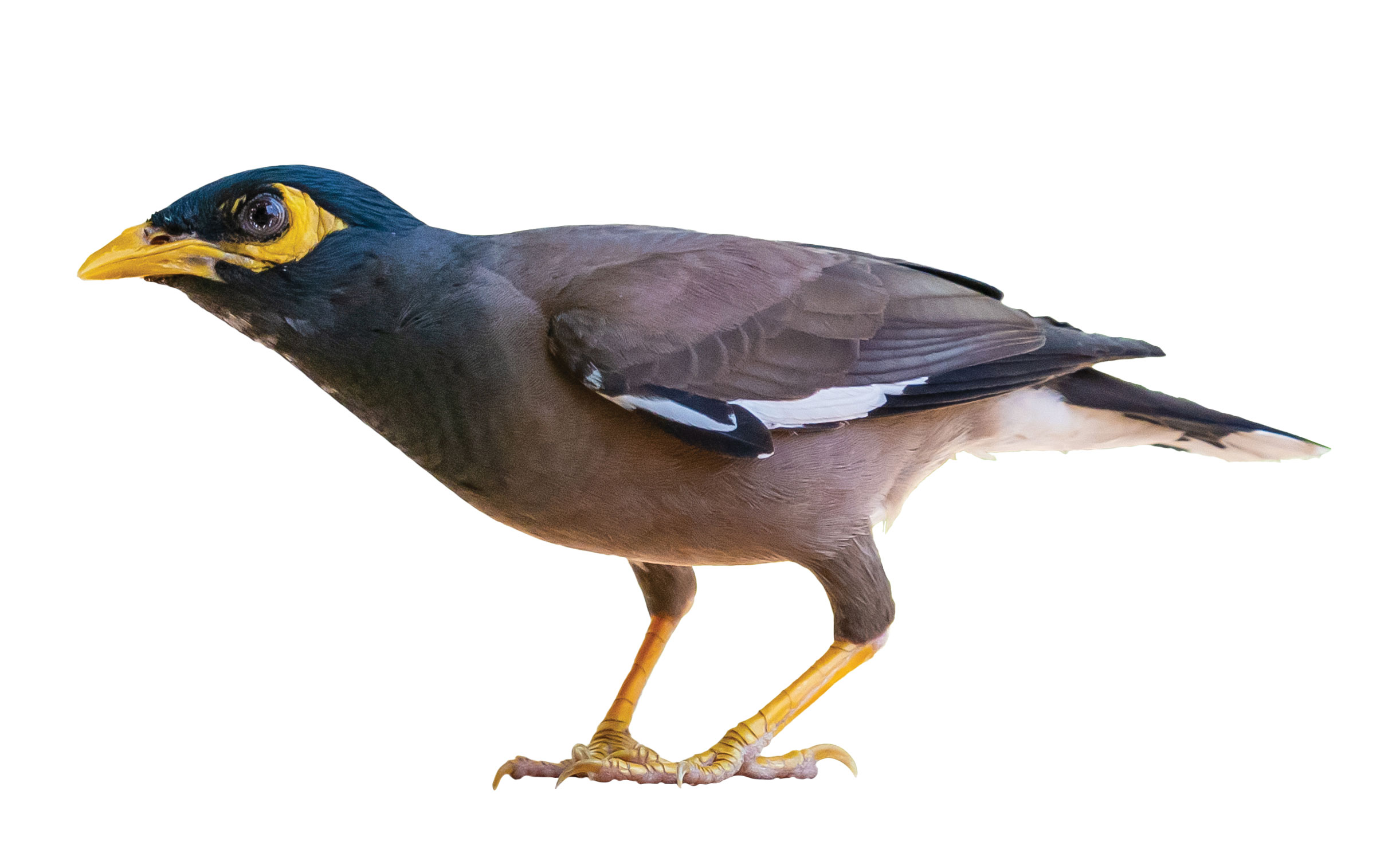
Bully bird incoming

Climate change will help one of the most pernicious pest birds in the country spread south, a new study has found—and reports from Christchurch suggest it’s already happening.

Common mynas, native to India, were introduced to New Zealand in the late 1800s in an attempt to control agricultural pests. Introductions in the South Island mostly failed, but the bolshie birds became well established in the upper North Island.

Now, the mynas are themselves agricultural pests. The birds are also fiercely territorial and destroy the eggs of other species, including natives.

In a paper published in the journal Biological Invasions, University of Auckland PhD student Kamolphat Atsawawaranunt looks at ecological variables such as rainfall, season length and tree cover to unpick how much mynas had to adapt to thrive here, and where they might be able to live as the weather warms.

Green is go—for mynas, that is. Right now the South Island is mostly too cold for the pests. This map shows where the birds may be able to live based on a temperature rise of 2.4 °C by 2085 and increased human population density projections.

He maps three future scenarios, according to a range of climate pathways—and in all of them, the mynas spread south.

Birdwatchers in Christchurch report the southern invasion is already under way.

Ornithologist Peter Langlands has been keeping an eye on a number of birds in the city—he suspects these mynas are either unwanted pets or hitchhiked in on container ships. “It’s probably just by accident that they haven’t already spread down here in greater numbers,” he says. “There’s really nothing stopping them from taking off, especially with the winters being milder.” He’s nicknamed the first one he spotted “Houdini”.

The Canterbury Regional Council has engaged a contractor to cull the mynas it is aware of, and Langlands has set up a Facebook page to collate sightings.

Climate change will help one of the most pernicious pest birds in the country spread south, a new study has found—and reports from Christchurch suggest it’s already happening.

Common mynas, native to India, were introduced to New Zealand in the late 1800s in an attempt to control agricultural pests. Introductions in the South Island mostly failed, but the bolshie birds became well established in the upper North Island.

Now, the mynas are themselves agricultural pests. The birds are also fiercely territorial and destroy the eggs of other species, including natives.

In a paper published in the journal Biological Invasions, University of Auckland PhD student Kamolphat Atsawawaranunt looks at ecological variables such as rainfall, season length and tree cover to unpick how much mynas had to adapt to thrive here, and where they might be able to live as the weather warms.

Green is go—for mynas, that is. Right now the South Island is mostly too cold for the pests. This map shows where the birds may be able to live based on a temperature rise of 2.4 °C by 2085 and increased human population density projections.

He maps three future scenarios, according to a range of climate pathways—and in all of them, the mynas spread south.

Birdwatchers in Christchurch report the southern invasion is already under way.

Ornithologist Peter Langlands has been keeping an eye on a number of birds in the city—he suspects these mynas are either unwanted pets or hitchhiked in on container ships. “It’s probably just by accident that they haven’t already spread down here in greater numbers,” he says. “There’s really nothing stopping them from taking off, especially with the winters being milder.” He’s nicknamed the first one he spotted “Houdini”.

The Canterbury Regional Council has engaged a contractor to cull the mynas it is aware of, and Langlands has set up a Facebook page to collate sightings.

3 FREE ARTICLES LEFT

Subscribe for $1  | 

3 FREE ARTICLES LEFT THIS MONTH


Keep reading for just $1

$1 trial for two weeks, thereafter $8.50 every two months, cancel any time

Already a subscriber?

Signed in as . Sign out