


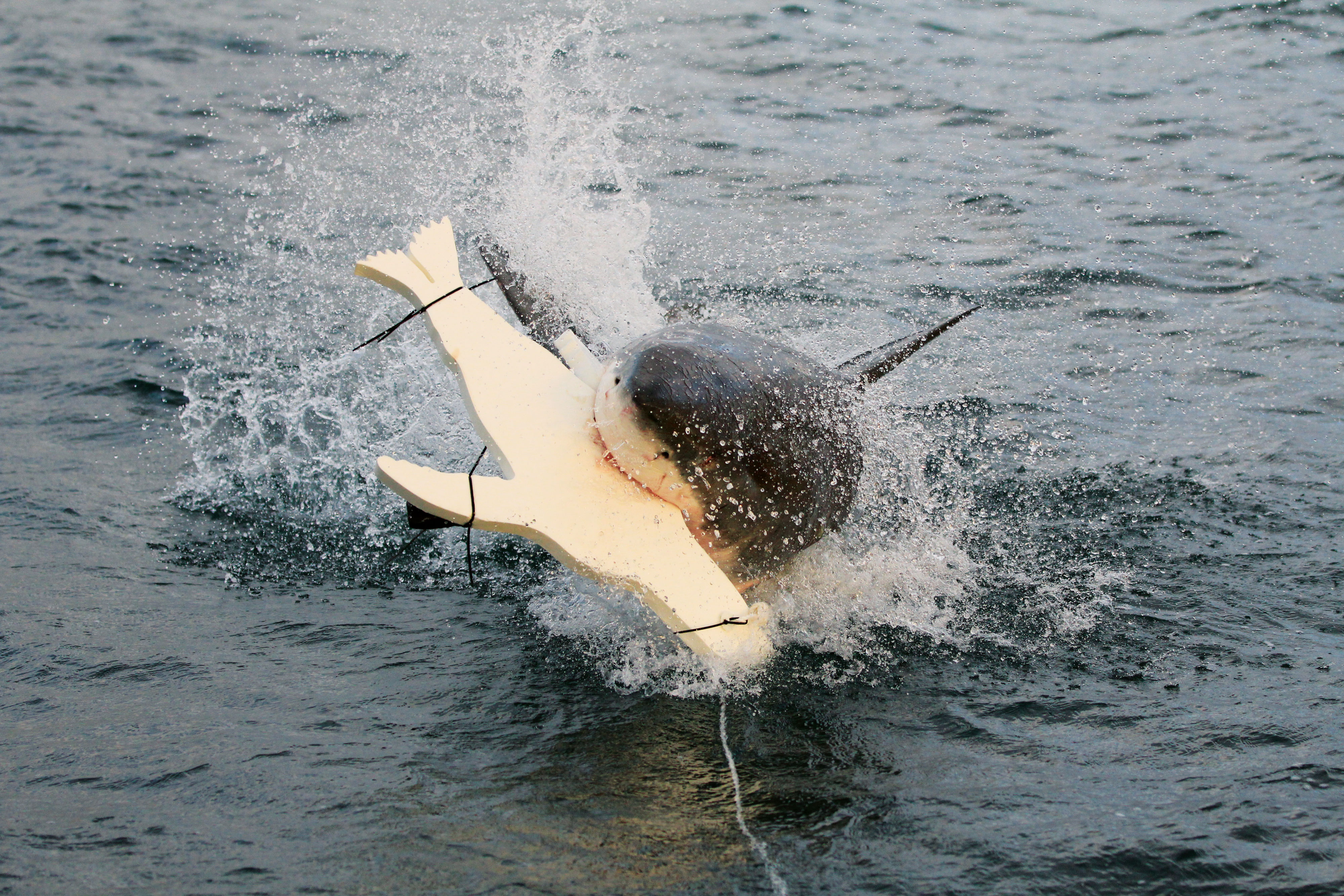
Laura Ryan was studying the visual systems of fish when a spate of shark attacks at her favourite Perth surf spot got her thinking—why do these apex predators confuse tasteless humans with delicious seals?
Great whites are by far the deadliest shark species to humans, though fatal attacks are extremely rare—there are only 59 recorded deaths in history, and we frequently share the same waters with them without incident.
These sharks also see the world in blurry black-and-white. When they look up and see a long, dark shape silhouetted against the surface, their brains can have trouble distinguishing person from prey. “This is a really difficult task if you have a shark visual system,” says Ryan, a neurobiologist at Macquarie University in Sydney.
So she and her colleagues set about making a swimmer or surfer look less like a seal. Many ocean animals use a camouflage technique called counterillumination—a form of bioluminescence where animals shine light from their bellies to help them blend in with the brighter surface when viewed from below.
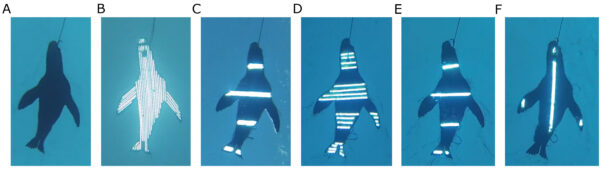
Ryan’s team stuck LED lights onto foam seal decoys and spent 500 hours towing them behind a boat off a great white hotspot in South Africa. They found that the brightest lights—brighter even than the sunlit background—and horizontal stripes of light were the most effective deterrents.
It’s a form of “dazzle camouflage”, Ryan says, an optical illusion that both breaks up an object’s outline and interferes with the shark’s ability to detect motion. But don’t go sticking glowsticks onto your surfboard or wetsuit just yet, Ryan says.
That’s because the exact brightness seems to be crucial—the sharks did attack some decoys fitted with dim lights—and the scientists need to check that the trick works when an object is still, like a surfer waiting in the line-up. They also need to make sure the lights don’t actually attract tiger or bull sharks, which see the world quite differently.
Those experiments are now under way, as is a glowed-up surfboard prototype—an invention Ryan hopes will one day protect both humans and sharks.
More by Kate Evans