


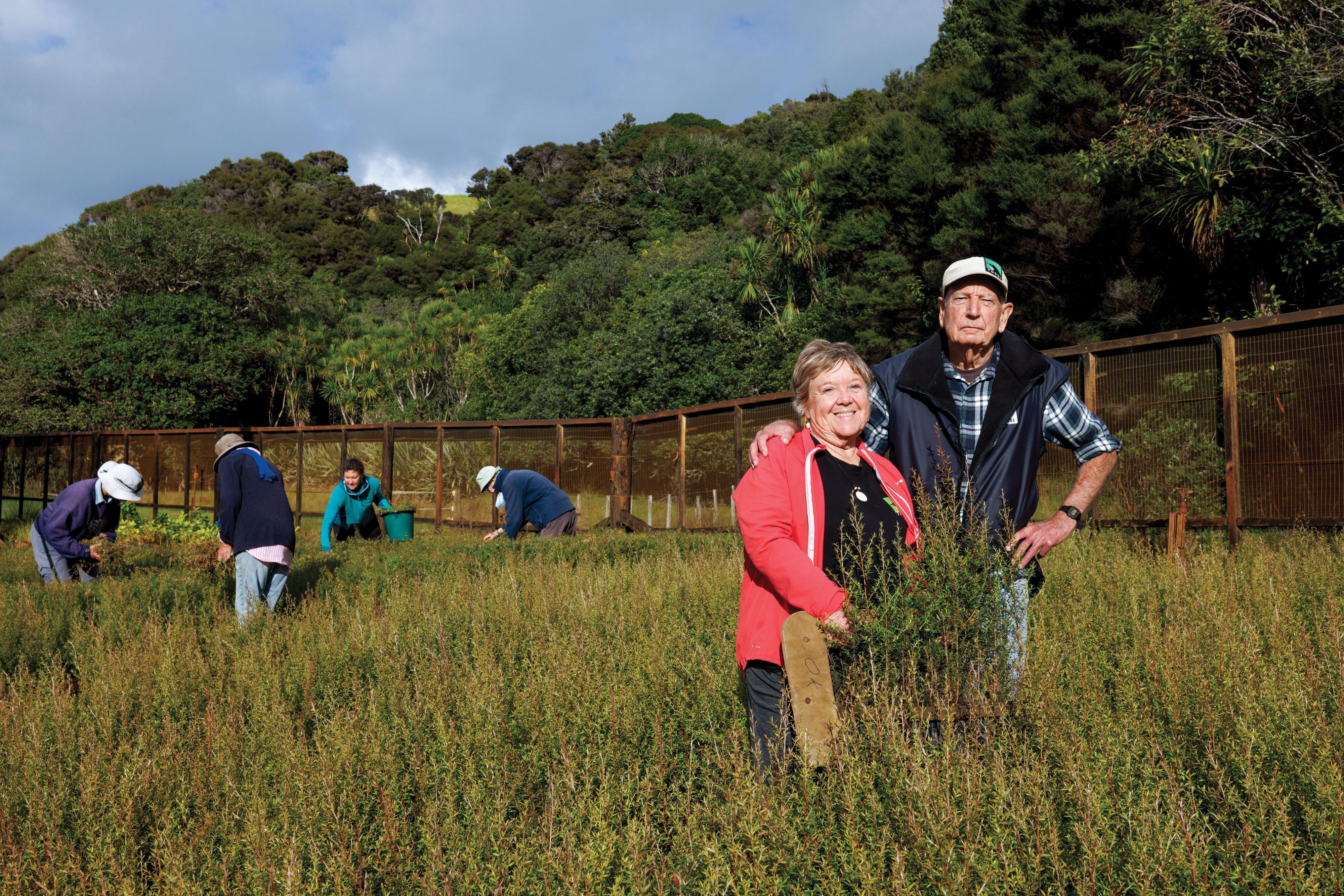
Ray Blackburn and Maggie Cornish have volunteered at the Tāwharanui Open Sanctuary north of Auckland since they retired 15 years ago. They kill rats, collect seeds, plant trees. The work gets them outside, keeps them physically and mentally fit—and has become a big part of their social life, leading to dinners, parties, camping and birding trips outside of the project.
“You’re working together, chatting away about your life and your family. You really can’t help but adopt these people, or be adopted,” says Blackburn. Volunteers keep coming back, Cornish says, because they enjoy each other’s company, and feel valued and respected.
Massey University researchers found exactly that in a new study based on interviews and surveys of more than 100 conservation volunteers in Manawatū. The researchers investigated what makes such volunteers commit for the long haul, and found that adequate time for socialising was a key motivating factor. So was the desire to make a meaningful contribution to the environment and their local community.
“I could achieve the same thing by playing golf or bowls,” says Blackburn, “but when you finally fall off the perch, what use is your golf handicap to the rest of the world?”
More by Kate Evans