Leslie Adkin found what he loved early in life: photography, the Tararua Range, and the violinist Maud Herd.
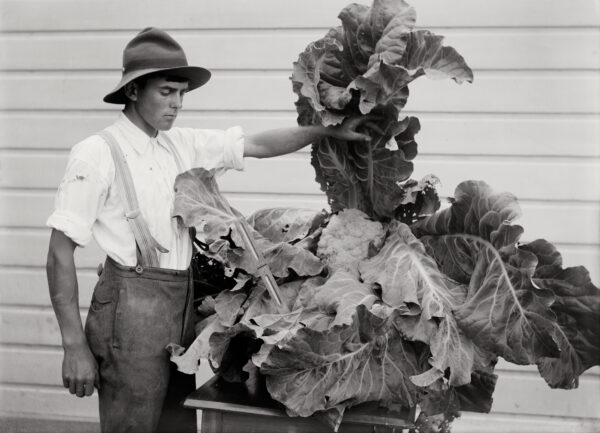
The oldest of seven, he grew up on his family’s farm in Levin, and spent just two years at high school. But that was enough time to learn how to take and process glass-plate photographs, and back home, he kept at it. He documented life as it was for a teenage farmhand in 1905: workers extracting a rāta stump, Māori contract shearers, a store of apples for winter, the sheep dip, his younger brother with a giant cauliflower.
For Leslie’s 21st birthday, his parents gave him money to buy a camera, and he chose a Kodak Pony Premo No. 6 for £10, or about $2100 today. It was a serious piece of equipment. He had to lug around glass plates instead of rolls of film, which the new snapshot cameras used, and its large-format nature meant it wasn’t the kind of device for capturing an unguarded moment. The Pony Premo took long exposures, so it had to be mounted on a tripod, and its subjects had to hold still to avoid blurring the picture.
That suited Leslie just fine. “He was a detail man, an observer and recorder of fact—to a fault,” writes Te Papa photography curator Athol McCredie in Leslie Adkin: Farmer Photographer.
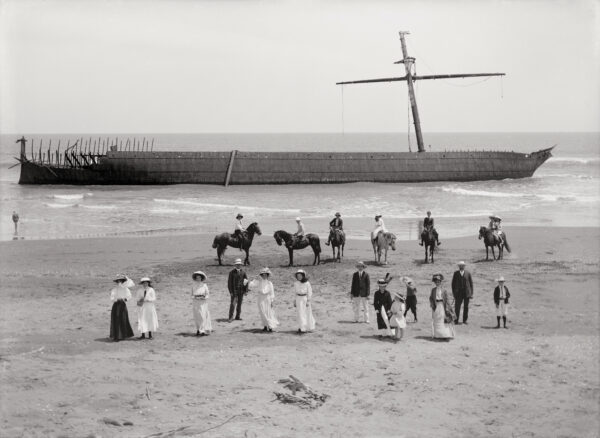
A casual family trip to the wreck of Hydrabad on Waitārere Beach, 1909. Leslie’s preference “was to do everything properly and with exactitude,” says Te Papa photography curator Athol McCredie. “Haphazard shots were not good enough for his perfectionist mindset.”
Yet so many of Leslie’s pictures feel like candid moments. There’s the photograph of a farmhand gazing down at a slaughtered pig, gently holding its trotter. The one of the kids at the beach squatting to examine something in the sand. Maud, tuning her violin. Maud, dwarfed by a field of maize on her family’s farm. Maud, peeling vegetables for Sunday lunch.
Leslie met Maud Herd the same year he got the camera—her brother joined the same YMCA he attended. Though they were keen on each other, Leslie was in no position to support a wife, and his parents told him that he ought to get that sorted out before declaring his feelings. Instead of telling Maud, he confessed them to his diary.
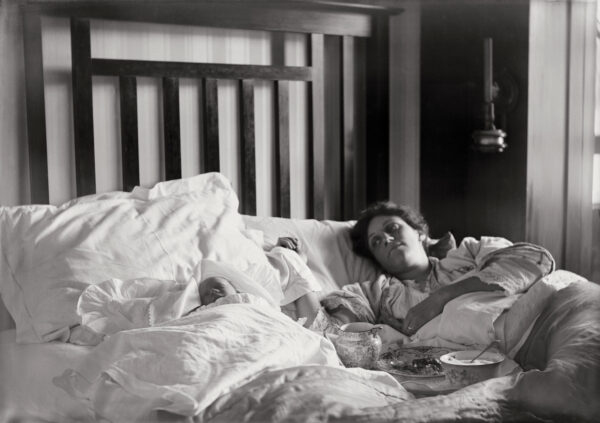
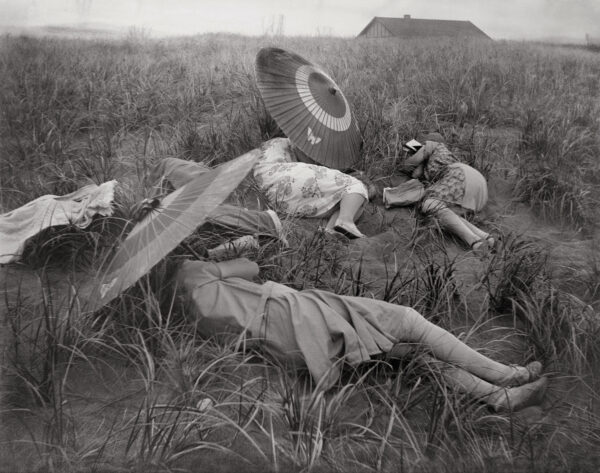
Photographing a new mother in bed was unheard-of in Leslie’s time.New Year’s Day 1927 at Ōtaki Beach was a much more horizontal affair.
In the meantime, Leslie had a distraction: he was developing a theory on how the Tararua Range had formed. Glaciation, he reckoned, contrary to the prevailing wisdom. In 1909, he’d made the first European crossing of the range from Levin to Masterton, carrying the Pony Premo and the glass plates to document landforms along the way. He wrote a paper summarising his ideas on the formation of the lowlands, and was invited to speak about it at the Wellington Philosophical Society. “It was unusual to have a 22-year-old farm worker present a scientific paper before such an august body, but the reception was generally positive,” writes McCredie. The paper was published. Leslie wrote another, this time on the peaks, advancing his glaciation theory, which was rejected by the professional geologists of the society. (His ideas would be generally accepted 30 years later—as they are today.)
By the fourth year of his and Maud’s courtship, Leslie was a published scholar, but that was still all he had to his name.
Then, in 1913, everything changed. Leslie “could not hold out any longer”, he wrote in his diary. On a late-night drive, he finally professed his love for Maud, which she returned, with “our first kisses”. Then, Leslie’s father decided to sell him some land, which meant he could make his own living. But bad news followed good: Maud’s family announced they were all moving to Hastings.
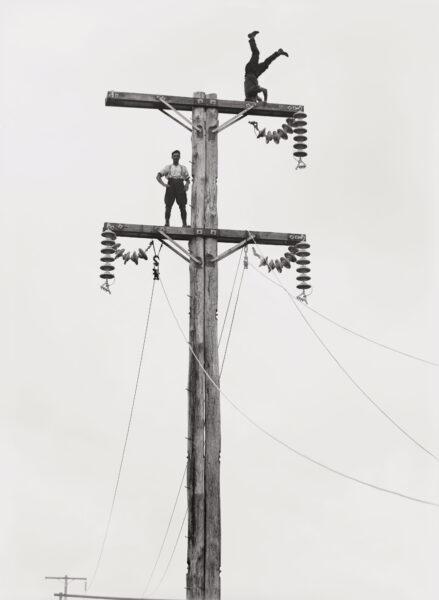
Summer shenanigans in Taitoko/Levin, 1923—C. Cusack on the high bar.
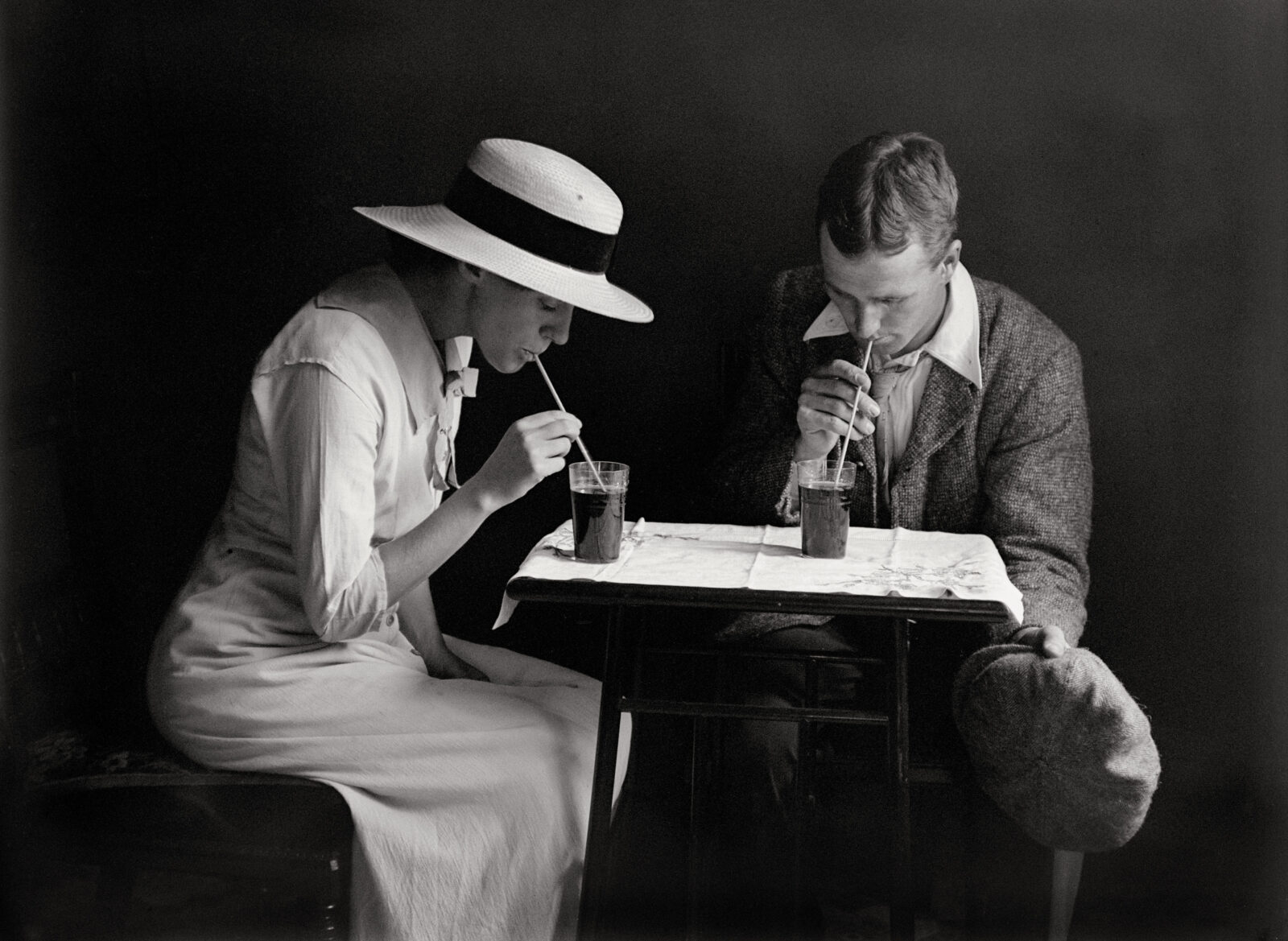
Unable to solidify his and Maud’s relationship via marriage before the move, Leslie decided to do so via photography instead. He made a series of pictures depicting important scenes in their courtship: drinking ice cream sodas, picnicking in the apple orchard, Maud greeting him at the gate to her home. These pictures are now widely regarded as Leslie’s best.
At last, they married, and Maud joined Leslie on his land. He photographed her reclining on their first batch of wool bales, and, later, resting in bed with their two-day-old daughter. This picture looks like an ordinary family photograph now; at the time, when standards of decorum meant the couple almost never touched in their romantic pictures, it would have been shockingly intimate.
*
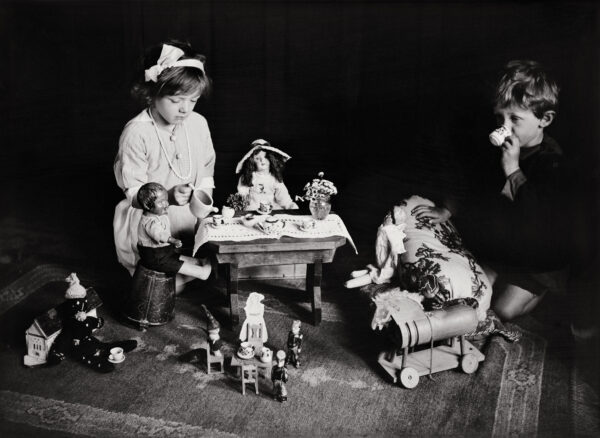
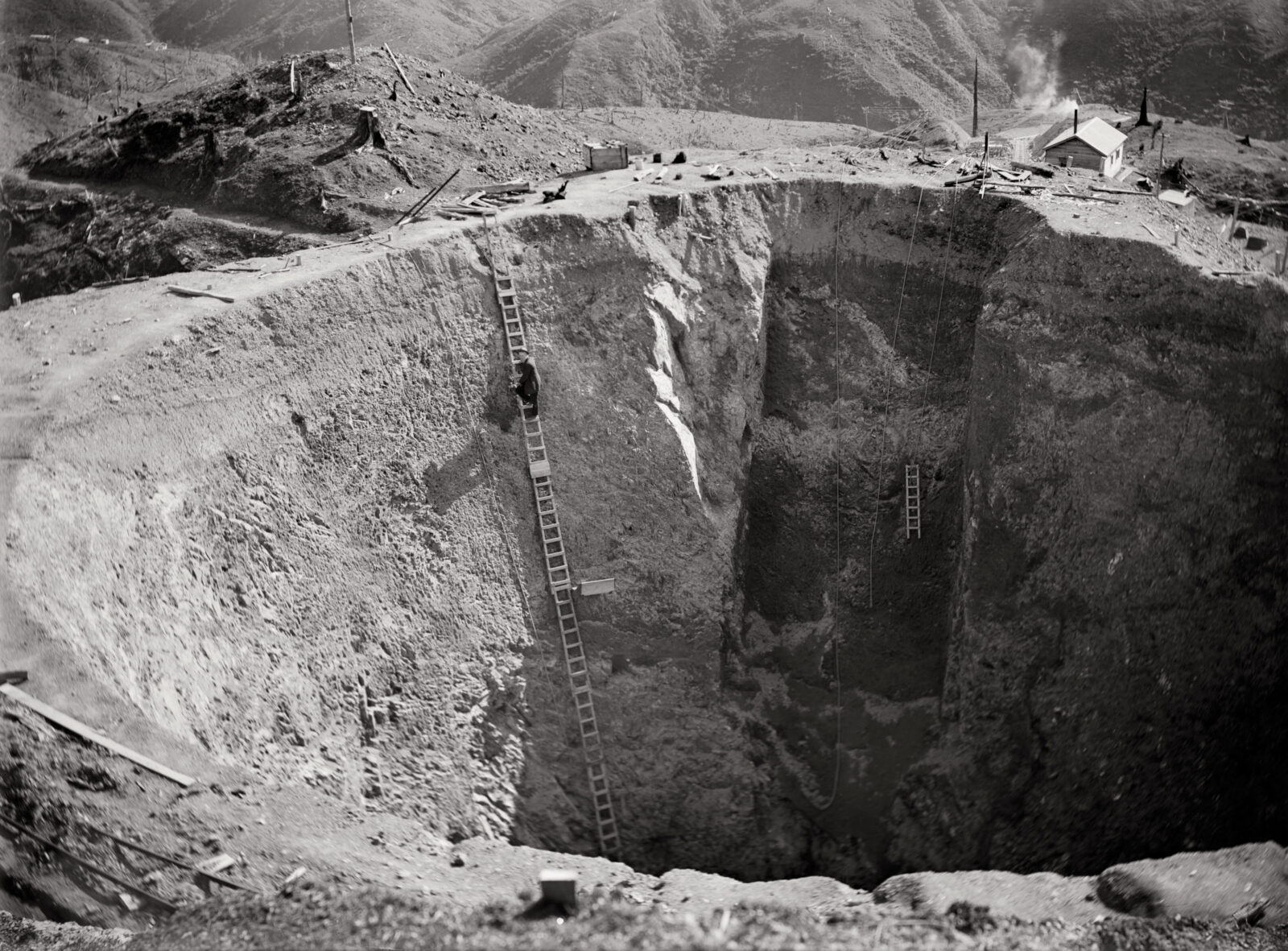
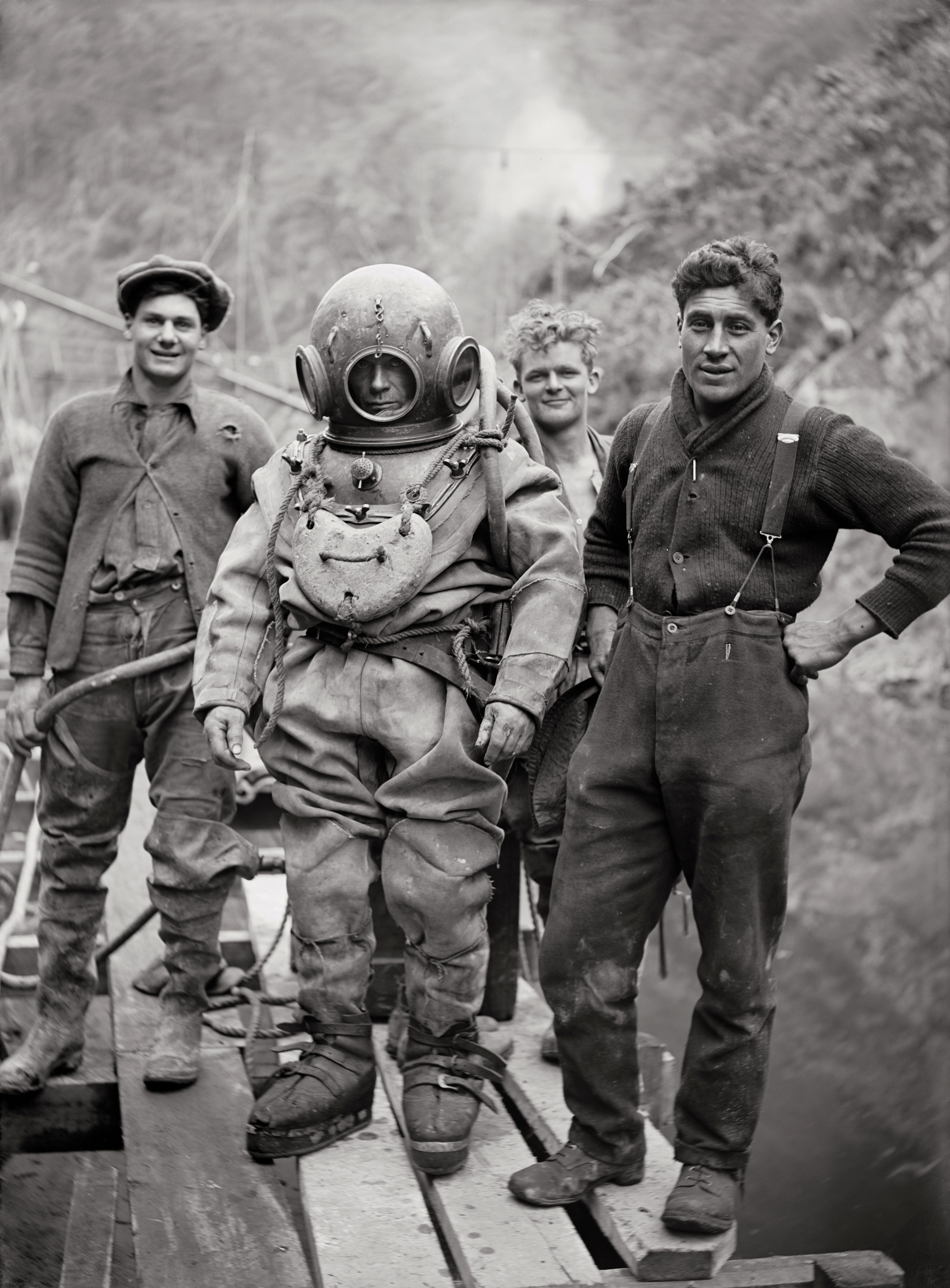
The farm was hard work. It brought Leslie “little pleasure nor profit”, wrote his earlier biographer, Anthony Dreaver. Other projects obsessed him instead. He posed his children, Nancy and Clyde, with their toys. He spent five years documenting the nearby Mangahao hydroelectric scheme, which would eventually bring electricity to the area, noting details of its construction in his diary and even identifying a problem with the plans. He wrote a book, Horowhenua, describing the origins of place names in the area and the history of Māori settlement via oral histories he received from Māori contacts.
In 1946, Leslie and Maud handed over the farm to Clyde and moved to Wellington, where Leslie took a job as a palaeontologist’s assistant. It was a lowly position, but the culmination of a lifelong dream, writes McCredie: “Now, at age 58, he would be paid to do what he really loved.”
One of his best-known images, it’s a cauliflower that dwarfs a man—his little brother, Gilbert.Leslie’s children Nancy and Clyde were not always thrilled to be photographed. “You were smiling until it set into a horrible grimace,” Clyde said in later life.
But the qualities that made Leslie an excellent amateur scientist also made him deeply frustrating to his family. Clyde hated posing—having to incrementally shift to find the perfect position, to smile until his face froze—while Nancy’s son, Derek, developed an aversion to being photographed that he retained long after Leslie’s death.
Leslie’s pictures, if hard-won, still resonate strongly. Online, they’re some of Te Papa’s most-downloaded images. Perhaps this is due to Leslie’s talent for ignoring the status quo. Photographers of his time tended to produce one of two kinds of formulaic images, says McCredie; either highly stylised art pictures, or carelessly made snapshots of holidays and family occasions. Leslie documented plenty of typical occasions, but “his camera also went to all sorts of places that the snapshooters didn’t,” says McCredie. Into quiet, domestic moments, where his sisters washed the dishes or his wife rested in bed. “There is a sort of paradox in Adkin’s photography, perhaps, that while he was a detail-obsessive and control freak on the one hand, his photographs are often full of fun and humour. I think you could say that he enjoyed life.”
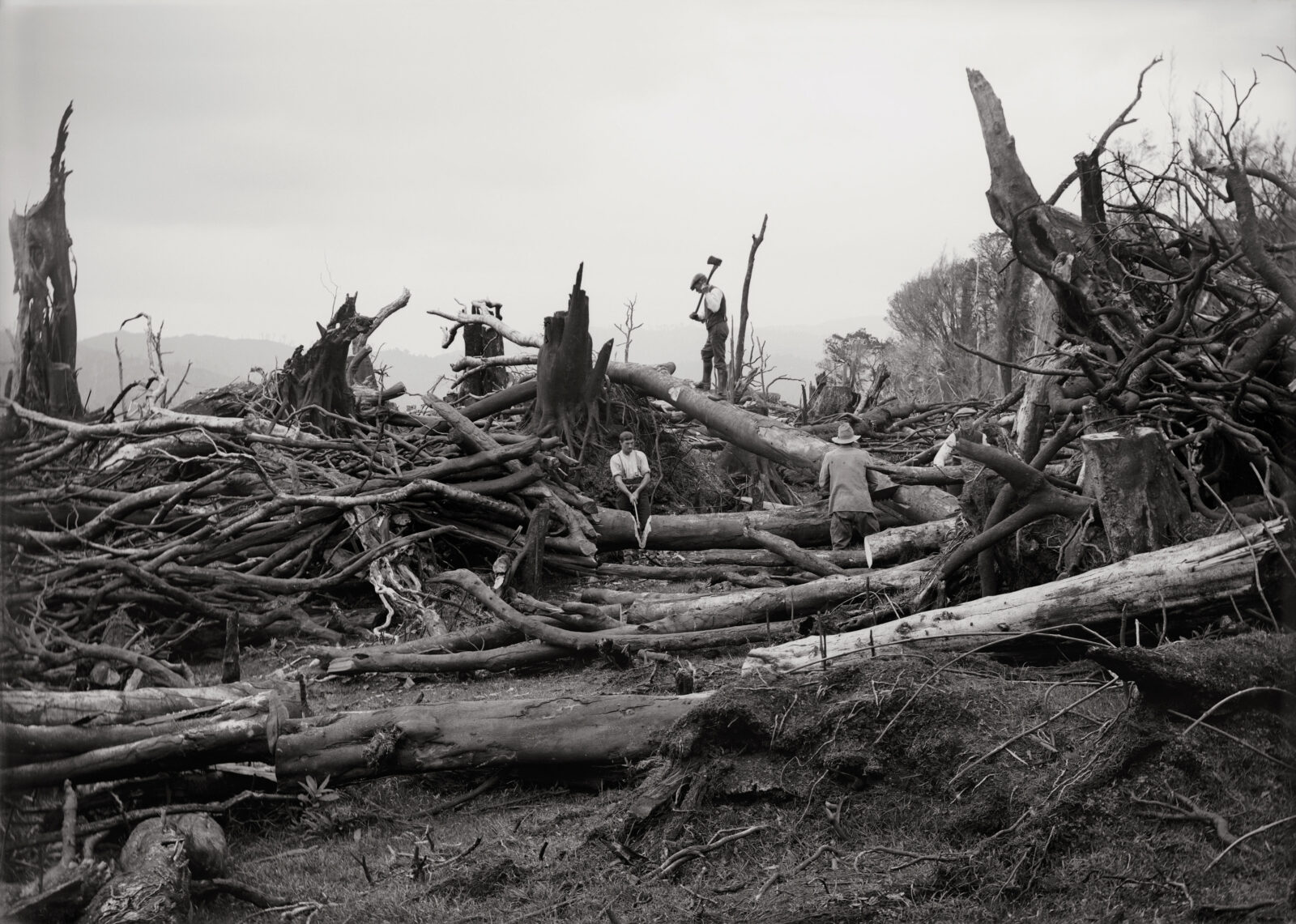
His wife Maud also stars in many set-up images, such as the synchronised soda-sip during their courtship.Leslie liked to highlight the scale of people in landscapes, such as the surge pit for the Mangahao hydroelectric scheme, or track-cutting on the family farm.
Leslie Adkin wore a lot of hats: photographer, farmer, pioneering tramper, husband and father, self-taught geologist, anthropologist. But it’s his pictures that have had the broadest impact. His meticulously created photographs, showcased in a new book, are an exceptional record of daily life in the early 1900s. (more…)
Issue 198
Mar - Apr 2026
Black-Backed Gulls
Meth & HIV in Fiji
Dung beetles
Centro
Rogaining