For decades, young women of New Zealand marked their late teens with ceremonies that looked a lot like weddings. (more…)
More by Catherine Woulfe



Moments before 9.30pm on Monday, August 8, 1938, Miss Hazel Latham stood outside in the cold.
She checked the spray of daisies pinned to her bodice, took the black-taffetaed arm of her escort, Mrs Cobb, and stepped through the front door of the Matamata Town Hall. It was a long walk to the stage and the pair took it slowly, as they’d practised, a carpet muffling their steps. The hall was draped with streamers of maroon and gold, balloons, greenery. More pertinently, the room was packed with people, and all eyes were on Hazel—her dress, her deportment. Her debut.
She was all in white, of course. Puffed sleeves, a full swing skirt, a posy of spring flowers. “Very petite and lovely,” the papers would later declare her. As she approached the stage, her high school principal announced her name. Hazel dropped a rehearsed curtsy to the four women, all respected locals, waiting on stage. Then she moved to stand beside them, and watched as seven other young ladies made the slow walk in white. Next, a formal photograph. Then finally the debutantes set aside their posies—violets, maidenhair fern, white roses—and the waltzing could begin.
The first debutante balls, in 18th-century England, were a chance for young, well-to-do women to (silently) announce that they were ready for marriage.
Only teens of sufficient social standing would receive an invitation. Then came months of perfecting dress, posture and demeanour.
When the tradition emigrated to New Zealand in the mid 19th-century, and picked up steam through the 1930s and 40s, we dropped the overt marriage-mart aspect—but kept the white dresses, the fuss, and the formal choreography.
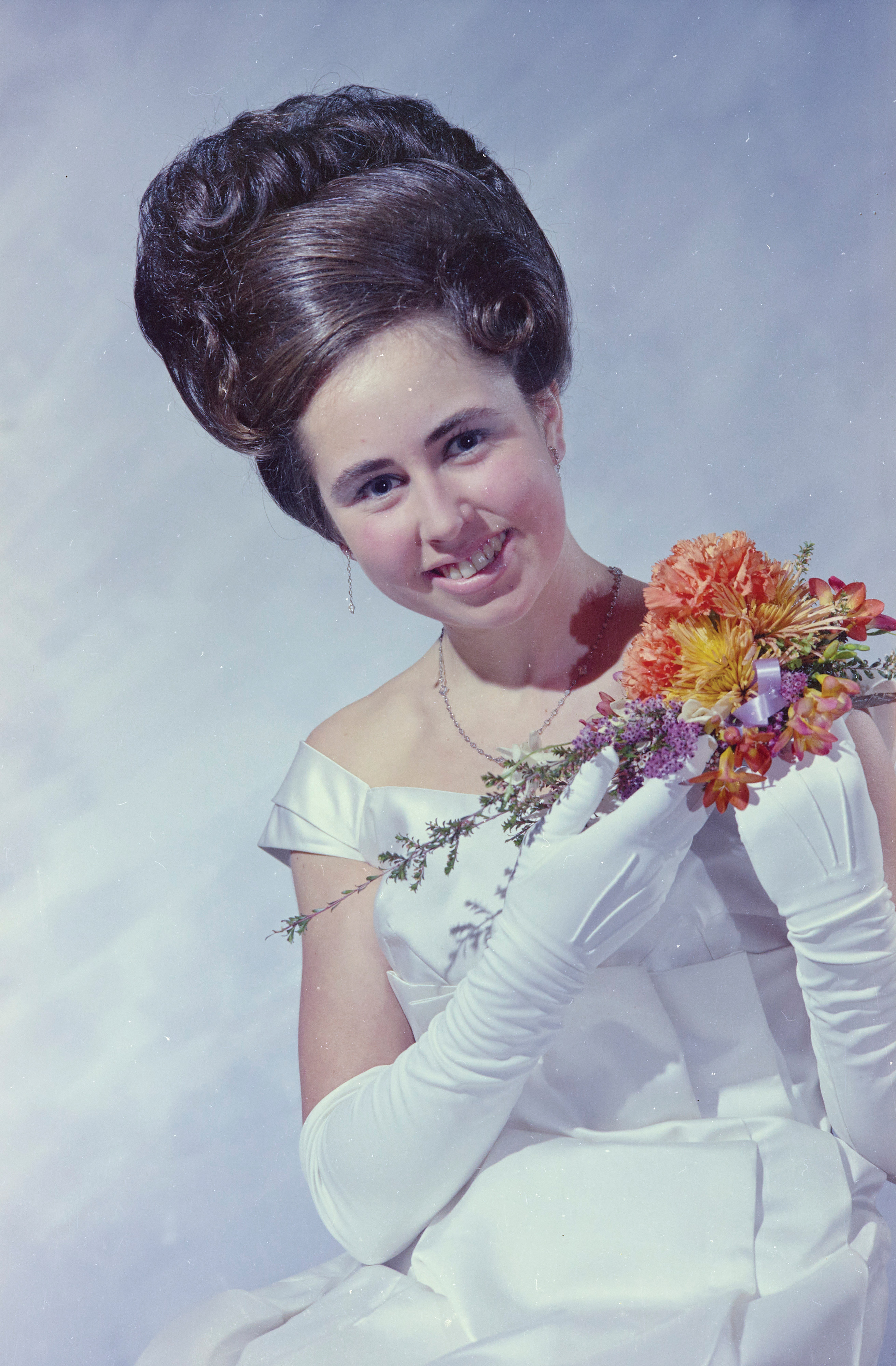
Most photographs were necessarily black and white (the image shown, of a Miss McNeill in 1963, is the only colour frame we could find—see page 8). But the decor, food, and most of all, the fashions were exhaustively reported.
The odd debutante had a party entirely devoted to her own coming-out—such as the Wellington ball thrown for Miss Pamela Paterson in the winter of 1936, to which the young lady wore ivory georgette and a headband of crystal leaves, and danced among tubs of holly and cypress.
Other balls, often organised by charity groups, churches or schools, were for the masses. “Brilliant frocking,” decreed the Grey River Argus, of a ball in Greymouth presenting 20 locals. At a Lower Hutt do, 38 debutantes arranged themselves into a perfect heart shape. In Wellington, the head of the Catholic Church in New Zealand, Archbishop Thomas O’Shea, was sitting through ball after ball; in just one night a procession of 90 debutantes were presented to him. Whangārei knew how to have a good time. “Forty turkeys, game, crayfish and so on were provided in abundance,” reported the Northern Advocate of a 1947 ball. “Six sittings of 110 people were necessary.”
In 1958, Queen Elizabeth II pulled the plug on the debutante tradition. Post-war, lavish parties were out and feminism was in. But New Zealand pushed on with non-ironic debutante balls well into the 70s. One of the last, it seems, was an extraordinary Ngāti Pōneke event held in the Wellington Town Hall in 1973. Te Ao Hou reports that more than 100 debutantes attended, wearing kaitaka cloaks over their white gowns. Each wahine was escorted to the stage by her father or brother, who gave her a meremere, signifying the handing over of his mana for the night.
Presiding was the first Māori Queen, Te Arikinui Dame Te Atairangikaahu. She smiled at each teen curtsying before her, the reporter noticed—a moment that “took away the nervous tension and in its place left a quiet dignity”. The young ladies’ names and iwi affiliations were announced, then they set aside their cloaks for an en-masse curtsy in white.
More by Catherine Woulfe
Subscribe to our free newsletter for news and prizes
3
$1 trial for two weeks, thereafter $8.50 every two months, cancel any time
Signed in as . Sign out