Tom Neale, HarperCollins, $45 (more…)
More by Catherine Woulfe



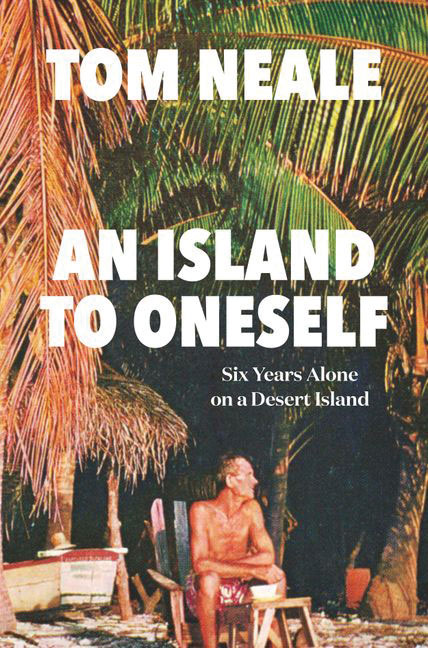
Tom Neale is dropped off on Suwarrow, an uninhabited atoll some 900 kilometres north-northwest of Rarotonga, on October 7, 1952. As soon as he is alone, he takes off his shorts. He only puts them on again when a boat stops by. And it’s a long time between boats.
Neale was born in Wellington and grew up in Greymouth and Timaru, joined the Royal New Zealand Navy, and fell hard for the South Pacific. He would spend the rest of his life there, picking up work in Rarotonga and Tahiti, but it was Suwarrow that held his heart, from the time he picked up Robert Dean Frisbie’s account of the place, The Island of Desire.
Neale’s own book, written in Tahiti between stints on Suwarrow, was first published in 1966. It was a hit. In this new edition, much of the story still holds up, especially those long stretches that focus on the pleasures of solitude, and the Hatchet-like building of a home.
Neale’s first, heady few weeks on the island are spent taking stock: he has no radio, no refrigeration or electricity and his only dinghy is split across the bottom, but he does have paw-paw, coconuts, breadfruit, chooks, rainwater tanks. He scrubs out a dilapidated shack, fashions a washing line, cuts firewood, caulks the boat. He sets out his jam and his tea on little shelves. He walks laps of the island, on white sand and carpets of fallen hibiscus flowers and coconut-palm fronds; “it’s all yours”, he thinks, immensely pleased. Each night, he makes a cup of tea and sits on the beach, watching the sun go down. He reads Dickens, Frisbie, Brave New World. He wakes in the morning to the crow of the roosters. He is 50.
“How lucky I was to look forward to a day which was going to bring me nothing but satisfaction,” he writes.
He stalks the reef, hauling huge crays from holes. Parrotfish are easy pickings. “They would make for some cranny in the coral and hide their heads so that I could spear their bodies easily.” Reef cod simply lay motionless. He makes a lure from white feathers and a strip of red fabric, and trevally hurl themselves at it. He gets sick of fish.
When the terns start laying, he makes omelettes, 10 eggs at a time, the yolks tinged pink. When he is desperately craving meat, a big turtle washes up and he has turtle steaks for Christmas Day.
A hurricane sweeps through but it is not like the 1942 terror that Frisbie and his family endured during their own stretch on the island—that one washed away 16 of the 22 islets. Frisbie saved his kids by lashing them high in tamanu trees.
Neale manages two years alone—during which time only two yachts stop by—before he hurts his back, and a yacht arrives with incredible serendipity to take him back to Raro. For six years there he is “constantly irritated”, focused all the time on his return to Suwarrow. Finally, in 1960, he makes it back, this time for a blissful three years. The autobiographical section of the book wraps with paradise lost. Eleven Manihiki pearl divers had turned up “and, frankly, turned my heaven into hell”. “When I heard that more natives might be coming to dive for a couple of months each year… I resolved to leave.”
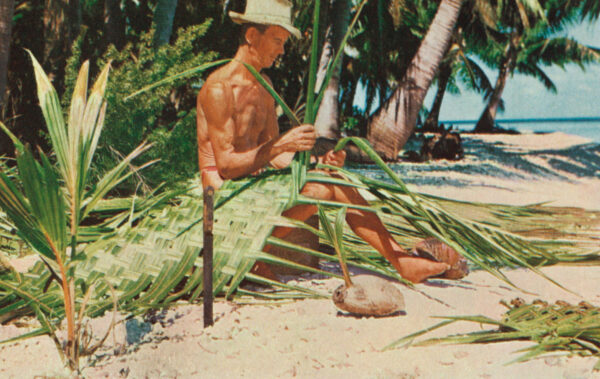
Neale ties a neat bow on the book there. But this edition includes an epilogue written by his daughter, Stella, in 2020. You wouldn’t know it from Neale’s telling, but he had three kids, and it’s a revelation that throws his book into a strange light.
Stella, somehow, writes of him with no rancour.
She explains that her half-brother, John, was born in 1949, three years before Neale first landed on Suwarrow, and was adopted by a New Zealander. He died in an accident in 1975. Stella and her older brother, Arthur, were born to a different mother, during Neale’s stir-crazy years in Rarotonga. Their father sailed back to Suwarrow when she was just a toddler.
Stella writes vividly of wearing her prettiest dress for his arrival back in Rarotonga, when she was five. She remembers him building her a swing, planting a beautiful garden, teaching her to savour Huntley & Palmers cream crackers topped with a thin slice of Anchor butter.
She remembers being told he was leaving for Suwarrow again, and sprinting to the wharf with Arthur to say goodbye. She was nine. “I could see his mouth moving but I didn’t hear what he said… I just nodded and tried not to sob. Then he was standing up and walking away…”
Being on that island, Neale writes, was “the most remarkable and worthwhile experience of my whole life”.
He went back to Suwarrow after writing the book, of course, despite the pearl divers and the visitors his book attracted. He died of stomach cancer, 25 years after first landing on the island, in 1977.
More by Catherine Woulfe
Subscribe to our free newsletter for news and prizes
3
$1 trial for two weeks, thereafter $8.50 every two months, cancel any time
Signed in as . Sign out