Last week, scientists and kaitiaki set to work to necropsy the rarest whale ever discovered—a spade-toothed beaked whale that washed up at the mouth of the Taieri River, south of Dunedin. (more…)
More by Bill Morris



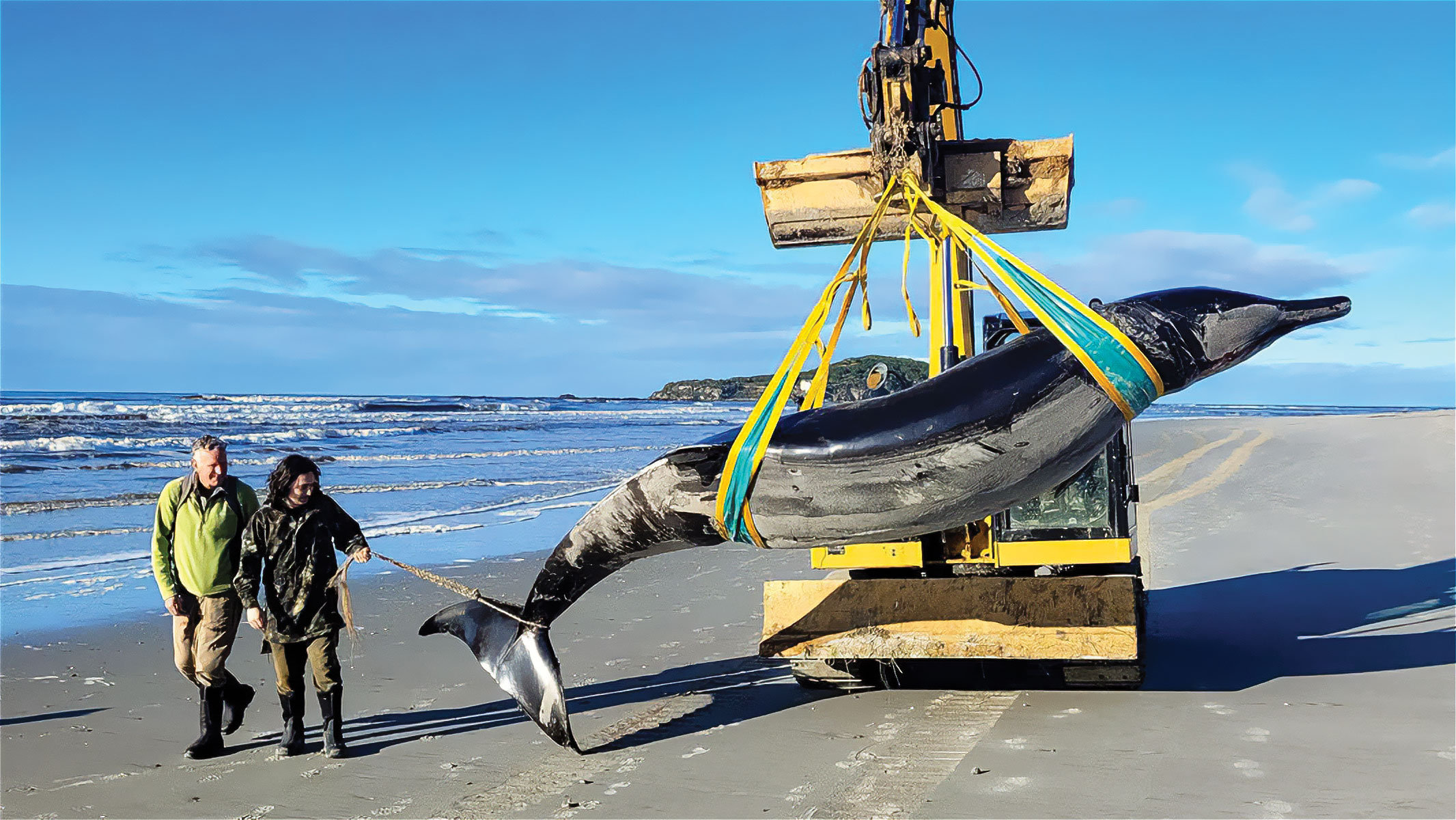
The five-metre-long male was found on the beach in July. Local Department of Conservation (DOC) staff and rūnanga members worked quickly, getting the 1.3-tonne animal into a freezer at a research institute near Mosgiel, so they could plan for the delicate, world-first dissection.
The species was previously known only from skull fragments. A mother and calf washed up at Opape, in the Bay of Plenty, in 2010 but were initially misidentified and buried. By the time they were correctly identified via genetic testing, they and many of their secrets had long decomposed.
Ngāi Tahu kaitiaki Tūmai Cassidy calls this necropsy a “huge opportunity” to better understand a species about which almost nothing is known—such as its diet, diving ability and internal structure. “It all builds a richer picture for that species, but also tells us how it interacts with our oceans,” Cassidy says.
Beaked whales live far out to sea and are rarely encountered by humans.
They typically feed in very deep water—one species, the goose-beaked whale, has been recorded diving to 2998 metres and staying submerged for almost four hours. “That,” says DOC’s Anton van Helden, “changes the way you think about what’s possible for an animal.”
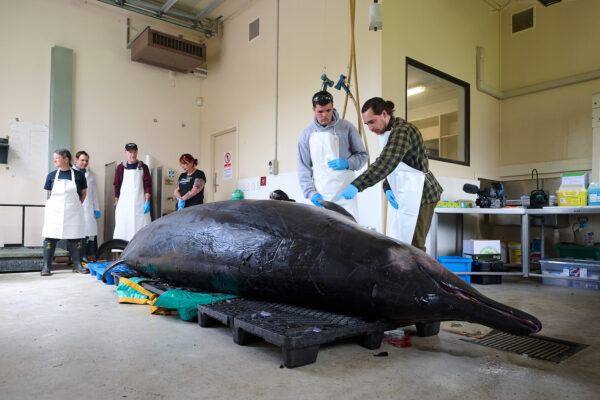
By analysing this whale’s head structure, van Helden, an expert in beaked whales, hopes to get a better understanding of how it operates at extreme depths—and how it is able to produce sound from an air-filled cavity in its head while subject to such bone-crushing pressure.
Rangatahi from the local Ōtākau rūnanga are helping with the dissection, and whale tōhunga Hori Parata has flown down from Northland to guide proceedings.
For Ōtākau kaumātua Edward Ellison, the dissection offers a gift of learning for his hāpu, who, he says, are in the process of “peeling back those layers of connection to our places, our taonga”.
That includes the traditional use of bone, teeth and other materials from stranded whales—skills that have nearly been lost. “It’s an opportunity for us to rekindle those links,” says Ellison.
Joy Reidenberg, of New York City’s Icahn School of Medicine at Mount Sinai, flew to New Zealand to examine the whale. Her interest in beaked whales is medical—many diseases, she says, mimic the extreme conditions deep-diving whales experience daily. Understanding the whales could help us to develop treatments for those diseases.
New Zealand is a global hotspot for beaked whales, with 13 of the 24 known species recorded in our waters.
While scientists know very little about any of these animals, beaked whales are thought to be highly vulnerable to deep-sea noise pollution, and to ingesting plastic, particularly bags, which might be mistaken by the whale for squid.
Why did the Dunedin whale die? We may soon find out.
More by Bill Morris
Subscribe to our free newsletter for news and prizes
3
$1 trial for two weeks, thereafter $8.50 every two months, cancel any time
Signed in as . Sign out