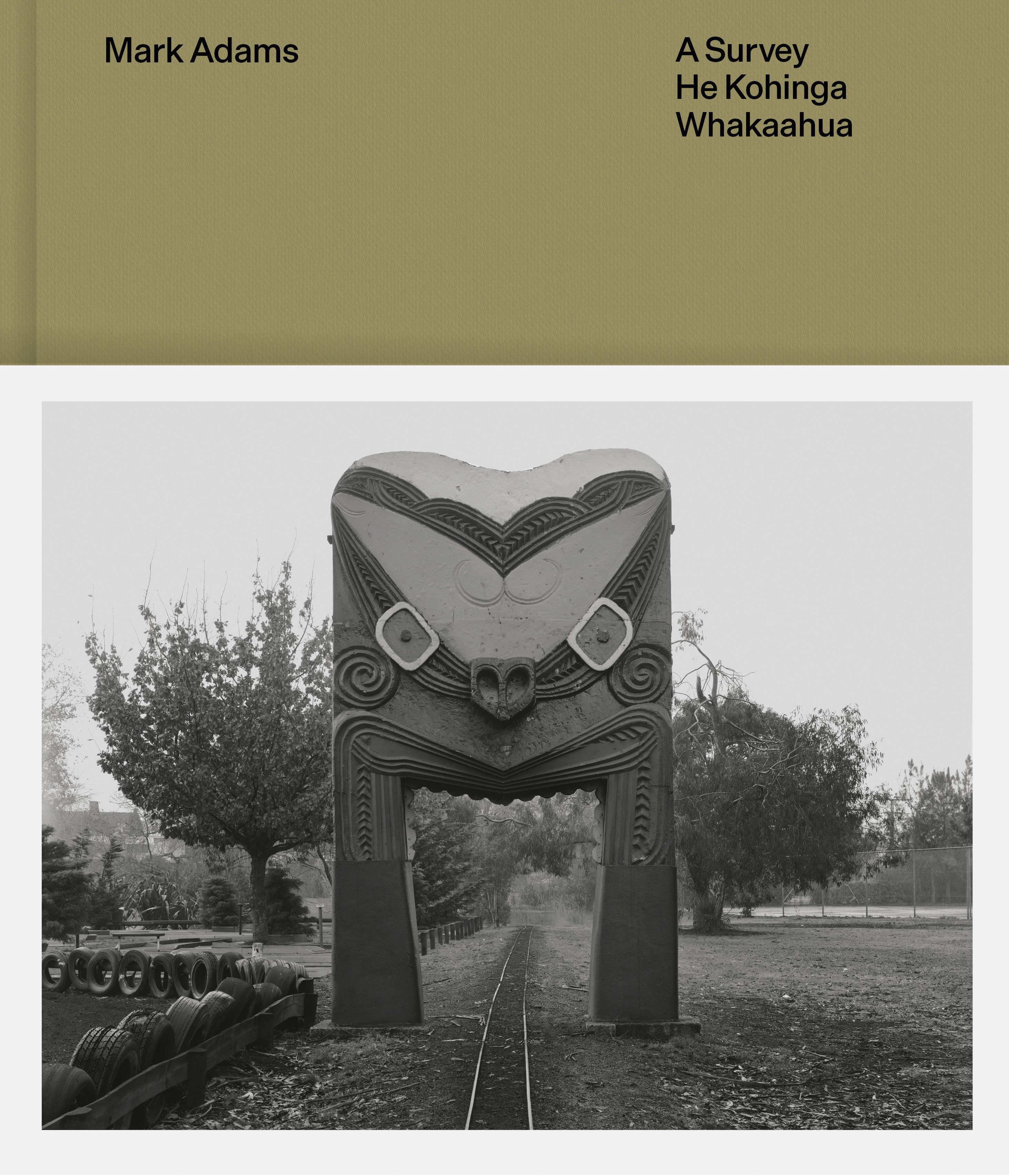
Mark Adams and Sarah Farrar, Massey University Press, $80 (more…)
More by Catherine Woulfe



Mark Adams was always, in his words, “the white boy in the room”. And he always knew it.
Now in his mid 70s, the photographer is best known for the decades he spent documenting the practice of traditional Samoan tatau, especially the artist Su’a Sulu’ape Paulo II. These are images that feel like invitations—not just to the tap-tap of the hammer, to the ink and the blood, but to the rooms themselves, to the homes, bright with mats and lavalava and friends. Look at these photos for longer, though, and a discomfort might edge in to stand beside you. Is this a moment you were meant to see?
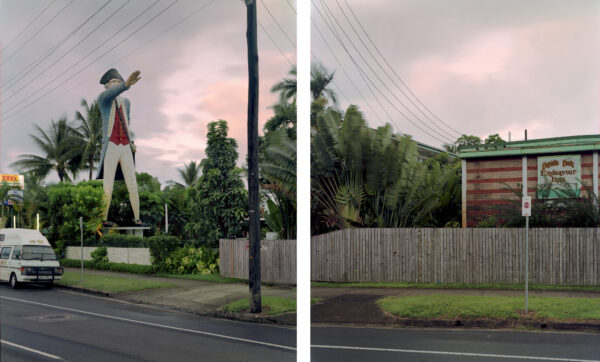
Adams was trying to do what he was always trying to do: turn the camera back on the viewer. Yet he feels “very ambivalent” about the project—concerned that the images slip, despite his efforts, into the “othering” he was intending to counter. (Clearly, Adams’ second-guessing of himself continues: he would not let us publish any of the tatau photographs, although more than 20 appear in the book. One of my favourite images, showing the interior of a Rātana church absolutely radiant with light and colour, was also held back.) Another mea culpa: when Adams started documenting Māori sites, he did not always ask permission. He does not sell those images or reproduce them, and he quickly learned to ask first, always.
A person who comes at photography this way, even if he does occasionally mess up, is trusted. So in this book, chronicling 50 years of work, and coinciding with an exhibition at Auckland Art Gallery Toi o Tāmaki, we are reminded that Adams was welcome at land marches and Waitangi protests; he was ushered into churches and wharenui; he was allowed to document taonga held in museums.
Ngāhuia te Awekōtuku, in her foreword, invites us to look especially at his photographs of Rotorua, a place that fascinates Adams. Here he shot pou, marae, the interiors of whare—but in each case, the place he chose to stand, and was allowed to stand, shunts those familiar scenes from postcard dross into photojournalism.
“An informed viewer,” te Awekōtuku points out, “knows that he was taken inside, or around the back, to get that particular view.” The white boy in the room was welcome, after all.
More by Catherine Woulfe
Subscribe to our free newsletter for news and prizes
3
$1 trial for two weeks, thereafter $8.50 every two months, cancel any time
Signed in as . Sign out