Jessica Hutchings and Jo Smith with Johnson Witehira and Yvonne Taura, Massey University Press, $45 (more…)
More by Rebekah White



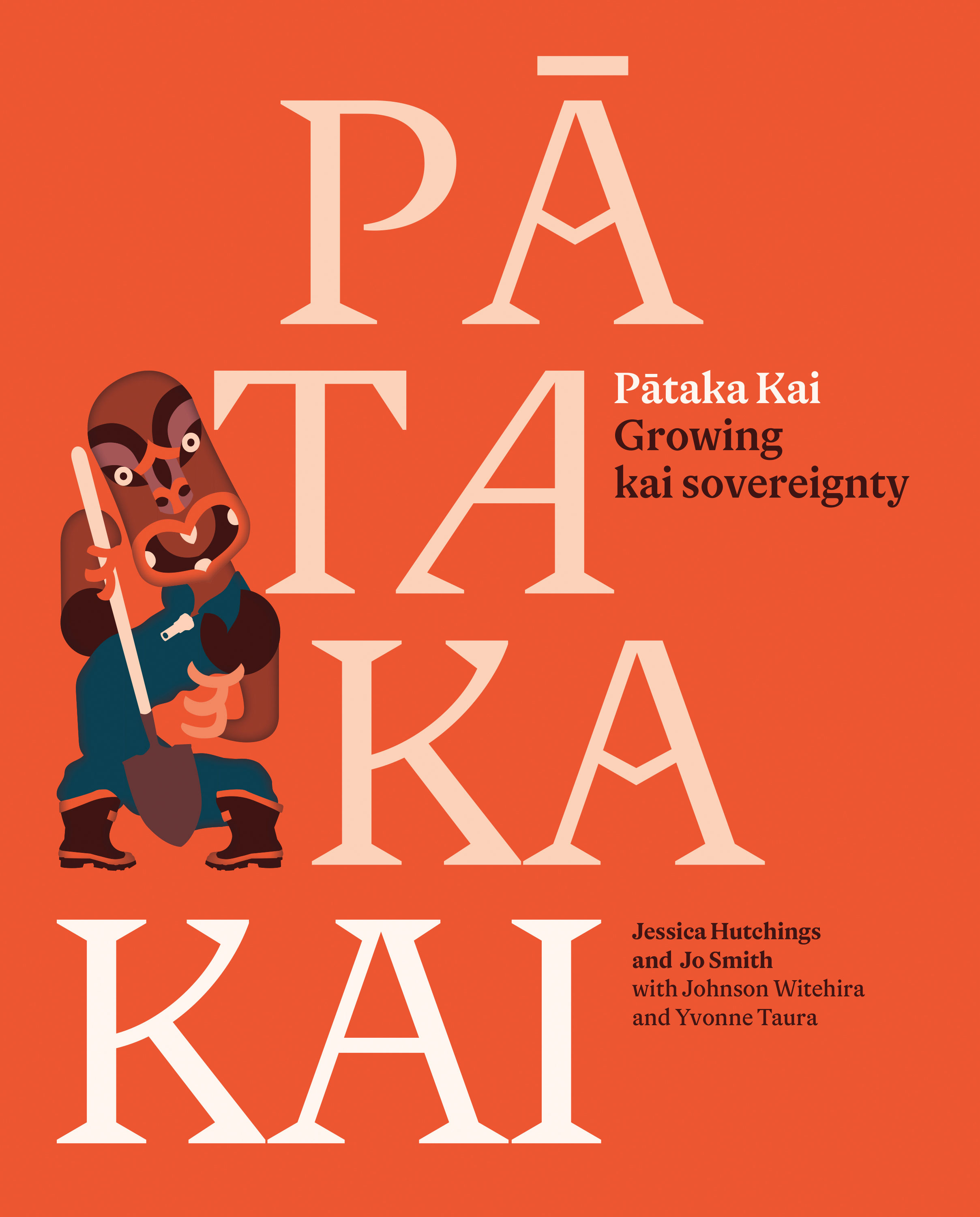
How could our food systems look different? Are there other ways to get produce from fields to kitchens? And even if those methods are less efficient, what do we stand to gain in the process? These are the questions that Jessica Hutchings and Jo Smith raise and answer in Pātaka Kai (which means “pantry”).
The term “food sovereignty” sounds like it’s mostly about owning the means of production, and that’s part of it, but the concept goes much further: it also encompasses ideas about environmental sustainability, empowering people, and growing culturally appropriate food. In a Māori context, write Hutchings and Smith, the idea of food sovereignty takes on additional layers: “It is also about revitalising traditional knowledge, language, systems of exchange, cultural practices and the values that connect Māori to whakapapa, to whānau, to whenua, and thus to hauora.” In other words, connections to history, family, land, and health.
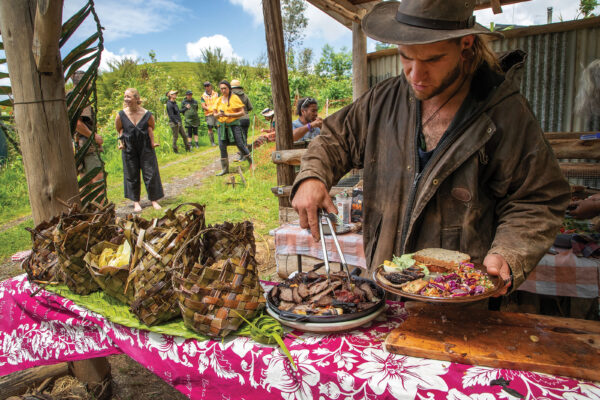
Pātaka Kai recounts stories from rōpū around the country. At Ihumātao in Māngere, which used to grow much of Auckland’s produce, people occupying the land cultivate a vegetable garden as part of their protest. Nearby, at Papatūānuku Kōkiri Marae, volunteers are still restoring soil damaged by landfill, while at Pourewa in Ōrākei, Ngāti Whātua Ōrākei are planting a rongoā rākau, a forest of medicinal plants. Members of Ngāi Tūhoe are seeking to reconstruct their grandparents’ gardening practices, and a Taranaki couple run community gardens, supplying food for hui and stocking pātaka kai at local marae for people to help themselves.
As Stephanie Chamberlin discovered in this issue’s story on a community garden in Tāneatua (see page 78), growing food is about a lot more than what you take home to eat. It’s about learning how to cook unfamiliar vegetables, about teaching the tamariki how to prune fruit trees, and about having a peaceful place to work through stress.
More by Rebekah White
Subscribe to our free newsletter for news and prizes
3
$1 trial for two weeks, thereafter $8.50 every two months, cancel any time
Signed in as . Sign out