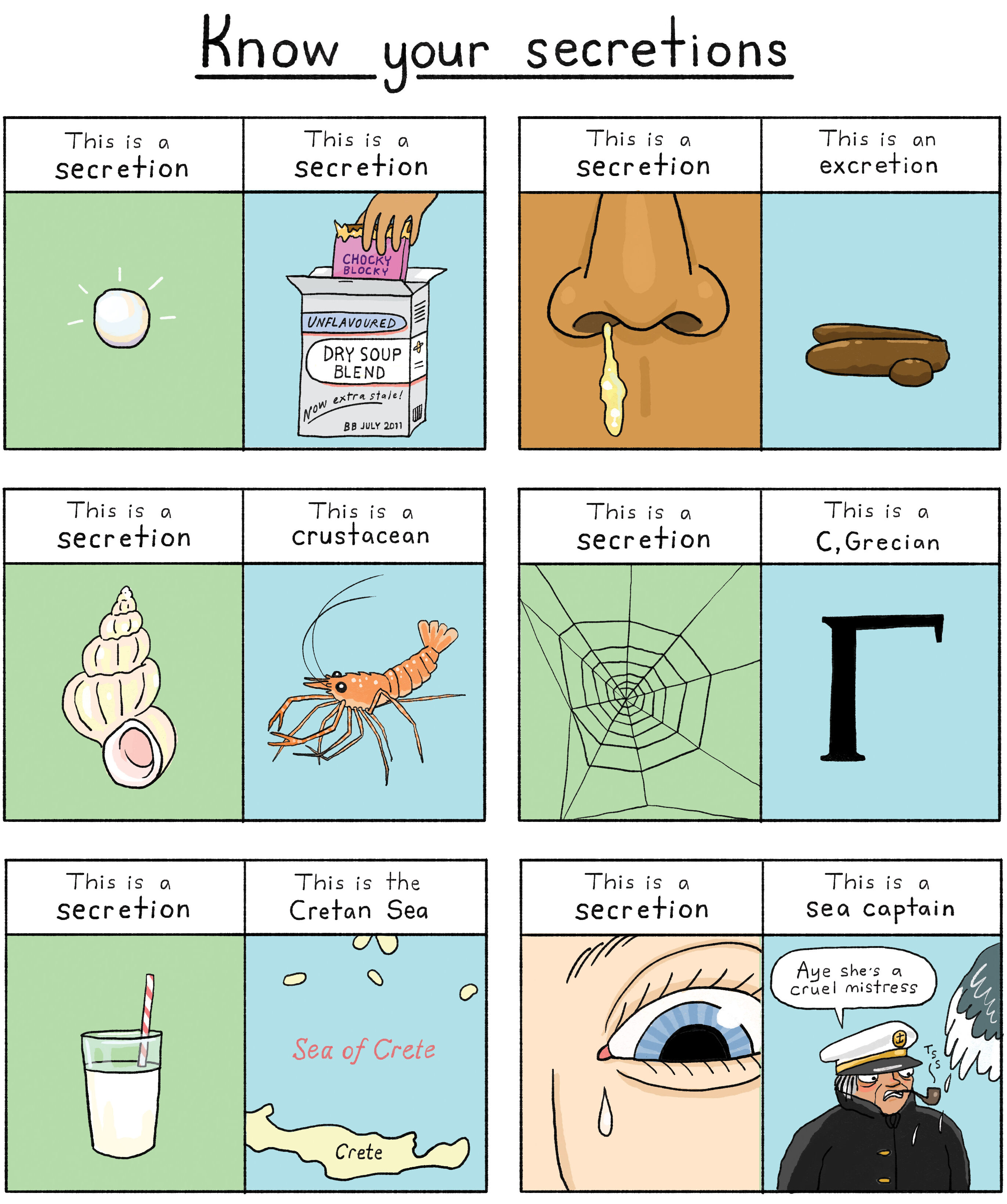
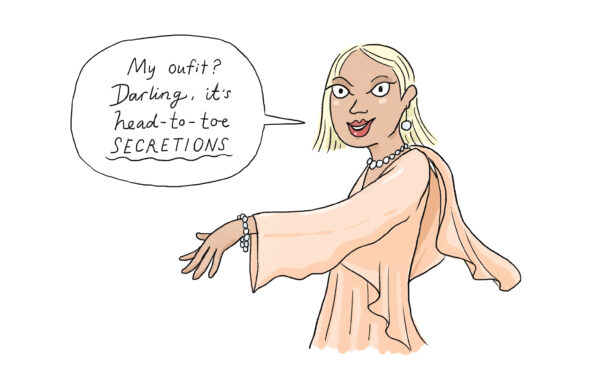
All around us, creatures are quietly getting on with secreting—oozing not just milk and tears, but beautiful homes, musical instruments and shark-fighting devices. (more…)
More by Rebekah White
More by Kay Lawson



Imagine if a snail had feet popping out the end of its shell, two soft little lobes. Now, imagine that it could flap those feet and fly away. That’s pretty much what a sea butterfly is, except that it swims rather than flies. It’s tiny—as small as a lentil. Its shell is so transparent that you can see its heart beating within. And, apparently, it’s delicious. So many other animals eat sea butterflies that they’ve been nicknamed “the potato chips of the ocean”. They are fundamental to marine life: anything that threatens sea butterflies threatens everything.
Sea butterflies themselves are mostly vegetarian: they spend their days hidden in the deep, then commute to the surface at night to eat plankton, in the same way that snails munch your basil under cover of darkness. As the sun rises, they hold up their wings to sink down. They eat by fishing with a net made of mucus, casting out snot and reeling in their catch, all while attempting to avoid their nemesis: the naked sea butterfly.
Naked sea butterflies, as their name suggests, don’t create shells, but fly through the water with their jelly-like bodies completely exposed. They look like tiny angels, except that you can see all their internal organs. If a school dental nurse ever made you a butterfly out of a cotton swab, a tissue and some dental floss, then you get the idea. They’re extremely cute—until they spot a sea butterfly. Then, their heads peel down to reveal a six-pronged claw, perfect for ripping sea butterflies out of their shells and swallowing them whole.
But this horror-show battle of the ages is in danger. A bigger force threatens to tip the balance in favour of naked sea butterflies. Around the world, oceans are becoming more acidic, which makes it harder for sea creatures to secrete their shells—to create them using molecules from seawater and proteins from their bodies. Sea butterfly shells are so delicate—they’re thinner than a human hair—that they are considered to be at extreme risk from ocean acidification. Climate change is affecting their ability to secrete, and there’s no time to evolve a quick fix.
*
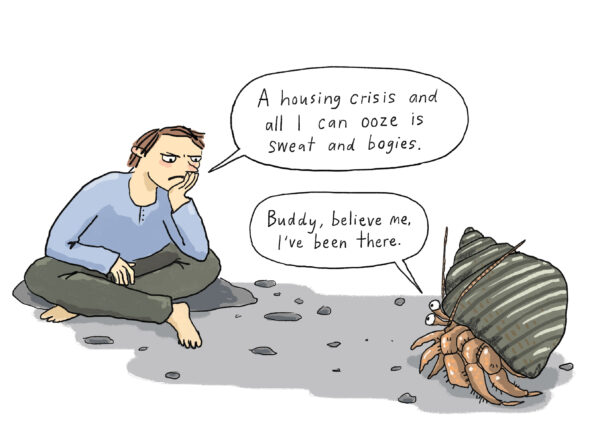
You, too, secrete all kinds of things. Most of your secretions happen inside your body—you never see them or sense them (if everything is going well). Your stomach secretes gastric juices that digest your food. Your skin secretes oil to keep itself smooth. Your endrocrine glands secrete hormones into your bloodstream. When you cry, you secrete tears, and when you exercise, you secrete sweat. Scientifically, secretion describes the process of cells making something and releasing it, as opposed to, say, your body processing something and getting rid of the waste. (Snot is a secretion. Poo? Nope.)
We have secretions in common with many other species across the animal world. Mammals, birds and reptiles all produce tears (yes, including crocodiles), though they do so only to lubricate their eyes, not to express feelings. Rats sometimes cry red tears, which makes them look a bit like they’re weeping blood, because of a colour-producing gland that becomes overactive when a rat is stressed or sick.
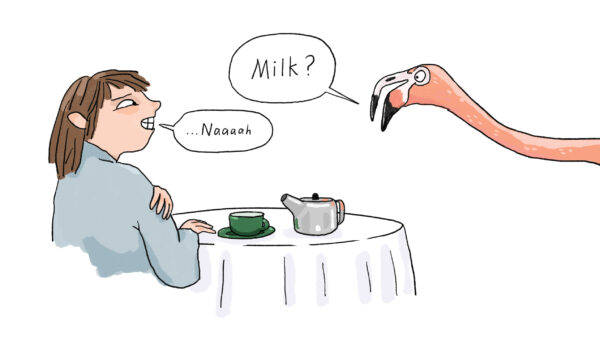
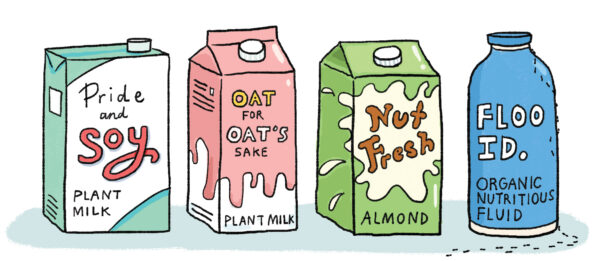
Many animals, like us, have special glands for secreting baby food. Female mammals can’t claim exclusivity, though: two species of male bats secrete milk. Certain birds produce milk to feed their young, and that’s secreted in their crop, the throat pouch that some birds have for storing food before swallowing it. Crop milk is made by doves, pigeons, and, oddly, flamingos—and both males and females produce it.
Male emperor penguins secrete crop milk, but female emperor penguins don’t, and nor does any other species of penguin. It seems strange, but emperor penguins were already Antarctica’s weirdos: instead of breeding in the warmer months, like every other penguin, they incubate their eggs over the harsh Antarctic winter, and that’s a male-only job. Crop milk means they have nourishment for the chick if it hatches before their mate returns from her winter of fishing.
Even ants secrete something to feed their young, though scientists have drawn the line at using the word “milk” for it. (They’ve gone with “nutritious fluid”.)
Some animals can construct beautiful homes with their secretions, which is a bit as thought we could weep fabric or sweat out a house. A wide array of animals, from lobsters to possums to deer to beewolf wasps, can communicate using secretions, scents that say everything from “Look out!” to “You’re hot!” Others can disable their enemies with giant globs of goo, immobilise prey with self-made poisons, or create precious jewels out of rubbish. When it comes to secretion, humans are duds.
*
Molluscs are the world’s champion secreters. All the shells you see on a beach were made by the animals that used to call them home. Marine molluscs take building blocks from the seawater—dissolved particles of calcium and carbon—and, using a part of their body called the mantle, mix these with proteins they’ve secreted to construct their shells. The material that they make is calcium carbonate—the same stuff as marble, limestone, eggshell, chalk. It’s even an ingredient in toothpaste.
Why are shells such different shapes? In tropical oceans, it’s easier for molluscs to pick up the particles they need, and so they build huge shells, like queen conchs and giant clams. Cold-water molluscs, however, must expend more energy on creating a home, so they build more sensibly.
The spikes and spines on shells evolved during a Mesozoic arms race: as predators got better at busting into mollusc shells, molluscs grew more and more fortifications, or developed other defensive secretions (cone snails, for instance, can fire a harpoon containing venom). Mussels and oysters evolved the ability to secrete glue in order to attach themselves to rocks. And if something unwanted gets into their shells—a parasite, a bit of grit—they slather it in secretions of nacre in order to protect themselves. Nacre also happens to be very pretty; a pearl is formed.
One of the strangest secreters of the underwater realm is the argonaut, a type of octopus that’s rarely seen because it lives on the high seas, far from shore. When a female argonaut is about two weeks old, it begins to construct a beautifully textured spiral shell—except it’s not a shell at all. Because the argonaut secretes it from her arms, not from her mantle, it’s technically an “egg case”. But the argonaut lives in it whether or not she is raising a family. She traps air in it in order to float on the surface of the water, looking for food, or for male argonaut.
The problem that ocean acidification poses—to sea butterflies, mussels, argonauts, cone snails, crabs, the lot—isn’t that the water has changed flavour. It’s that these animals will increasingly struggle to build their shells.
The ocean naturally absorbs carbon dioxide from the atmosphere, and because there’s currently more carbon dioxide there than normal—thanks to humans—the ocean is absorbing more than normal. This changes the chemical composition of the water, reducing the number of molecular building blocks available to molluscs, or dissolving their shells entirely.
For a long time, scientists assumed that sea butterflies would be the first to go. But recent research shows that sea butterflies may have a secret weapon in the form of another secretion—a protective coating on the outside of their shells. Sea butterflies can also repair their shells, scientists found—a skill that possibly evolved to fix damage caused by naked-sea-butterfly attacks.
So far, some species of sea butterfly are doing okay, whereas others are more susceptible to acidic waters, according to a recent study led by Clara Manno, a scientist at the British Antarctic Survey. Manno periodically collected sea butterflies from traps 400 metres deep in the Southern Ocean, and found that their survival depended on the time of year in which they spawned. Winter, it turns out, is a particularly difficult season to be a tiny shell-building mollusc: there are few construction materials to be found, and ocean acidification makes it all worse. The future, for sea butterflies, remains unknown.
*
Calcium carbonate isn’t the only substance that animals secrete to build a home. Others have developed a softer material: silk.
Humans figured out how to steal silk from Bombyx mori thousands of years ago. These caterpillars make it easy: when they spin their cocoons, hoping to become silk moths, they secrete a thread hundreds of metres long, wound up in a spool. Alas, they will never reach their adult form: the caterpillars are killed before they can punch a hole in their cocoons and ruin the thread.
Silk is one thing, but spider silk is even better: flexible, stretchy, stronger than steel. Darwin’s bark spider silk, the most durable of all spider secretions, is 10 times tougher than Kevlar—but its stretchiness means it wouldn’t make a particularly effective bulletproof vest. (The bullet might not go through the spider silk, but it would still go through you.)
Still, it’s tantalisingly useful, and for decades, scientists have been trying to synthetically copy spider silk in order to make it artificially. Farming spiders in the same way as silkworms isn’t an option; they eat each other when in close proximity, and they don’t wind their silk into a tidy little spool. Spiders’ abilities, however, have seduced scientists into spending decades of their lives on figuring out how they do it. “Here is a creature which, according to its size, can build from its own body a structure on the scale of a football pitch overnight, every night, and can catch the equivalent of an aeroplane in it,” spider researcher Fritz Vollrath, who runs the Oxford Silk Group, told The Guardian. “Why would you not want to study how it did that?”
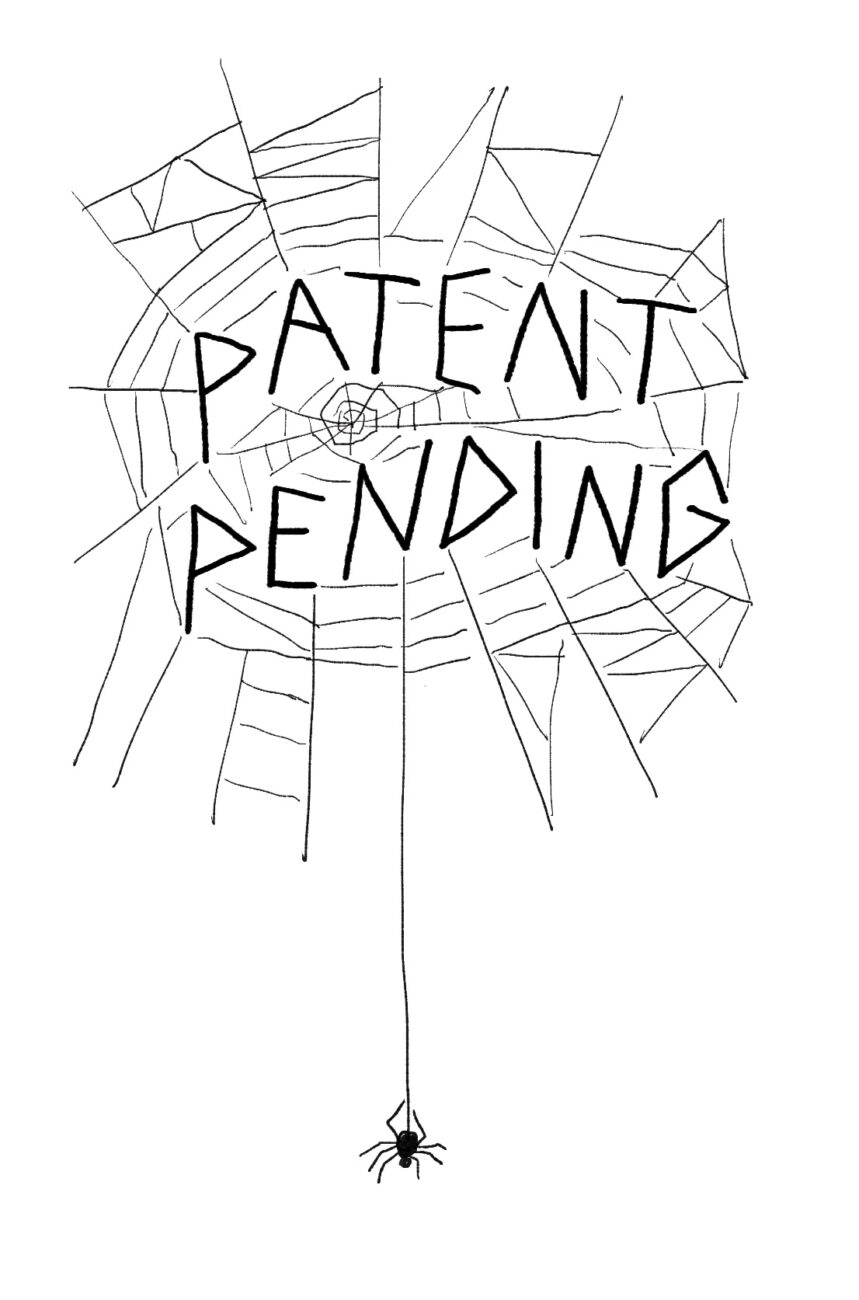
One researcher used spider silk to spin a set of violin strings, which calls to mind the fact that spiders’ webs are fundamentally a musical device; the strings’ vibrations allow spiders to listen for the signature footprints of their prey. And in an ever-noisier world, even spiders have had to adapt: research finds that spiders construct their webs differently in an attempt to soundproof their home and allow them to listen for tasty trespassers.
New gene editing tools, however, may finally provide a breakthrough. In 2023, a group of researchers announced that they’d successfully created silkworms that produced spider silk by editing their genomes to add the genes for some spider-silk proteins. A year earlier, other researchers engineered bacteria to produce spider-silk proteins. The hope is that spider silk might be medically useful, revolutionising sutures and implants.
But it isn’t just about the proteins—recent research also found that the silk’s strength comes from spiders stretching the threads with their hind legs as the thread is released from their spinnerets. Perhaps spiders’ secrets of secretion will remain hidden a little longer.
*
Off the coast of Aotea/Great Barrier Island, 681 metres below the surface of the sea, a hagfish nibbles delicately on frozen pilchard in a bait trap laid out by Te Papa researchers. The hagfish isn’t an eel, but it looks like one, long and sinuous. In daylight, its skin would be pinkish-purple, with the velvety texture of an air mattress. This far down, illuminated only by the light of an underwater camera, it’s grey.
Hagfish are fearsome-looking—they have no jaw, just lips studded with teeth. Still, this one is in trouble. A kitefin shark has just swum into the light, and now it’s circling the hagfish, which keeps on eating.
Suddenly, the shark strikes, seizing the hagfish halfway down its body. But it lets go immediately. There’s something in the water. The camera goes blurry in one spot. The shark appears to cough, and turns tail. It’s gone.
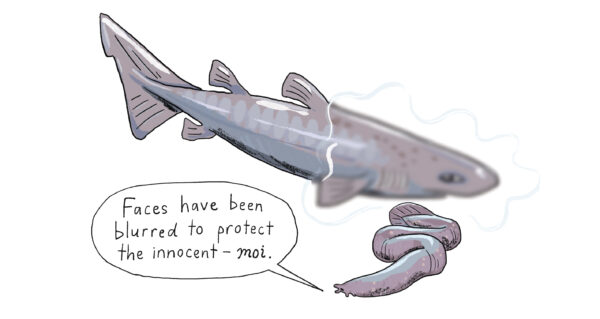
The hagfish has jetted a cloud of goo into the shark’s face—thick slime that clogs the shark’s gills. The researchers filmed a succession of hagfish, in various locations, repelling a draughtsboard shark, a swollen-headed conger eel, a pink cusk-eel, a northern spiny dogfish, a southern Mandarin dogfish and two bass groper. The hagfish won each time, even though their attackers were many times their size. “Hagfish secrete slime at an incredibly fast speed when they’re under attack,” said marine biologist Vincent Zintzen, who led the project. Moreover, the goo released from their slime pores expands 10,000 times as soon as it hits the water. That means a tablespoon of secretion becomes 150 litres of slime, enough to overflow the average wheelie bin. It looks like snot but it’s not: it’s made of very thin and very stretchy protein threads, and those threads are soft, not sticky. “It’s totally different from anything we’ve seen in the natural world,” Zintzen told Science News.
Hagfish have to be careful not to get stuck in their own slime; they’ll drown if they do. To clean it off themselves, they tie themselves in a knot, and slide the knot down their bodies in a wiping motion.
The hagfish bitten by a shark likely wasn’t hurt before it could slime its attacker: a hagfish’s skin is so loose that it’s too squishy to bite properly. Imagine trying to grab someone and only getting their clothes; the hagfish could be 40 per cent bigger without its skin having to stretch.
Hagfish haven’t changed in 300 million years: in evolutionary terms, their bodies are super retro. This is unusual in the animal world, but it also makes sense. Secretions evolved to solve problems: eyeballs being too dry, soft mollusc bodies needing shelter, babies requiring food, or fish defending themselves from attack. Perhaps, once hagfish evolved slime, they simply didn’t need anything else.
More by Rebekah White
More by Kay Lawson
Subscribe to our free newsletter for news and prizes
3
$1 trial for two weeks, thereafter $8.50 every two months, cancel any time
Signed in as . Sign out