How one man with a chip on his shoulder changed our waterways forever. (more…)
More by Bill Morris



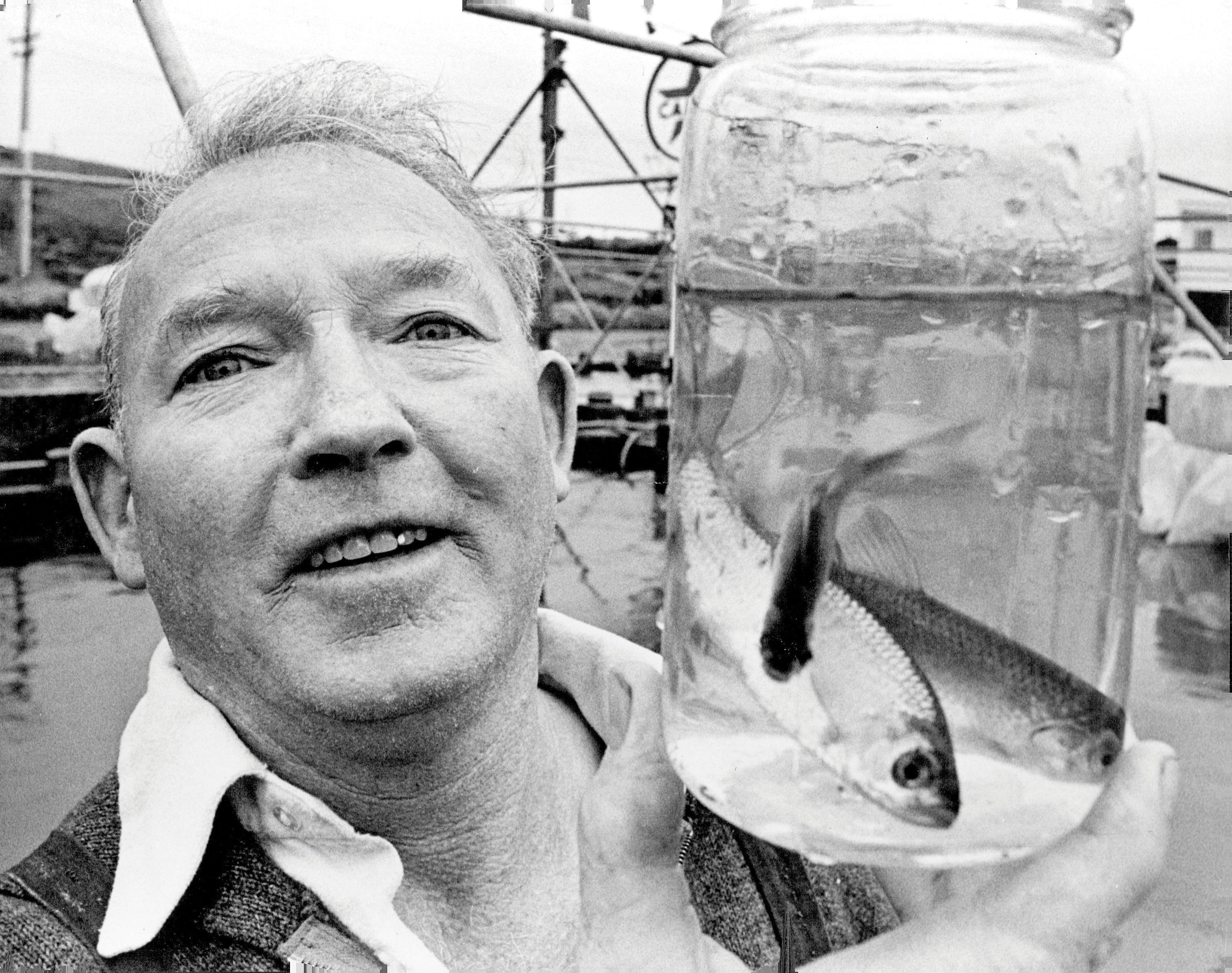
The manager of Farmers in Auckland had a problem. He’d bought a handful of koi carp, an ornamental species, for a display pond. The carp had been smuggled into the country with a load of goldfish. Perhaps the manager knew this provenance, perhaps not, but in any case, the carp were sick. He got on the phone to Stewart Smith, a well-known breeder of exotic fish.
As Smith later recounted it, in his West Auckland garage the carp perked up—and spawned. He sold the thousands of fingerlings to an acquaintance, who onsold them to a farmer on the Waipā, a tributary of the Waikato. A flood swept the fish into the river proper.
Some 40 years later, the Waikato river system is riddled with koi carp—it’s estimated they make up 80 per cent of its fish biomass. The carp cause enormous ecological damage, rooting up plant life, stirring sediment, and driving algal blooms.
Other invasive fish species—rudd, tench, gambusia and perch—also plague North Island waterways. Stewart Smith is tangled up with all of them.
Smith was born in East London in 1913. Fishing in the city’s canals was the highlight of his working-class childhood. At 15, perhaps due to his parents’ financial difficulties, he and his brother were shipped off to New Zealand. Here, working on farms and fishing boats, Smith crystallised his ideologies.
When World War II arrived, Smith refused to join the Army—by then he was an active member of the Communist Party, and he feared he’d be shot for it.
He was thrown into a conscientious objectors’ camp near Tūrangi. At the request of the camp officers, Smith illegally netted trout from the Tongariro River to feed the inmates and officials. “Like all commercial fishermen, I was a born poacher,” he wrote.
Upon his release, Smith bought an empty section in Massey, Auckland, and built his garage. From here he would launch his life’s work.
Smith longed for the fishing of his British childhood, catching so-called “coarse” fish, such as tench, perch and carp. He railed against the dominance of the trout fishing “elite”, such as the Acclimatisation Society, which had actively blocked the introduction of other fish. To Smith, this mirrored the old class divides of England, where trout fishing was reserved only for the wealthy.
And so he did something about it. He built a sophisticated network of fish-breeding tanks at his garage and installed a concealed tank in the back of his car, to carry fish around the North Island.
Smith would talk landowners into letting him release fish into ponds and drains on their properties. Or he’d simply sneak in without asking. He would tip fish into roadside rivers and lakes—anywhere he thought could do with a new fish species or two. Over four decades, starting in the 60s, he likely released tens of thousands of fish. Thanks to his efforts, rudd and tench were eventually classed as acclimatised in northern New Zealand (in other words, impossible to get rid of).
His grand plan of introducing gudgeon to Lake Taupō never came off. In 2005, when Smith was 92, authorities raided his property, and then a farm near Helensville, finding ponds full of gudgeon and an invasive Australian freshwater crayfish. It was Smith’s final, failed, fling. He died three years later.
Right to the end, Smith was railing against the powers that opposed him and his fellow coarse fishermen. “It’s all about money,” he wrote. “They’re trying to destroy our sport to safeguard their profits… I’ve done my part. Now it is over to you.”
More by Bill Morris
Subscribe to our free newsletter for news and prizes
3
$1 trial for two weeks, thereafter $8.50 every two months, cancel any time
Signed in as . Sign out