They’ve been here 300 million years. They grow on rock, or in deserts, or underwater, or on dead animals—and they can survive for centuries. In short, mosses are super cool. (more…)
More by Catherine Woulfe



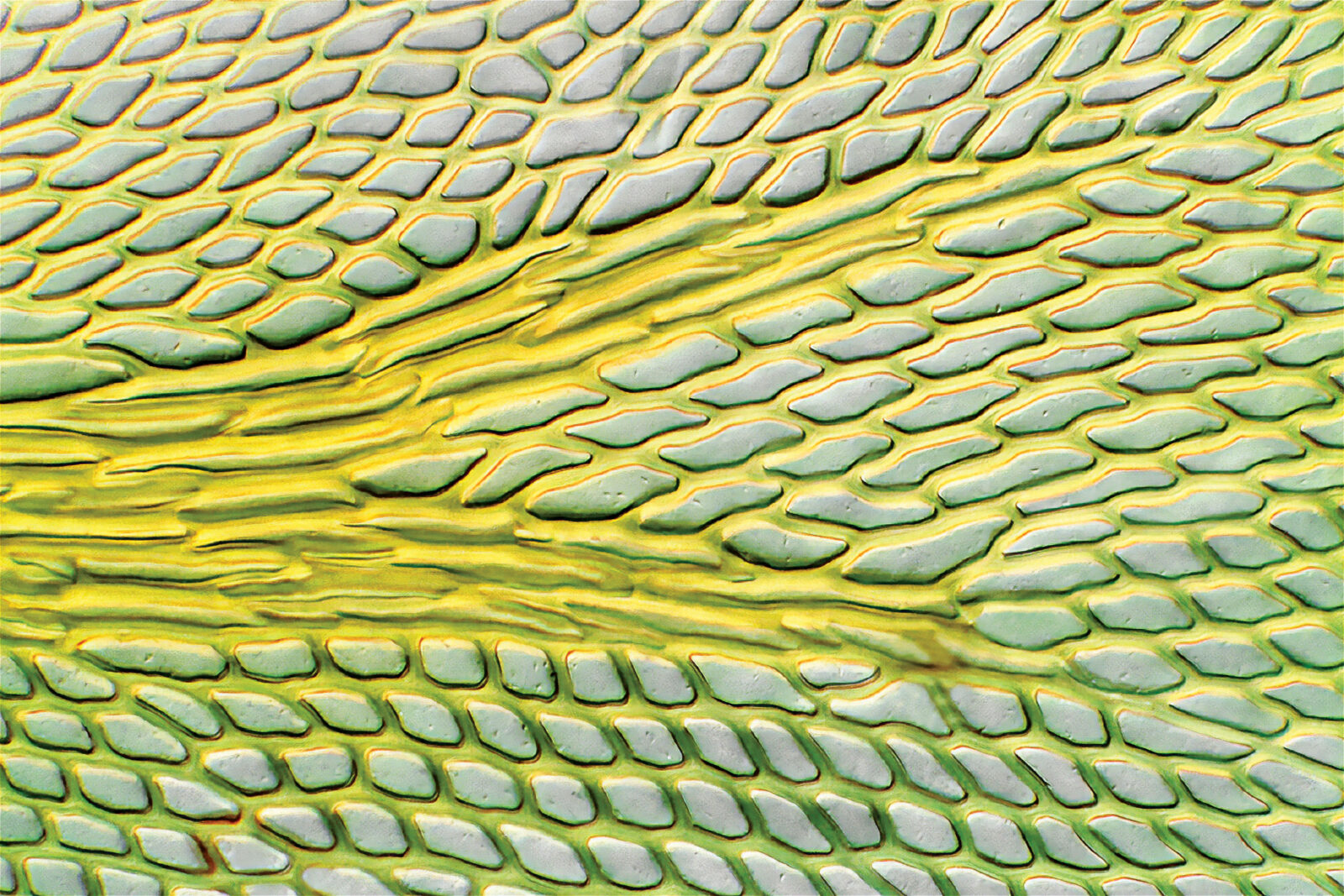
Aimee Pritchard was 17 when she saw the light. Working on a botany project about cell structure, she slid a sprig of moss under a microscope and was greeted by a gaudy mosaic of shapes, strange and non-uniform, like sea glass arranged in bubbles. “Nobody knows about this,” she thought, elated. “I’m the only one who knows.”
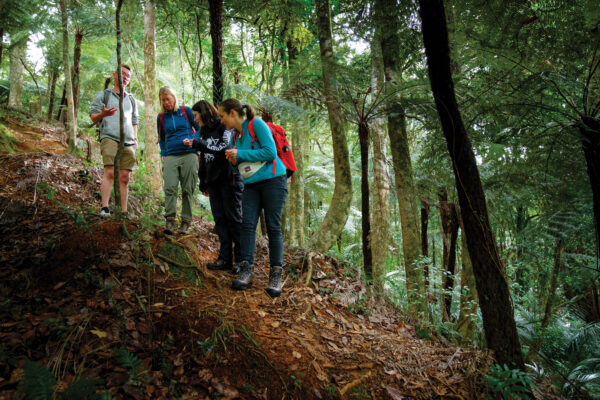
Sixteen years on, we pick our way down a steep track on the outskirts of Whangārei’s Pukenui Forest, a lone pīwakawaka in tow. Above us rustle kahikatea, tōtara. As the track flattens out we pass through a grove of nīkau.
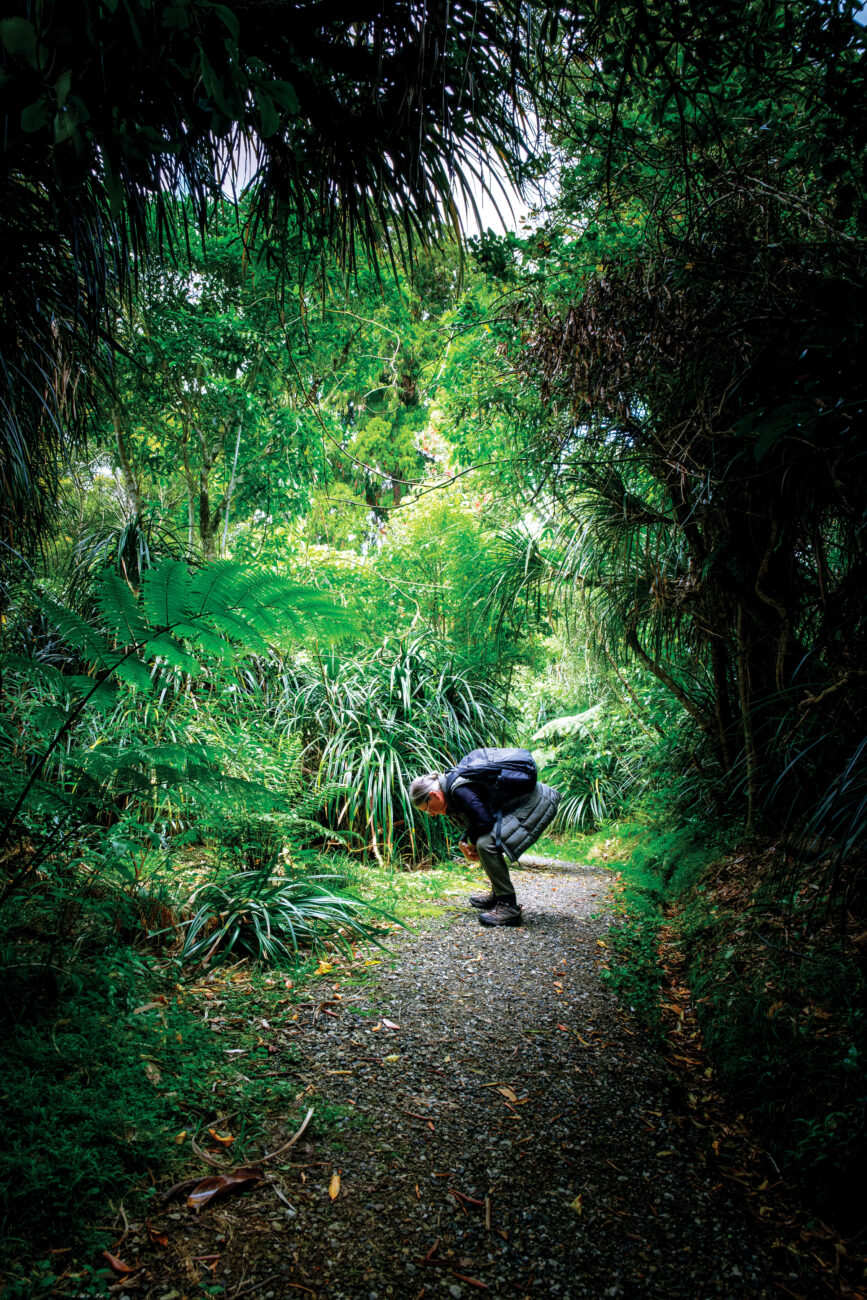
“Everyone’s like, ‘Oh, look at the forest!’,” Pritchard says. “And you’re like, ‘Yeah, but look at this.’” She gestures at a leg-sized log on the edge of the track, quilted with greens. Now a research assistant at the University of Otago, she has a young son and another child on the way. She often walks at toddler speed, eyes down, stopping now and then to peer at a furry root or trunk. She gets dizzy sometimes, so focused on the small and low. “I look up and I’m like, ‘Whoa’.”
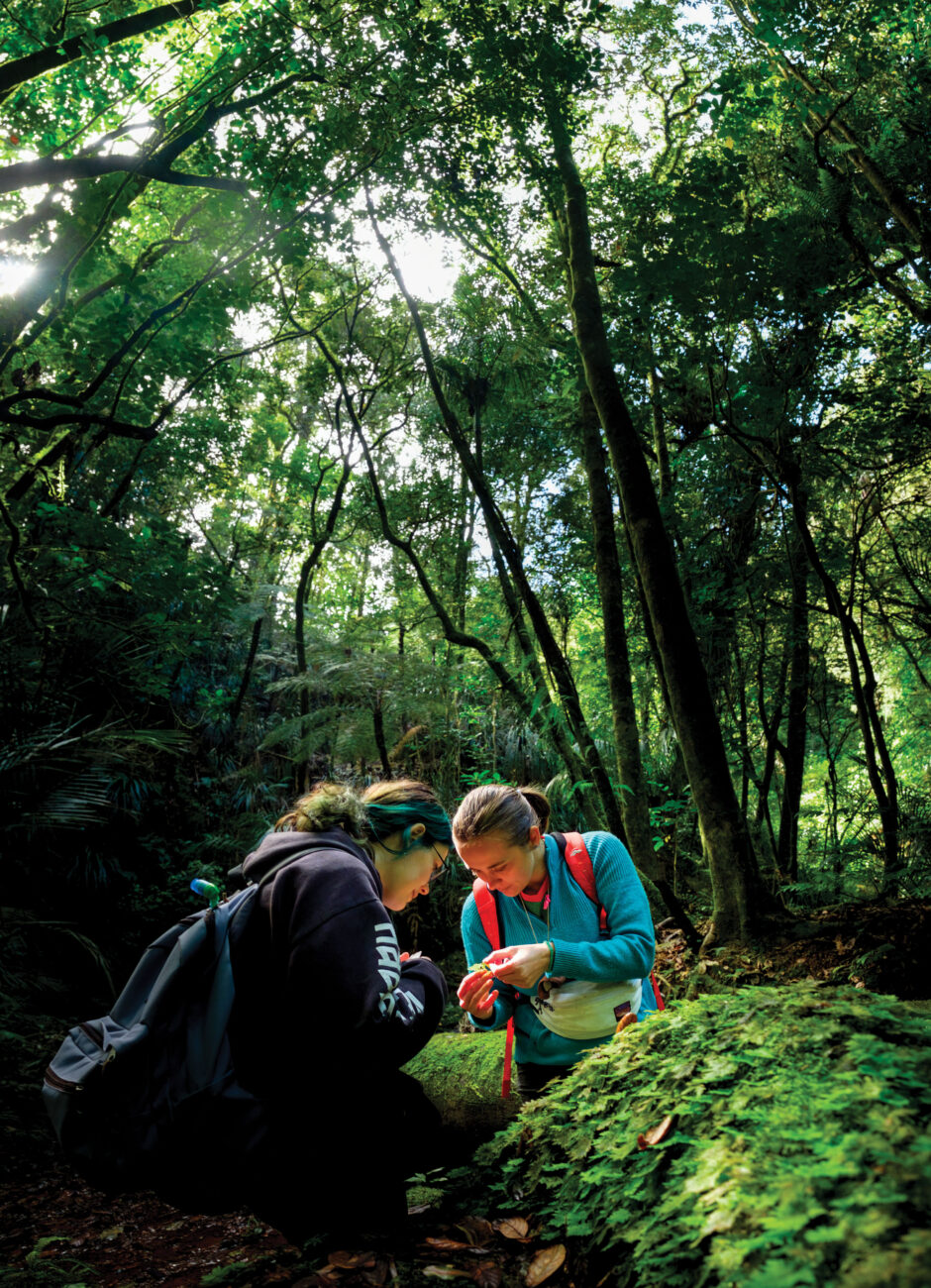
Three years working to identify samples for the Department of Conservation—staring down a microscope at moss after moss—failed to kill the buzz. So did two years of field work at a bog in the Catlins. It must have been muddy, and cold, and hissing with mozzies, but Pritchard talks only about the mosses: they hung from the trees and built cushions on the ground, she says, and the whole gang was there—all the big moss families, except those that prefer clean rock. Most astonishing of all was the Sphagnum. The top layer of this moss is green and tender, a dense constellation of star-shaped growing tips. But part the stars and you’ll see the stems underneath are dead and brown. Further down still are the base layers, inexorably compressing into black mats of peat and, eventually, coal. Probing this mat, Pritchard found that in patches it was 18 metres thick. “Really deep,” she says. “Insane.”
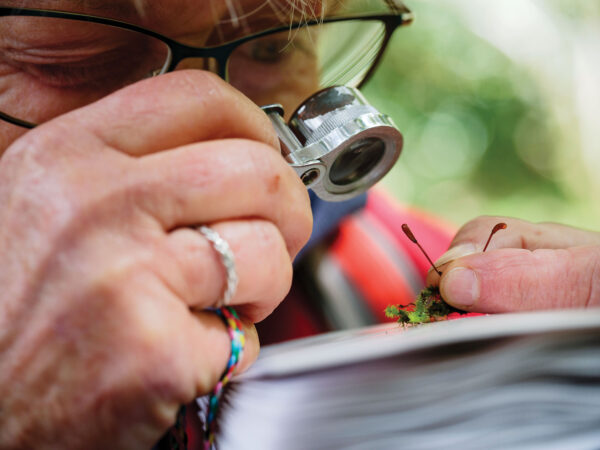
We reach a creek. Pritchard’s colleague Jess Paull is here already—standing on a boulder at water level, she has her hand lens out and her face pressed close to the bank, communing. Delicate rhizomes of ferns thread across the vertical clay. Hammocks of spiderweb brush her face. If there’s anyone who loves mosses more than Pritchard it’s Paull. For her PhD she’s studying the microbial communities that live in mosses—whizzing samples in a blender, pouring the purée into Petri dishes, and monitoring what grows. Lately, she’s also been making “moss pets”—live mosses packed into Petri dishes—for everyone in the botany department.
“Whenever you’re having a rough day, you can just pet the moss like a little soft friend,” she says. “They’re so cute. It’s like stroking a cat.”
Paull, a Californian, moved to New Zealand to study fungi, but was less than entranced by their “grey splodges” under the microscope. So in the fungi off-season she messed around with mosses. “I have never in my life seen anything so fascinating,” she says. “It’s the cells. They’re incredible. They’re beautiful. And they’re so different.” How many people in the world, she wonders, have really seen a moss?
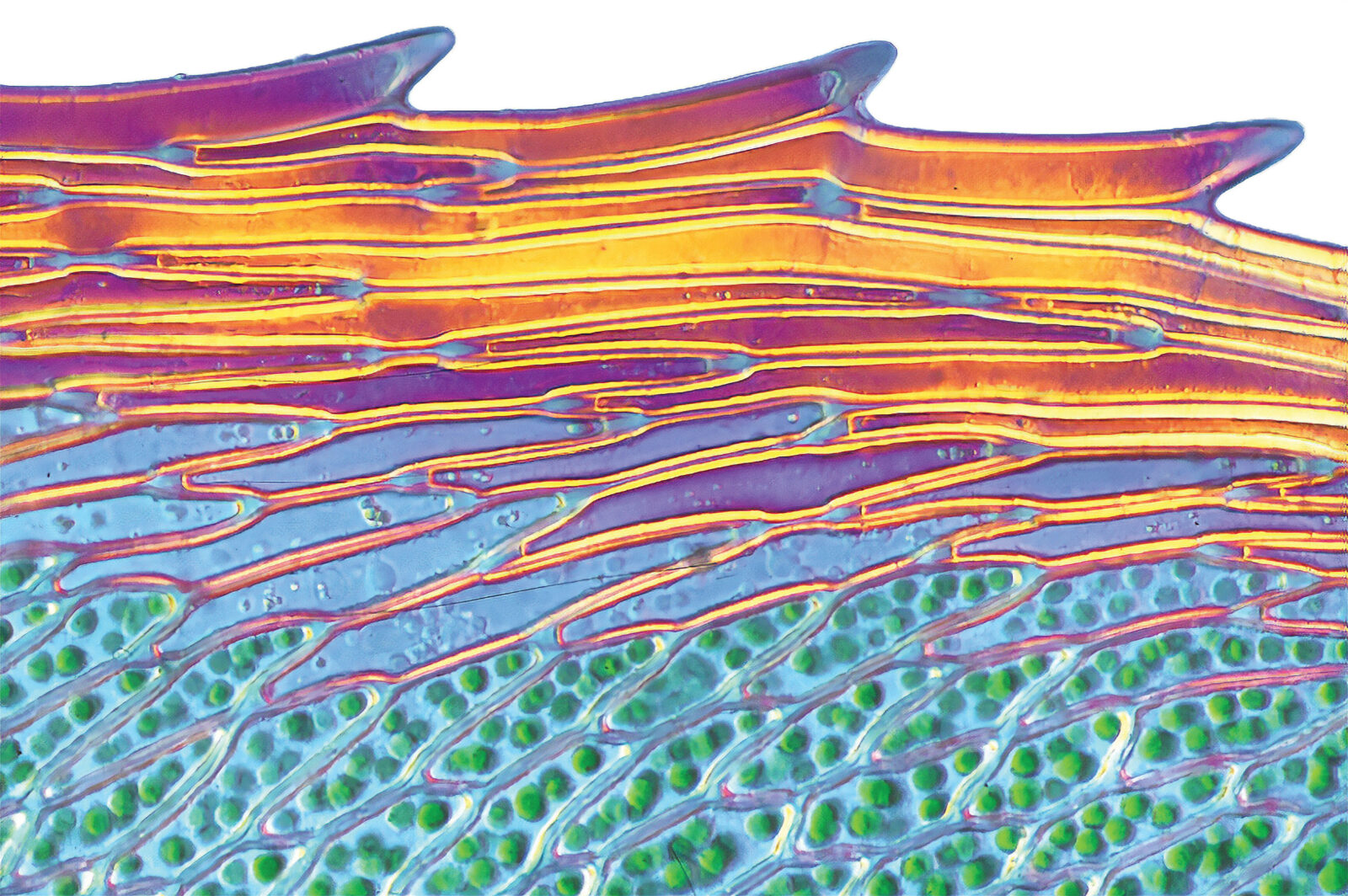
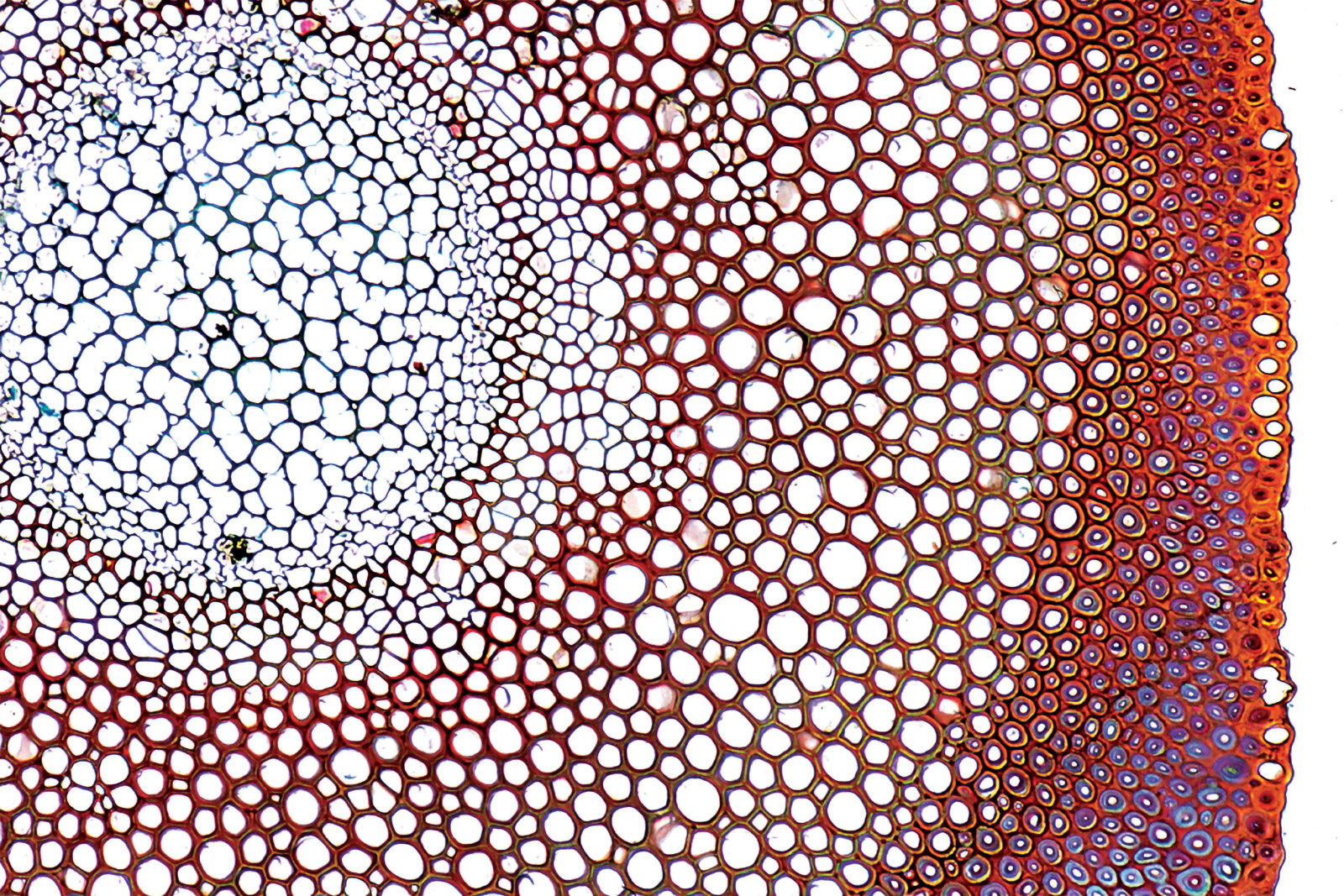
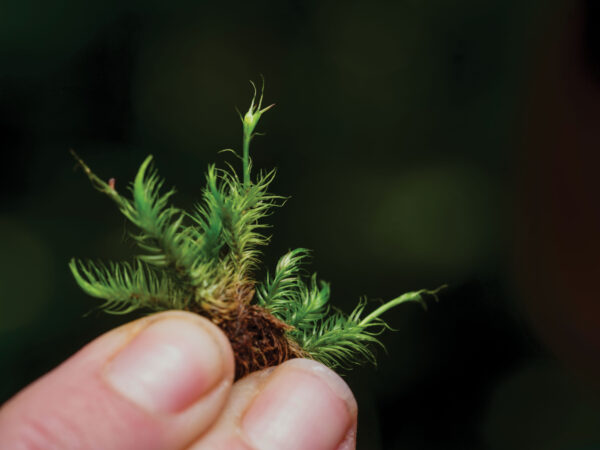
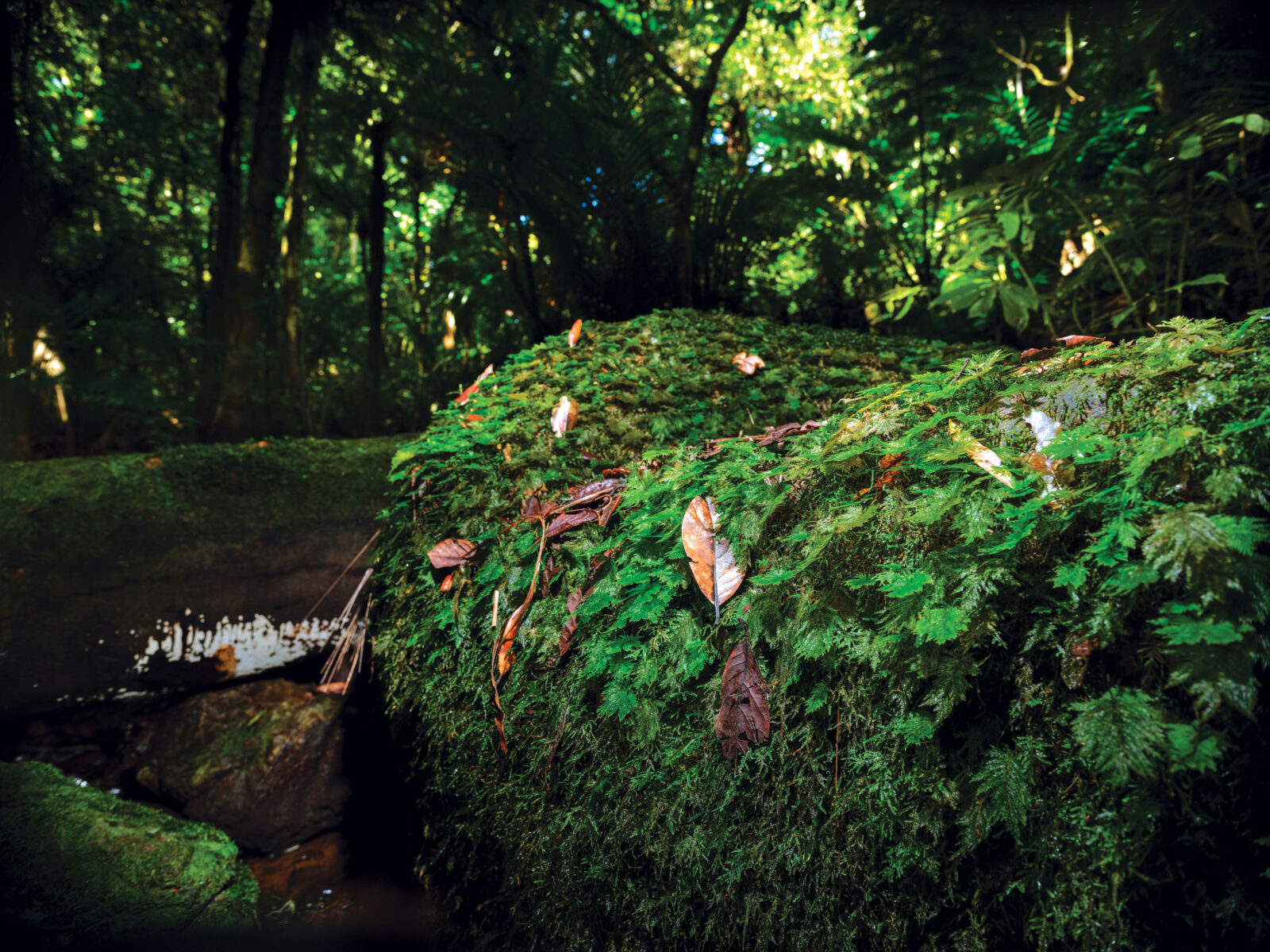
Boulder-hopping up the creek is tricky when you’re aware of the living mats under your feet. I try to step in the same spots as the others. One by one, we make a dodgy leap to shore—and round a corner into fairyland. Here, a tūī drops coins of sound into the water. The sun breaks through the canopy just so, painting a boulder that is bigger than Pritchard and Paull put together. The rock is drenched in the umbrella moss Canalohypopterygium tamariscinum, as if someone’s upended a bucket of green feathers. Each frond has found its own space and tilts like a cupped hand, ready to receive the light and the rain. Paull brushes her palm across them in greeting.
Pritchard pulls out a single frond and shows me its long, hair-like rhizoid. This is not for sucking up water—mosses don’t have roots, or vascular systems, like most plants, rather absorbing water directly into their cell walls, bringing each into an equilibrium with the humidity of the air. It’s not something the mosses control. The water, she says, “just passively enters and exits. It’s quite a hard concept to understand, because we always do stuff.”
Certain mosses that live underwater, Pritchard says, are thought to hold onto oxygen bubbles then use those to photosynthesise, even when completely submerged. “Pearling,” bryologists call it. Lots of mosses have tiny hairs on each leaf surface, helping to move and direct water for the long haul.
Mosses have many ways of spreading and reproducing; they will creep, or grow from fragments, or set spores adrift in wind, water, fur and feathers. Some, I’ve read, will guide water on their surface into minuscule hydroslides, allowing gametes to cruise between male and female plants.
It is, as American botanist and nature writer Robin Wall Kimmerer puts it, a “beautiful intimacy with water”. Her 2003 book of essays, Gathering Moss, is something of a touchstone for bryologists (the susurrating headline on this piece is a line of hers). Kimmerer, a member of the Citizen Potawatomi Nation, urges us to consider the aggregate: all those mosses, taking in moisture from rainfall or creek or mist then slowly releasing it, their stockpile of humidity helping to keep their vascular cousins ticking over. The vascular plants, in turn, give the mosses shelter from desiccating winds.
The rhizoid, then, is purely about hanging on. Pritchard tucks the frond back in. “That’ll keep growing,” she says. “I’m not worried about that.”
Is this boulder’s ruffled cloak one organism, or many? “It’s really hard to say what’s an individual,” Pritchard says, with the tone of someone working out how to explain something super complicated. Paull jumps in. “Or if it matters at all, because if the colony structure is what maintains viability of the population, then…”. She shrugs. These mosses are haploids, she explains, meaning they pass on one set of chromosomes, rather than two as humans or vascular plants do. Each moss is a true clone of its forebears, and of those that come next. “So what is an individual if it’s identical in every way?”
If a moss dries out too quickly it can be damaged. Setting up in big patches—in communities—provides a buffer against this, a tender wet blanket working for the greater good. The politics of the collective. The politics of the very small. Welcome, Paull says, to “the non-vasc mind”.
*
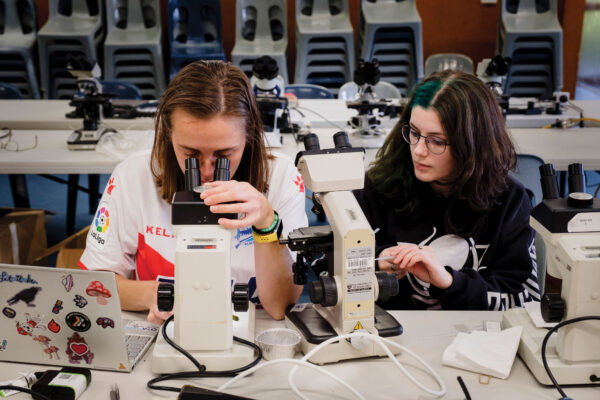
Every year, a few dozen “non-vascs”—people who fancy lichens, liverworts, hornworts or mosses—gather for the John Child Bryophyte and Lichen Workshop, spending their days collecting samples and their evenings hunched over microscopes. There are niches.
“I like lichens,” says University of Auckland technician Ashleigh Adam, in a definite tone. “Liverworts are much more beautiful than mosses,” says DOC senior policy advisor Paula Warren, fixing me with a glare. “Are you a mossy person?” someone asks hopefully, as we wash dishes.
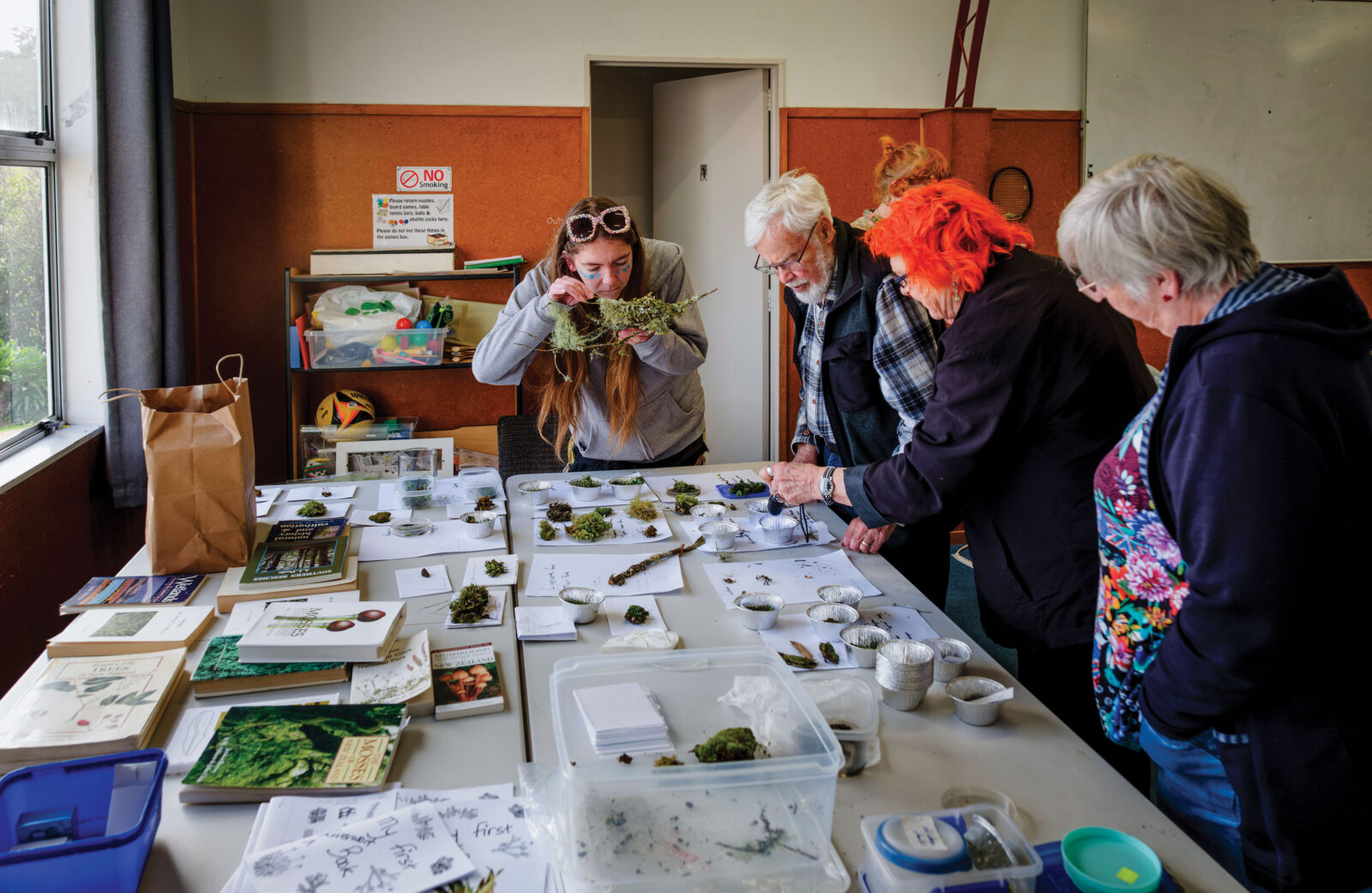
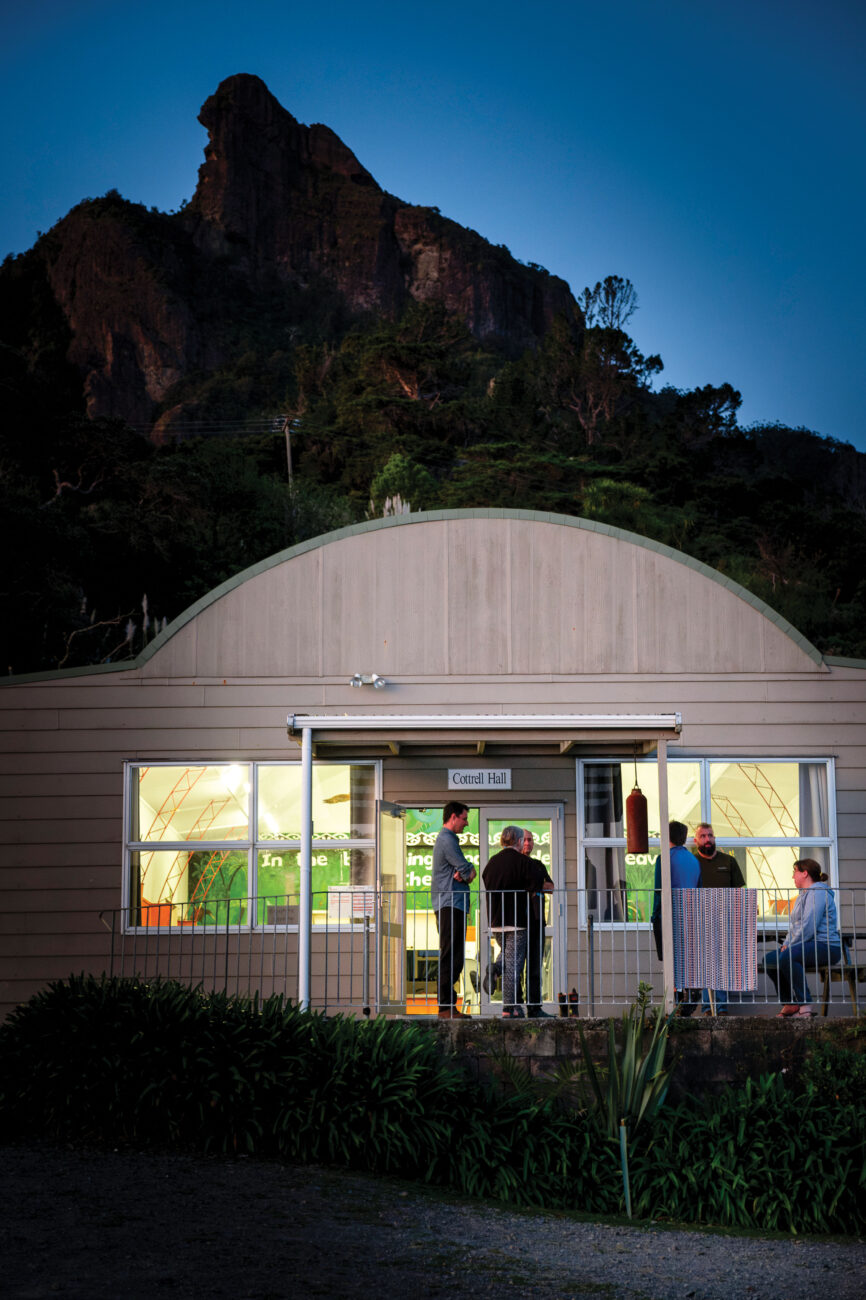
This year’s workshop is at the Manaia Baptist camp at Whangārei Heads. The hub is a big dining room lined with long tables, huge sea views at one end and kitchen at the other. Adam has brought a van full of loaner microscopes. Arriving bryologists chuck their sleeping bags on bunks and start plotting their outings. Each morning, they pack a lunch and head out in happy groups. In the afternoons, they straggle home, find a ’scope and unpack their stashes—tufts of green and brown and grey and copper, carefully tucked into folded paper, ziplock bags or photo albums. They arrange their samples on slides and chat about substrates and chromosomes beneath a mural that reads: In the beginning, God made the heavens and the Earth.
More by Catherine Woulfe
As dinner gets under way, the dozens of samples laid out at the back of the room combat the food smells with dirty huffs of forest.
I peer at a crunchy-looking tangle of Papillaria crocea, a spindly, avocado-coloured species that likes to dangle from trees. Through the hand lens it reminds me of an armadillo, snugly covered in scales. Rosulabryum subtomentosum is stumpy and dull to my inexpert naked eye—but magnified, its nondescript capsules, or fruiting bodies, turn out to be bright orange, nodding on long stalks like a bunch of tiger lilies. Kermit-green and soaked, Fissidens asplenioides reminds me of a soft toy fresh out of the washing machine. It’s not often that a bryologist uses a common name for a moss—it’s not often that a moss has a common name at all—but this one, I’m told later, is fondly called “drowned kittens”.
Some mosses, I now know, are so dense they feel like sharkskin. Some look like ropes of tinsel, or paws dipped in milk, or like the oxygen weed you use in fish tanks. Some have a charming way of curling at the leaf-tips as they dry, like a new baby clutching at air. There is a species that spangles Westland caves like glow-worms. Occasionally, I am told, a moss dislodged from a tree or a bank will form itself into a ball and bumble about loose on the forest floor.
When you learn such things about mosses, the way you think about them changes, and so does the way you talk. Using the monolith “moss” becomes nonsense, as silly as looking at a forest of kauri and māhoe and ponga and saying, “Oh, look at all that tree.” So mosses, say the devotees, taking their time over the plural. More often they use Latin, giving each species the gift of its name.
Susan Hansard, a botany enthusiast from Foxton, attends every workshop with her friend Lynette Fischer, from Palmerston North. “I always liked the little things in the forest,” Hansard says. “These plants open your eyes up to what most people will walk on by and not even see.”
What are these two hoping to find up here? Anything new, Hansard tells me—any mosses they haven’t yet met. I note that “met”, and she smiles. “Well, yeah. It is a two-way thing.”
*
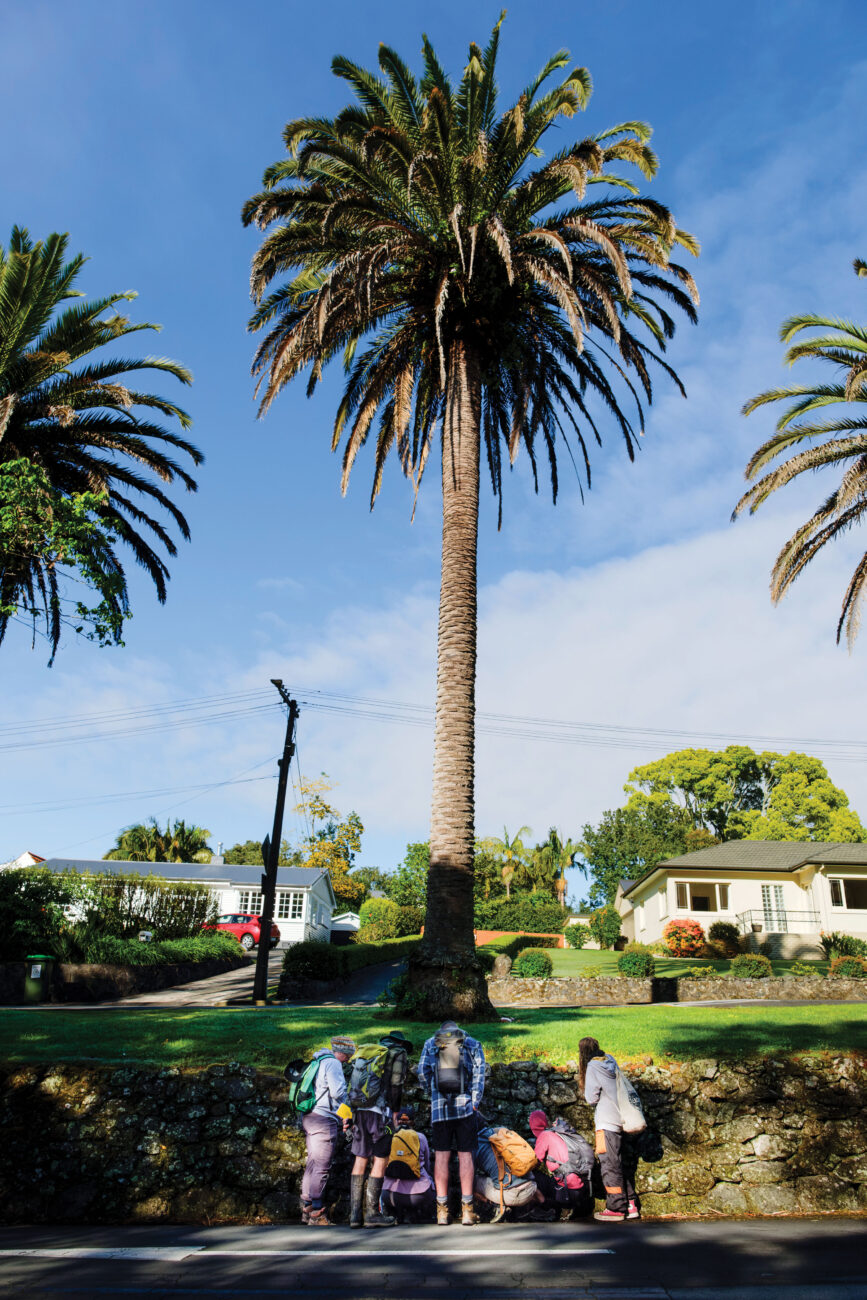
Funny thing about bryologists: they often don’t make it out of the carpark. One morning, a tired bunch of us pull in to Mair Park, a patch of bush near the Whangārei city centre. We’ve been promised “thick carpets” of mosses and liverworts in the forest understorey. But look! Right behind the cars: A rock wall. The group perk up, spreading out along the wall, pulling out hand lenses and excited Latin. At speed it sounds like Elvish.
An hour later, we’ve made it maybe 100 metres past the entry gate. “That’s how you know it’s good!” grins ecologist Marley Ford.
A clutch of preschoolers hoon past. Rewarewa flowers litter the ground like red hedgehogs. Ryan deRegnier, a University of Auckland bryologist who grew up in rural Wisconsin, ducks off the track to look for two old friends. “Caco”, or Calomnion complanatum, is a yellowy-green moss that likes to drape its fingers down the trunks of tree ferns; deRegnier and a colleague have been studying settlements of it, trying to understand how the moss influences other plants in each spot.
The other is Tayloria callophylla. “I would love to find some of my dung moss,” deRegnier says, slightly wistfully. “It grows on, well, dung, and dead animal carcasses.”
Does that mean you see blobs of it beside dog-walking tracks? “Pretty much, yeah. You’ll see a little clump of it and think, ‘Oh, that kind of looks like dog poo…’” There is a particularly “good habitat” on a certain track in Swanson, West Auckland, he says, which strikes me as a nice way of looking at the world.
DeRegnier, one of the few people studying mosses in New Zealand, has always been fascinated by what he calls “strange vegetative systems”. T. callophylla truly delivers. Typical life story: a dog drops a turd. Flies turn up, scattering the moss spores clinging to their bodies. Snugly in situ, T. callophylla bolts and spreads to smother the poo. For two or three years, the host decays and the moss grows, eventually pushing up capsules, ready to reproduce. It takes on a tinge of visceral red and starts to emit scented volatile compounds. (Push your nose right in, says deRegnier, and you’ll get a whiff of “a distilled smell of decay”.) Flies descend, pick up a dusting of sticky spores, and the cycle begins again.
It’s a good enough way of getting around—much more precise than relying on the whims of wind or water, as most mosses do—but across the world, scientists have noticed dung mosses such as T. callophylla popping up in places separated by oceans and huge distances. Way too far for a fly.
But what if, deRegnier wondered, something ate the fly, spores and all? A friend of his happened to be working with captive mynas at the university. So deRegnier made them lunch. He went out to his favourite track in Swanson and brought home an envelope stuffed with capsules. Chopping them up with a razor blade, he sprinkled the spore-laced powder across a banquet of mealworms.
He caught the bird poo on parchment paper, put it through a centrifuge, then spread the goo on agar and crossed his fingers. By day seven, when deRegnier slid a dish under the microscope, he could see the first light-green strands of protonemata streaking across the jelly. In the end, nine of his 10 samples grew T. callophylla. It was a global first—until then, it was not known that moss spores could survive in the digestive tract of birds, or in any animal gut at all.
For deRegnier, the “tantalising” finding indicates that mosses are more dynamic players in the ecosystem than we ever thought. And it could join a lot of dots. Such as why it is that certain species of moss appear in isolated patches of coast—which happen to be very close to seabird colonies. Not many birds or animals eat moss directly, or so scientists have always thought. Perhaps they’re munching in secret, though, which might explain why some mosses bother growing unusually large, colourful capsules, or why the capsules of Tetraplodon mnioides smell strangely like berries.
Caribou are one of the few animals that we know like to eat moss. DeRegnier pictures them on their great migrations, chomping mosses, leaving a trail of spores in their wake.
*
The patron saint of the New Zealand moss community is Jessica Beever, a career bryologist who has not attended the workshop in recent years, but is nonetheless very much present. Jessica, people say when they refer to her, just the first name, warmly. During the workshop, the moss people post her a handmade card full of Wish you were here. Paull and Pritchard stop off for a cup of tea with her on their way back to Dunedin.
Beever has not just a species but a genus named after her: Beeveria distichophylloides has stems of oily green leaves arranged on a flat plane, and each stem is often tipped with a bauble of filaments. Specimens growing at the Ōpārara River have been reported to have a luminous quality. What does Beever most want people to understand about mosses? That they’re beautiful, she says without hesitation. She says it again. “They are extremely beautiful.”
Beever is now 78—“the same age as Donald Trump”, she notes with a roll of the eyes. She lives near Auckland’s Cornwall Park and works, on a volunteer basis, as a research associate at Manaaki Whenua—Landcare Research, a lone mossy person in a hall of mycologists (“I don’t mind a bit”). On the wall of the department are pictures of her late husband, Ross, also a mycologist, a giant in his field. Some of the best moments of her career were spent with him. She loves that their names are still linked in her moss database, and on the folded paper packets she makes for her samples.
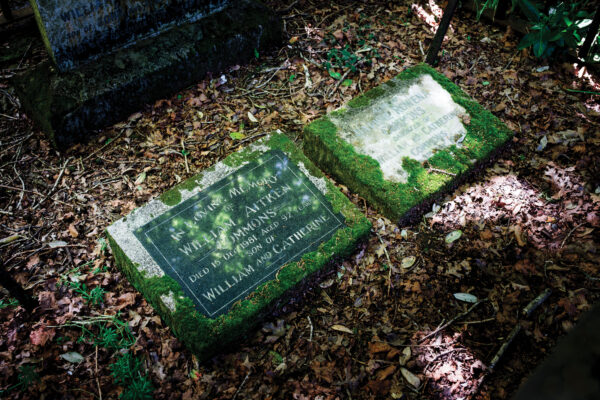
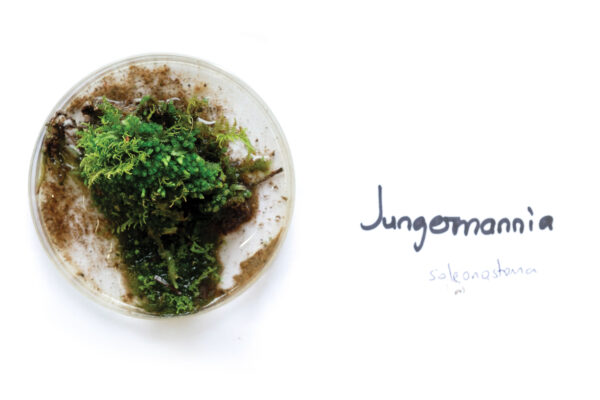
When Landcare moved to this building, she cheekily bagsed an entire bay for her moss samples by filling up spare shelves with empty boxes. They’re full now, each box stuffed with packets and stories. Usually she doesn’t think too much about her achievements: those thousands of samples; 119 collection books full of rich data; the second edition of guidebook The Mosses of New Zealand, in which Beever updates not just the words but the illustrations. She untangled the taxonomy of the Fissidens family for the moss eFlora, which is a sort of map, or master key, for those eyeballing a moss and wondering which it might be. Recently, the New Zealand Botanical Society awarded her the Allan Mere prize for her outstanding contributions to botany. Occasionally, when she has a visitor, the scale of her life’s work springs back into focus. “It’s good for me to do this with you,” she says. “Because I realise, yeah, I have done a lot.”
Originally, moss appealed because it was an aspect of botany that could continue around her young children (Rosemary and Graham; now, she has two grandchildren). You’d go for a picnic, Beever says, and come home with packets of mosses.
When we meet for the second time, I bring Beever an assignment: my five-year-old’s treasure jar, full of dried gum leaves and musty camellias picked up on long-ago walks. There’s a chunk of moss at the bottom that’s been drying out for two years, and Leonie wants to know its name, please. Beever pulls out her hand lens, holds the crispy scrap to her face. “Ah,” she says, and I know what she’s going to say. “Fissidens taxifolius.” Dammit.
This is the moss that many New Zealanders likely picture when we think of moss, because it is everywhere, especially in places where people like to walk. But it’s not ours—F. taxifolius is an invasive weed.
Bits of it arrived here somehow, before Beever was born. Since at least the 1940s, it has quietly crept across the country, swallowing up space not by reproducing but by being indestructible: fragments, broken off by shoes or paws or machinery, will simply keep growing if they land in a good spot.
It’s like The Slime, I say to Beever. “No, no, no,” she says with a grin. “It’s a moss.” She thinks it looks a bit like teeny fields of silverbeet. F. taxifolius prefers soil—such as the sides of walking tracks—but it will settle on rock or concrete, and is often spotted in parks and lawns. Beever has found it in the lawn of the Treaty House at Waitangi, and on the tracks of Hauturu/Little Barrier Island, and in the garden of the DOC rangers who live there.
We don’t know how much native moss F. taxifolius has seen off, although Beever has a feeling it’s “pretty efficient”.
“There’s a hell of a lot of basic facts that we don’t yet know,” she says. “That’s what makes life interesting.” Most of us have probably not noticed one moss muscling out the others. Should we care? To answer, she steps back into the world of the vascular. “Well, do you want New Zealand covered in gorse, or would you rather have native vegetation? You know, it’s the same thing.”
F. taxifolius even had the gall to colonise the driveway of the bach in the Waitākere Ranges that once belonged to the Pākehā side of Beever’s family, the Spraggs (she also has whakapapa to Ngāti Toa, Te Āti Awa and Ngāti Mutunga). It’s where she learned to love mosses. One spring morning, we drive back out there, and walk at bryologist pace through a patch of bush her family gifted to the council. We visit a kauri, generations of Spraggs old, and she points out the interwoven communities of mosses. She talks about the way, when flakes of bark fall, other mosses spread to claim the space.
Beever doesn’t go out in the field much these days. She hasn’t been to this bush in years. “Don’t tempt me,” she says with a laugh, when I ask whether there are big mossy questions she’d really like to answer. She is too busy already, mostly with finishing the Pottiaceae family for the moss eFlora, but also with distributing her thousands of samples to museums and public herbariums, archiving her collection books, and encouraging those freshly fallen for mosses.
*
Nobody quite knows how long a moss will wait for water. Ten years ago, Auckland Museum bought a little album of New Zealand bryophytes, mostly mosses, that had been collected sometime in the mid-1800s and found its way to an antique bookseller in London. Who had collected these plants? And when, exactly? To Beever, the album was a delicious puzzle. She could identify almost all of the mosses in their dry form. When she was not sure, she simply wet a tiny sample and watched the cells swell back into shape, a century and a half after they last met water.
In her office, I bend over the microscope. Beever puts a desiccated tuft of sphagnum on a slide for me and uses a dropper to apply a little water. I watch the cells dilate and take on a stained-glass sheen. I suck in a breath. I think I see the stem flex, the leaf at the tip flick up like the ear of a puppy, but maybe, I think later, I dreamed it.
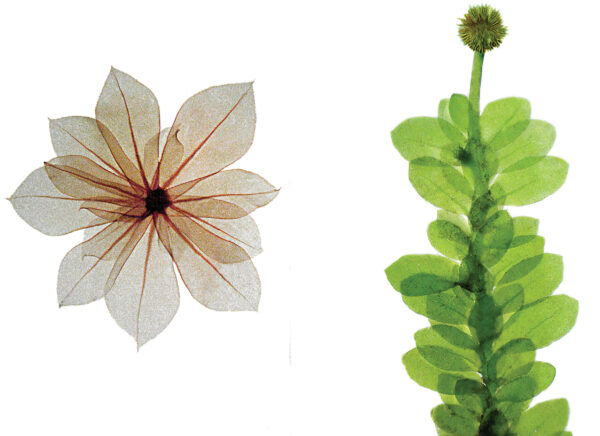
Even to the naked eye, a dry moss can look dramatically different from when it’s wet. Go for a walk in the forest just after it rains, Paull says. Then you’ll really see green.
Pritchard has heard a story of English settlers packing their porcelain in dried Sphagnum for the stormy trip to America. For some reason the boxes sat around unopened for hundreds of years, she says, and when they were rediscovered, the moss simply kept growing.
Not long ago, she and Paull were doing an experiment that involved germinating seed pods. They lined the dishes with what Pritchard calls “super dried, super processed” Sphagnum from the West Coast. Just to be sure, they put the moss through an autoclave, the machine used to sterilise surgical tools. “Nothing should live,” Paull says. “Nothing,” says Pritchard. “But then we were watering it and it just started growing green shoots.”
Subscribe to our free newsletter for news and prizes
3
$1 trial for two weeks, thereafter $8.50 every two months, cancel any time
Signed in as . Sign out