How did the chicken (and the chihuahua, and the chinchilla) cross the country? By bus, of course. Lottie Hedley documents an extraordinary journey. (more…)
More by Asia Martusia King



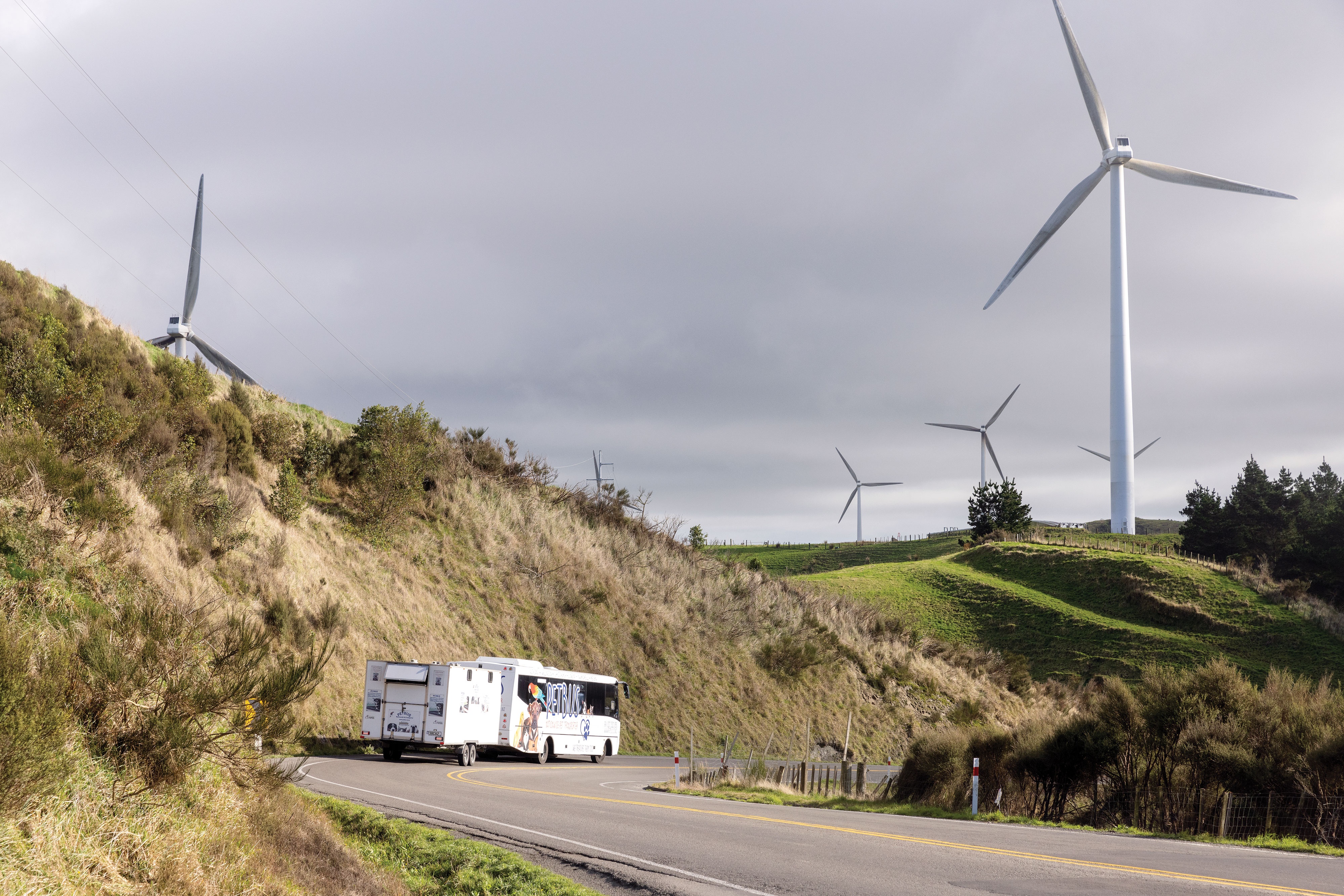
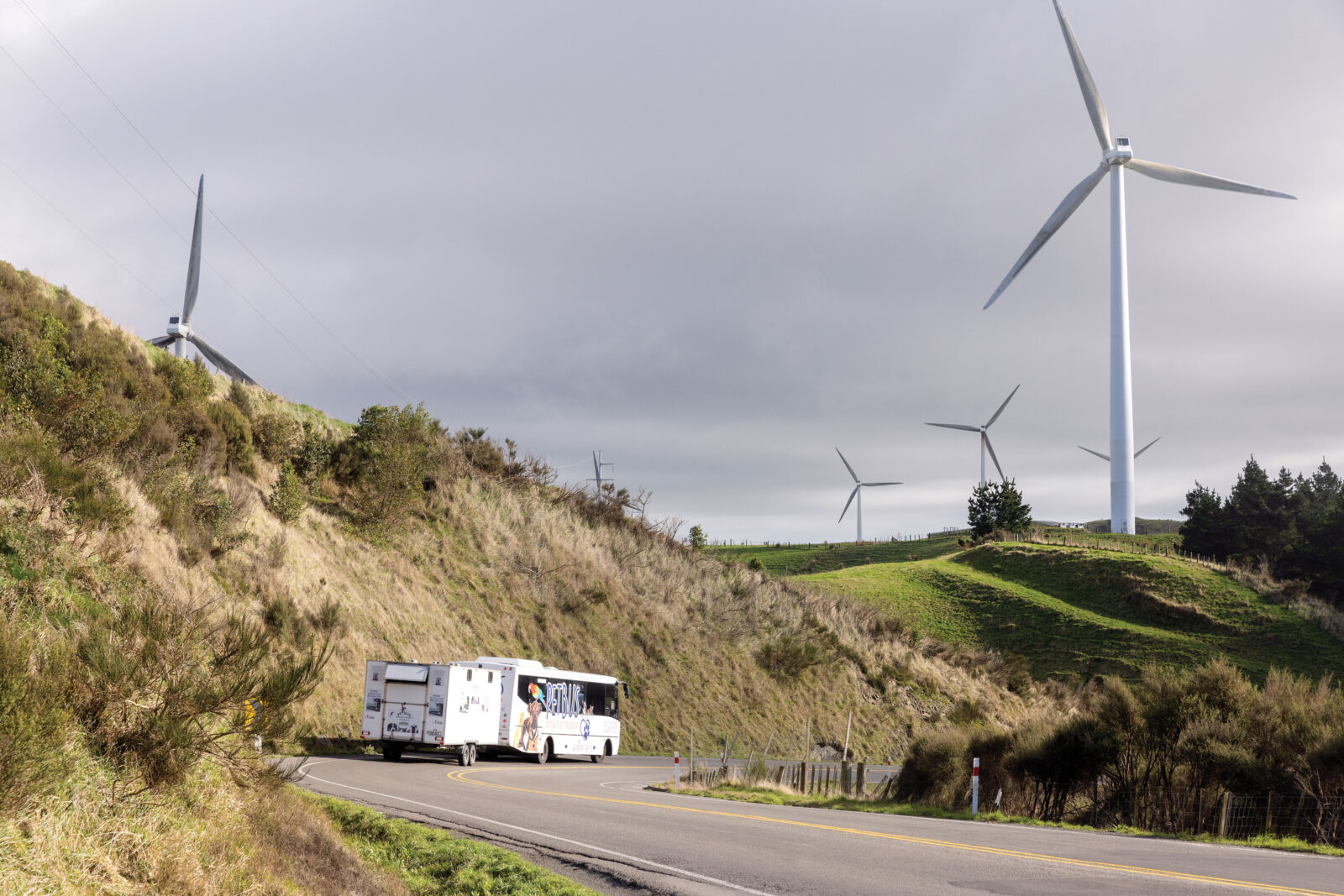
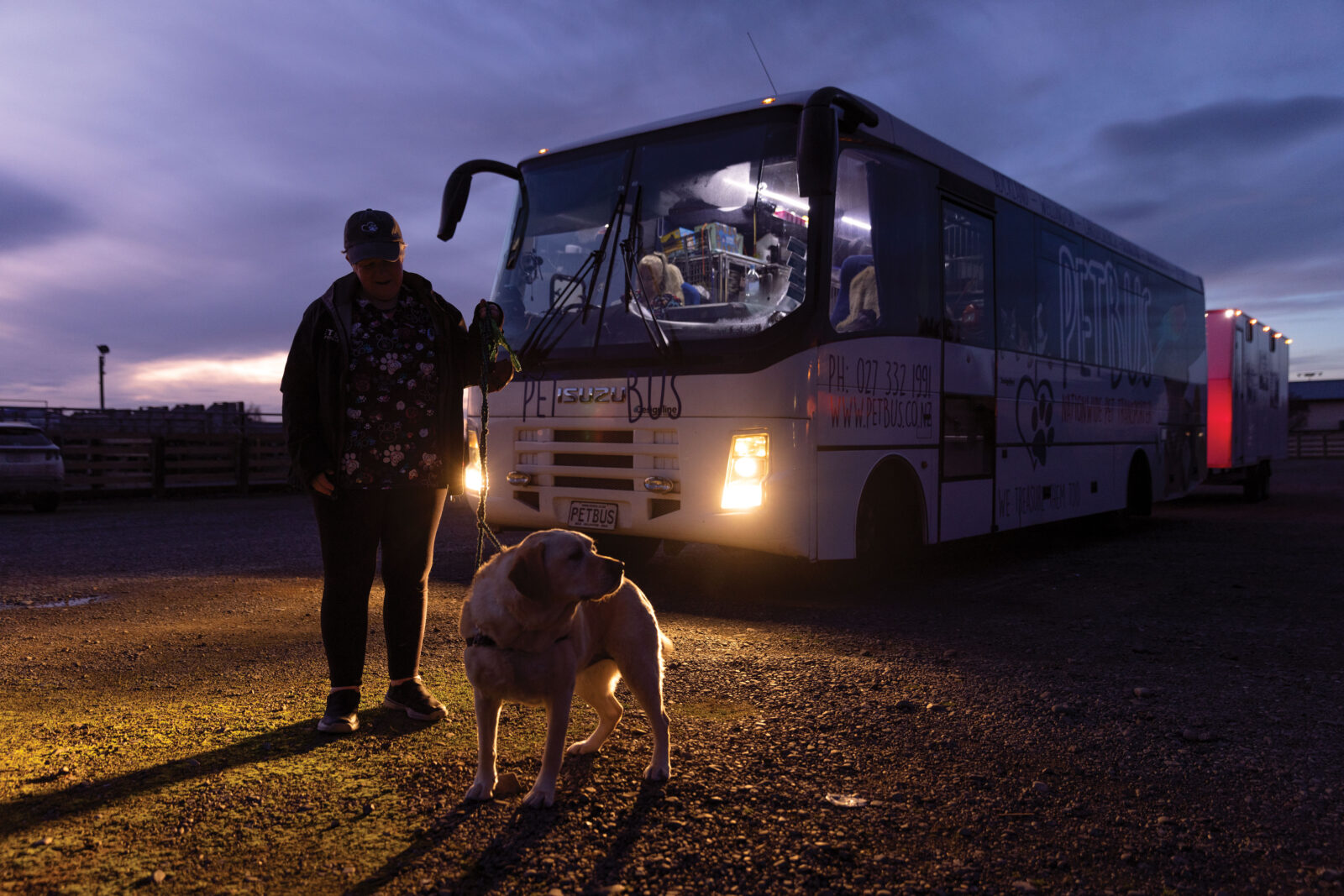
The bus trundles along the Kāpiti coastline, Karyn McLauchlan behind the wheel, her sister Leanne riding shotgun. Lined up behind them, dozing in crates instead of seats, are Winston, Zara, Reg, and Target.
A tinny voice pierces the silence.
“Googoo gaga! Ohh, floppy ears! Weewoo!”
“Some of the crates have cameras and mics, so the owner can speak to their pet,” Karyn tells me. On the receiving end this time was an enormously droopy poodle-schnauzer puppy, who gazes at his camera with sweet doleful eyes. He boarded the bus at Pukekohe and is bound for Wellington, and his new, besotted owner.
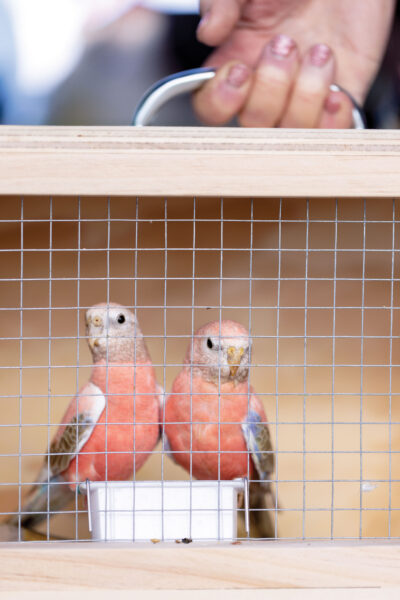
The Pet Bus voyages monthly, from Te Awamutu, up round Auckland and the Bay of Plenty, then on to Invercargill and back again. The passenger manifesto is mostly dogs and cats, but also goats, chickens, chinchillas, emus, spiders, ducks, parrots, bearded dragons and once, an ant farm. The bus smells of lavender and puppies. It is equipped with a calming aromatherapy diffuser, relaxing new-age music (“funeral music,” the sisters joke—“don’t you dare play it at my funeral, though,” Karyn hastily adds), a coffee machine, freezer and microwave, and artisanal pet water. It’s softer on sensitive stomachs, apparently. Karyn lets me have a slurp. It’s delicious.
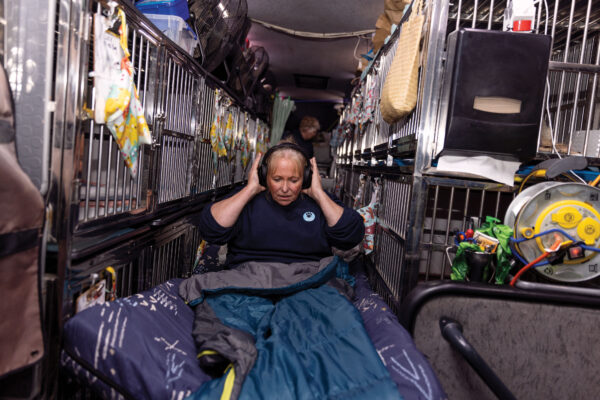
It takes eight nights to do a lap of the country. Karyn and Leanne usually bed down in the aisle to supervise the animals overnight. Leanne sleeps through the animal noises; Karyn employs earplugs and a white-noise machine.
There is a polite “no talking through cameras” policy after nightfall, but Karyn (and the animals) are occasionally woken by a 3am “aww googoo gaga!”. At the back, there is a people-toilet behind a curtain, which sways back and forth with the bus while cats yowl and stare. It’s a 4300-kilometre round trip, and Karyn reckons she’s delivered 24,000 pets in her 20 years of driving. “No accidents yet, touch wood,” she says, leaning over and touching a plastic fridge.
The Pet Bus began when Karyn, a blue-heeler breeder who wears dog-themed scrubs and a fantastic smile, sent three of her puppies to Wellington via airline. Two died—she believes due to being left on the hot tarmac. Karyn began transporting puppies in a van, added a trailer, then eventually upgraded to the Isuzu coach and trailer she uses today. She parks wherever the bus can fit—the online schedule lists locations such as “Rakaia by Big Fish Statue and Toilets” and “Te Kauwhata (roundabout where the old fruit shop was)”.
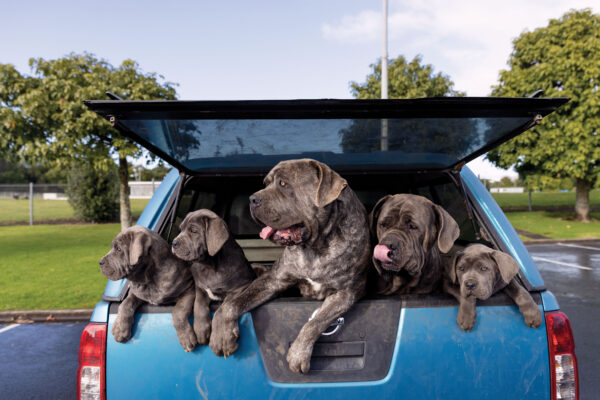
The bus typically hits Cook Strait in the middle of the night. On the ferry, Karyn and Leanne will crank up the aircon and spend a blissful three hours conked out in the cabin. At 6am, in Blenheim, they’ll walk the dogs and hit the road again.
But first, in Wellington, we pull into the Plimmerton weigh station. The droopy pup is disembarking here. A woman shyly approaches, holding a bag of dog treats and a collar. “Do you think he’ll like them? He’s my first puppy. I’ve been watching him on the camera all day.”
She holds her arms out and Karyn gently hands her the pup. He’s uncertain at first, then nuzzles into her neck. She bears him away like he’s the most precious thing in the universe.
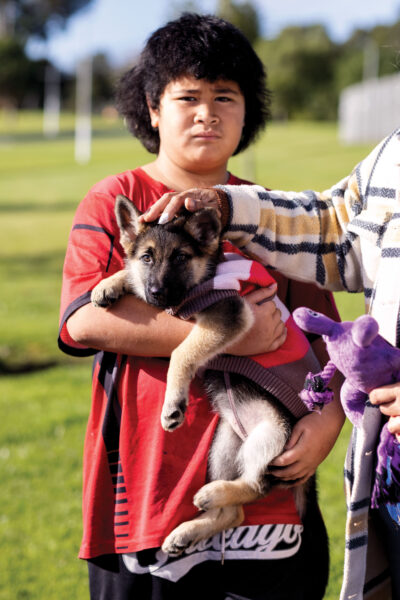
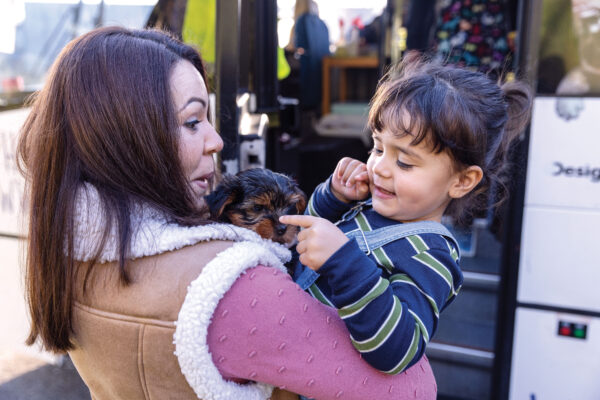
Next, a surprise. Sureca and Neil Venter carry their toddler, Reyka, to Karyn. A tiny scruffy Yorkshire terrier, Winston Truffles, is plopped into the child’s arms. Her parents beam. A girl’s new best friend. Reyka looks at her parents, baffled, then at the dog, then plays with some gravel, then squeals when she realises Winston Truffles is joining them on the car ride home. Karyn leans against the bus, arms folded, smiling. Creating these moments never gets old, she says. And they’re never predictable. She remembers fondly a woman who came to pick up a pet rat. She was wearing a trench coat, with a dozen pockets, also full of rats. “They all came to meet the new family member,” Karyn explains.
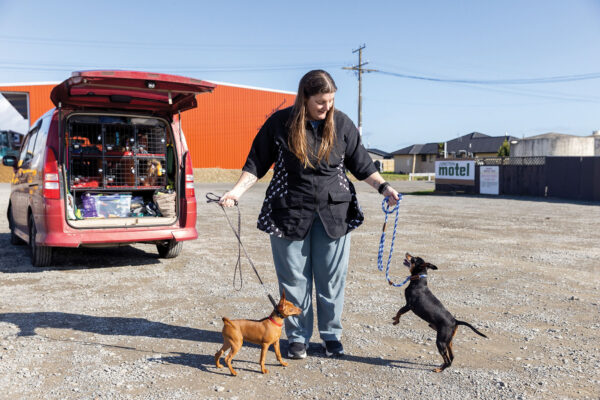
Christmas is Karyn’s favourite time: she feels like Santa, bus instead of sleigh. But for each heartwarming pickup, there is a teary dropoff. At Te Rapa in Hamilton, Bernadette Morrison smooches a chihuahua, her eyes wet. She’s left six kids at home sobbing over this pup; the landlord wouldn’t let them keep it. “It’s like giving up one of your children,” she says. In Waipukurau, Ash McCormick gives her sleepy huntaway pup a hug before handing him to Karyn. “I wonder if this is what it feels like saying goodbye to a child,” Ash says, echoing Bernadette. Farmers in muddy Red Bands wipe their eyes, farewelling surplus kelpies and pig dogs. There are bigger stories behind some of the journeys.
Some pets are displaced in divorces. One Yorkie’s owner is awaiting a liver transplant, so he is sending his dog to stay with family in Christchurch.
Diana Coffey meets the bus at a stop in Sanson. She is sending a boxer pup to Rangiora; it’s her first time breeding a litter, and she swears she’ll never do it again.
“It’s horrible saying goodbye,” she says. “I brought her a toy which smells like home.” The boxer, nicknamed Big Girl, looks decidedly little and scared as Diana kisses her head one last time. “See ya, sweetie.”
Karyn carefully pops Big Girl into the bus, gives her a pat, and away they go. Big Girl falls into a deep puppy-sleep.
At many of the stops, Leanne takes the larger dogs out for a walk and a pee. The dogs, she says, always take a moment to pause and look back in the direction they’ve come from.
More by Asia Martusia King
Subscribe to our free newsletter for news and prizes
3
$1 trial for two weeks, thereafter $8.50 every two months, cancel any time
Signed in as . Sign out