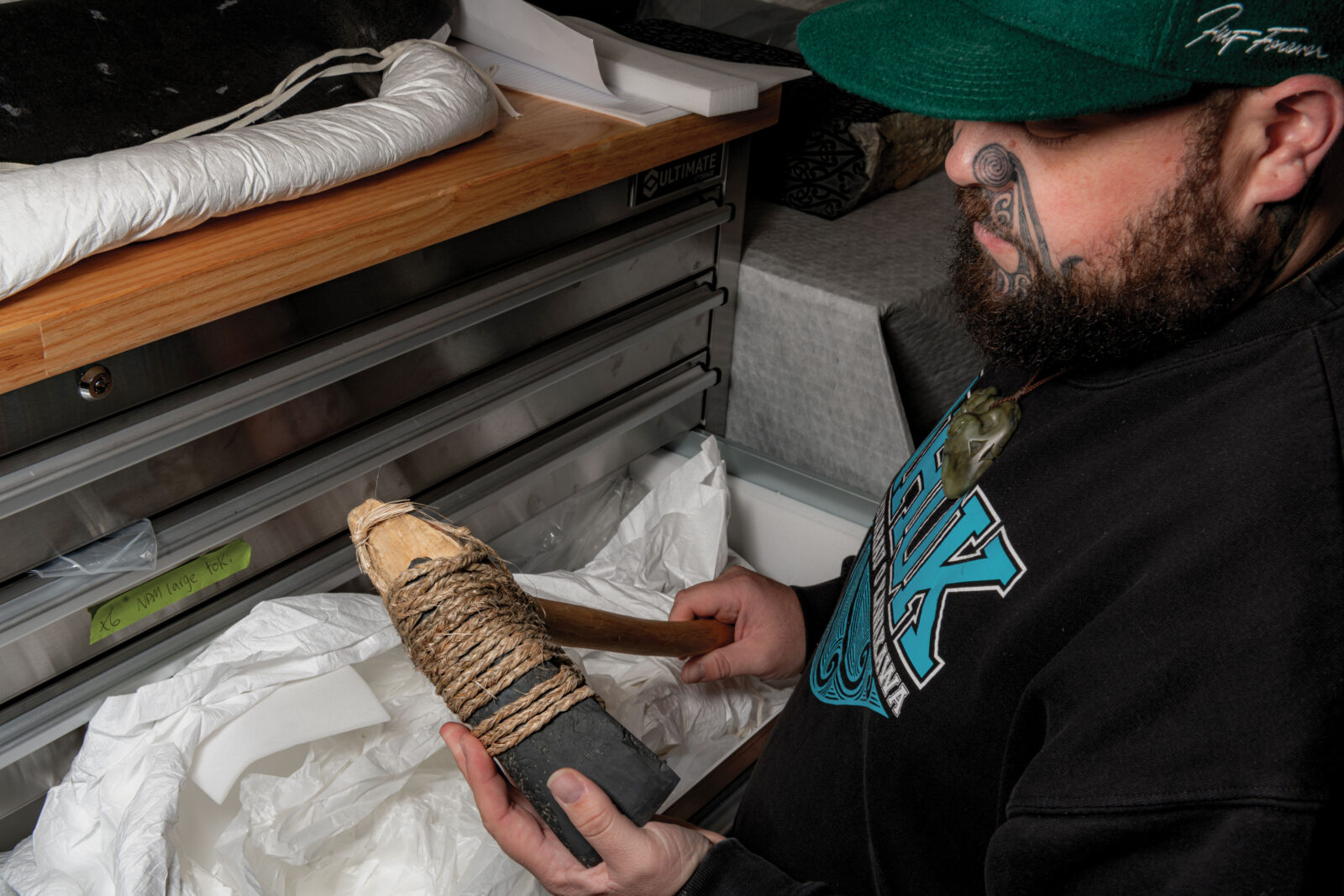
Ngāti Kuia once relied on what they call pakohe, a type of argillite found only in their rohe, for the tools that kept them alive. Now, the iwi are revitalising traditional methods of working the precious stone. Tatsiana Chypsanava photographed a recent wānanga.
Ruihana Smith couldn’t find his fishing knife. His mates had come up short, too. But they were hauling in kahawai—and the fish needed to be bled right there on the beach or the taste would be ruined.
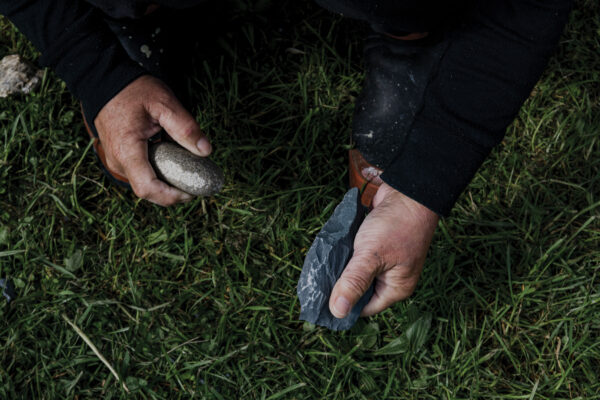
Then Smith remembered the stones rattling around in his boot. Hammerstones—perfect for hitting other rocks with, and for knocking flakes loose—and pakohe, a type of hardened mudstone that has been quarried, shaped and traded by his iwi “since time beyond memory”. He got to work, striking the pakohe just so, until a good sharp-edged flake broke off. As he worked, his mates gave him stick. But then he started taking the heads off the fish.
“They were like, ‘Oh, what? It actually works? And I was like, ‘What, did you think I was just making this up this whole time?’” Smith laughs.
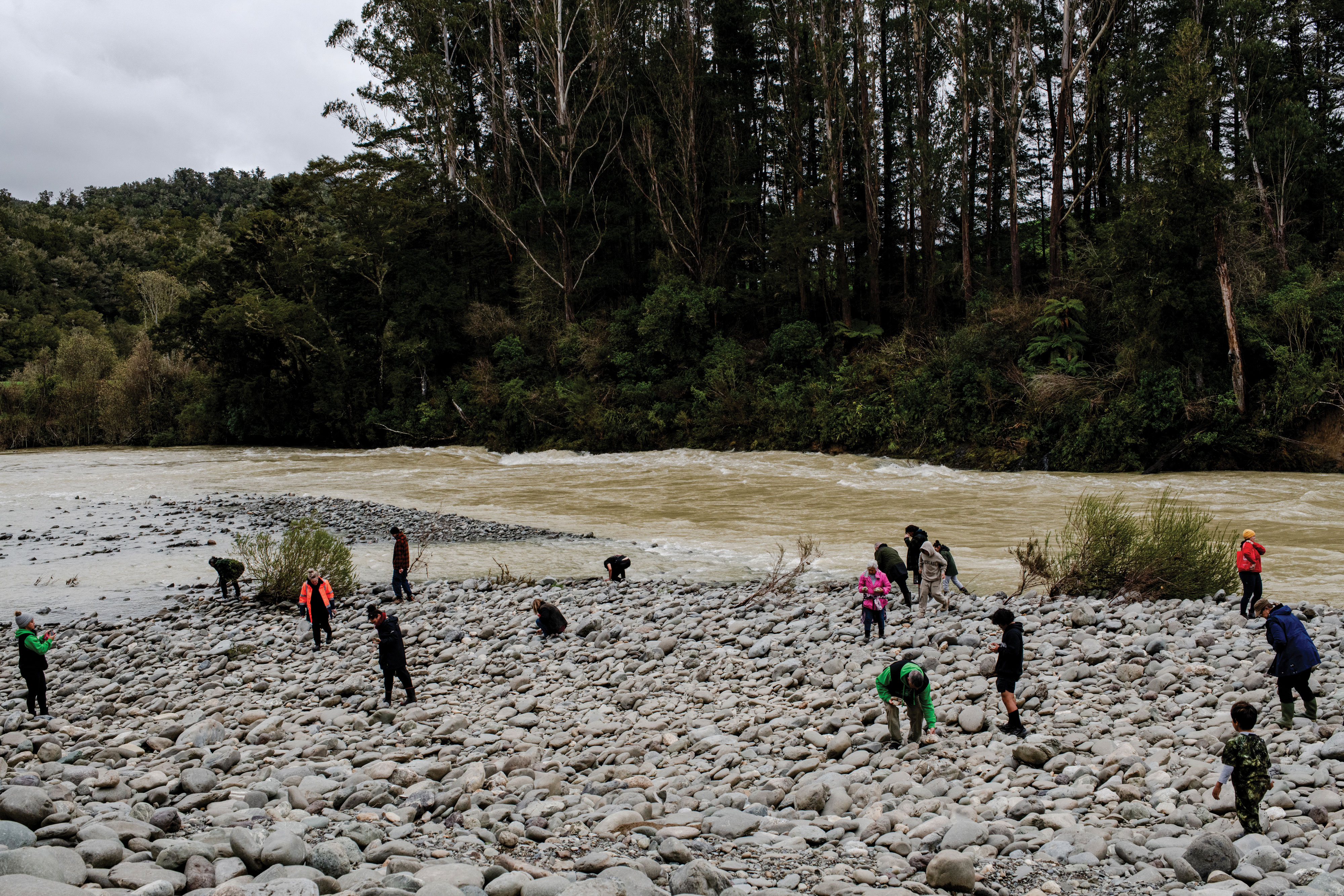
They fossicked on the Pelorus River, then learned to carefully flake, smooth and sharpen the stone to create a toki, or adze. Kids got into the stonework too—when they weren’t busy chucking rocks and chasing kōura.
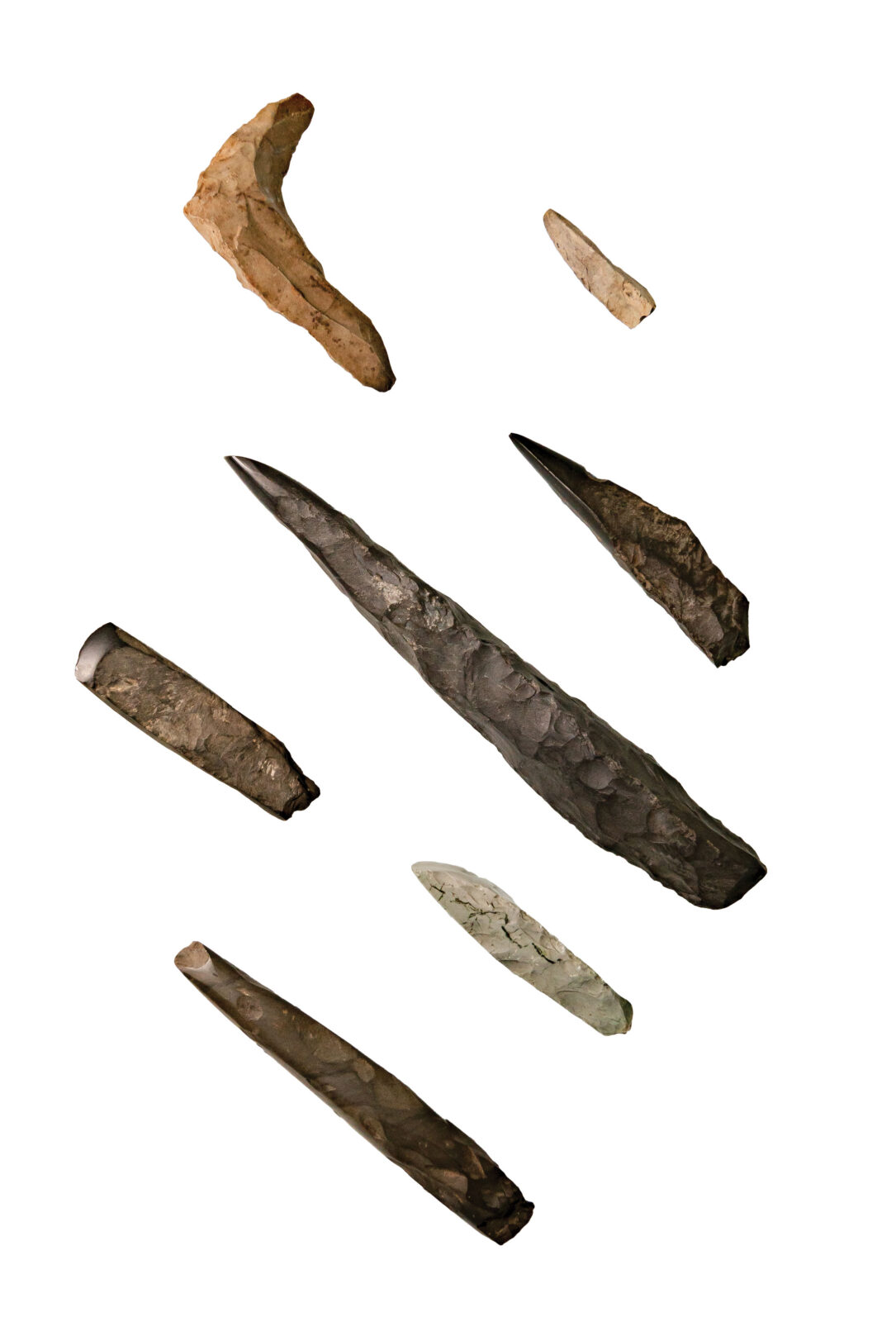
Smith is a relative newcomer to pakohe, but a devotee. He is particularly drawn to marutea, a lighter, milky variant of the stone; most people would be more familiar with the darker pakohe, which Ngāti Kuia know as uriuri.
His connection to pakohe started in 2017 with a visit to his late grandfather’s whenua, an old pā site in the Marlborough Sounds which could be accessed only by boat. Arriving one day shortly after his grandfather died, Smith and his father headed up the beach for the path that led to the house bus. Then they stopped. On top of a boulder that marked the path sat a strange piece of uriuri. It was slightly bigger than a hand, quite smooth, and shaped like a cannonball—most pieces are jagged and knobbly. Even stranger, it was wet, “as if someone had just put it there”.
Smith took it as a tohu, a sign. The pakohe now lives in a small kete in his whare, and he occasionally hands it around for others to touch; with all the rubbing, he says, “it’s taken on a sheen”.
Smith started researching the geology and whakapapa of pakohe, and asking Ngāti Kuia elders how it was used by tīpuna. Pakohe tools would be sharpened and reworked as necessary, he was told, becoming shorter and shorter over time. The best were handed down through families or buried with people when they died. “These tools were essential for the survival of our ancestors,” Smith says. “Felling trees, carving waka, building whare, processing food and fibres.”
His tīpuna would fossick for pakohe in rivers, or lug hammerstones the size of basketballs to mountain outcrops, thudding the rocks down at certain points to loosen big chunks full of stone. Some would be worked on site—the ancient quarry sites are covered with flakes and with toki (adzes) that broke while being shaped.
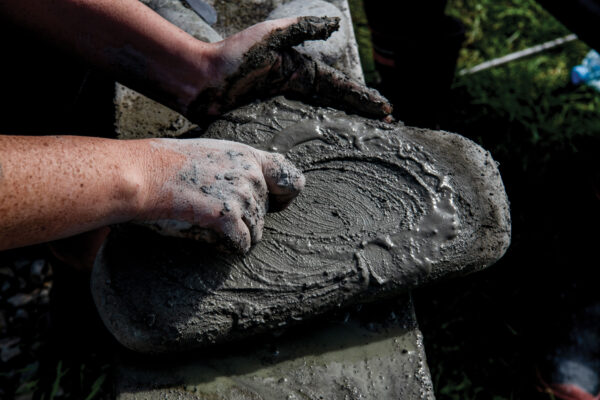
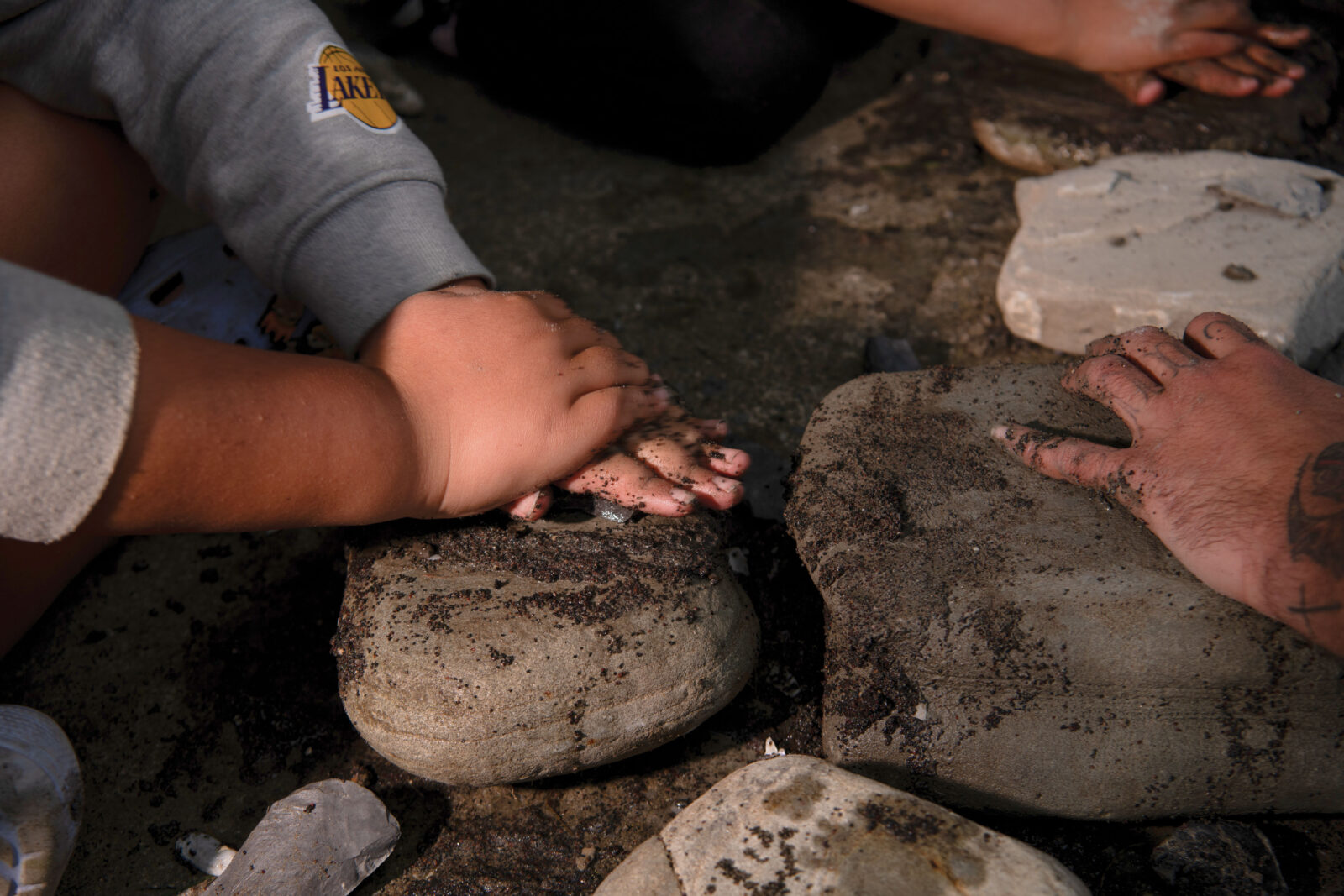
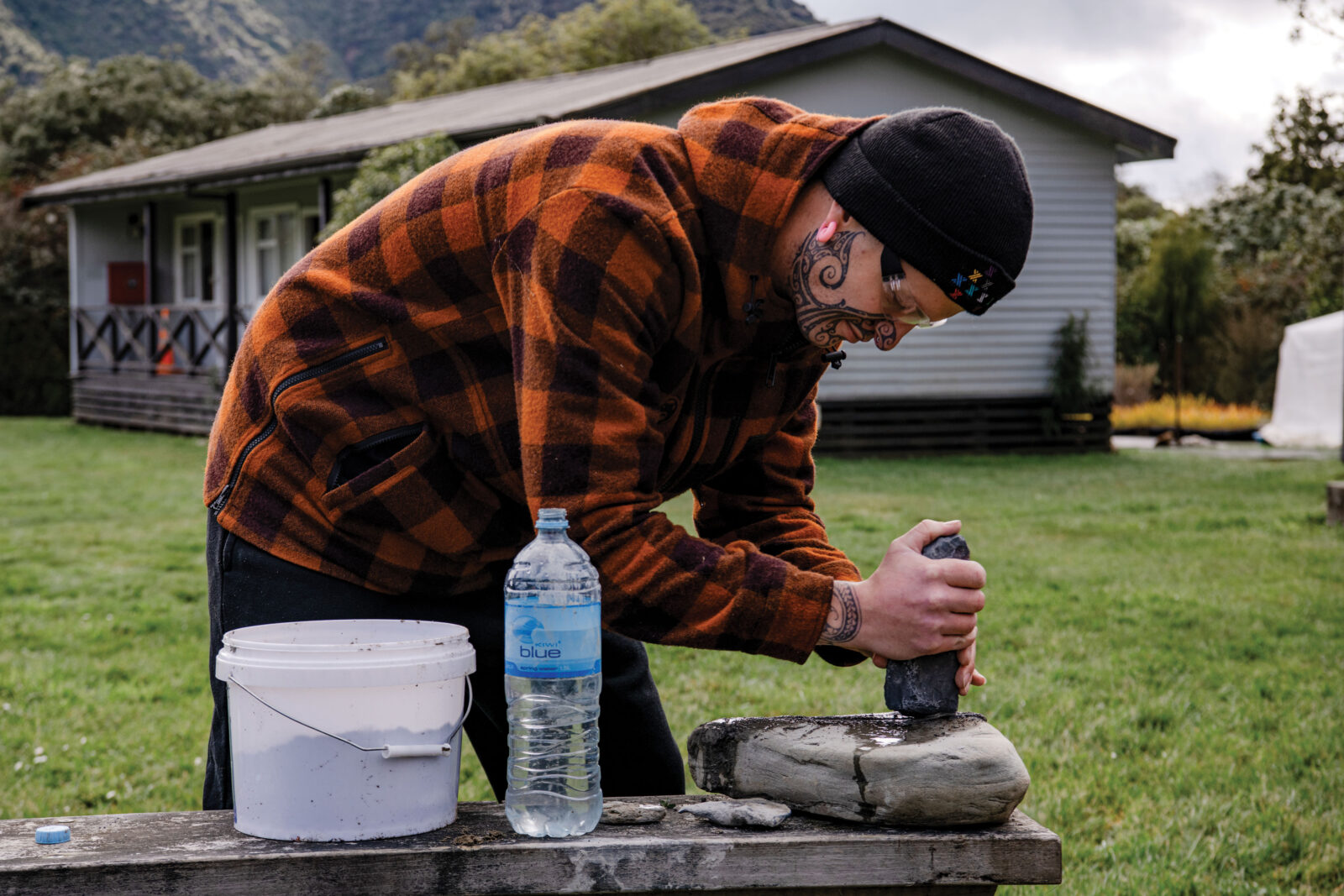
The first step, coaxing flakes from the pakohe with blows of the hammerstone, is the riskiest. After that comes “bruising” or paopao, where the ridges are worn down by striking in a different way. Finally, the pakohe is sharpened on a wet sandstone.
Doing all this himself was very much trial and error at the start, Smith says. “You’re just clanging rocks together, thinking, ‘How the…?’ And you give up.” Only a few people in Aotearoa know the traditional methods of making stone tools, and Smith learned from two of them: Dante Bonica and Layton Robertson.
Whao, or chisels, and kota, scrapers, at the Nelson Provincial Museum showcase the many shades of pakohe.
He broke a lot of rocks. “When I first started, 10 out of 10 would crack,” he says. It’s still hit-and-miss.
“I’ll have something that’s pretty good and I’ll go, ‘Oh yep, I’ll give it one more flake just here before I start the next step.’ And that last flake can split it in half.”
Pakohe is the bedrock of his life, now, and Smith is intent on helping reconnect Ngāti Kuia to it—to the techniques of making tools, but also to the mauri of the stone, and the people who first treasured it. Smith runs wānanga where whānau learn to make toki, from finding a likely looking stone through to shaping a handle, preparing cordage and lashing stone to wood.
“You go away with something you’ve made that’s really cool,” he says. “But inside of that you have the connection to the atua, the whenua, the tīpuna, and that whole connection back—the whakapapa.”
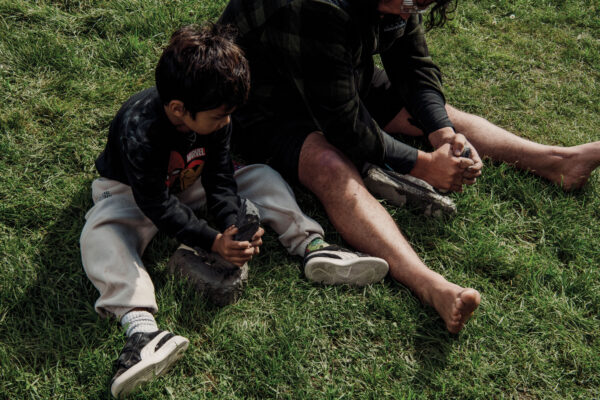
The wānanga documented here by Tatsiana Chypsanava ran for five days—it takes time to make a good toki, and to take in the kōrero around it. While their parents worked, the kids chased crawlies in the creek, popping back now and then to help with the grinding. And in the closing moments of the last day, when all 20 attendees stood with their finished toki, Smith pointed them at a tōtara log.
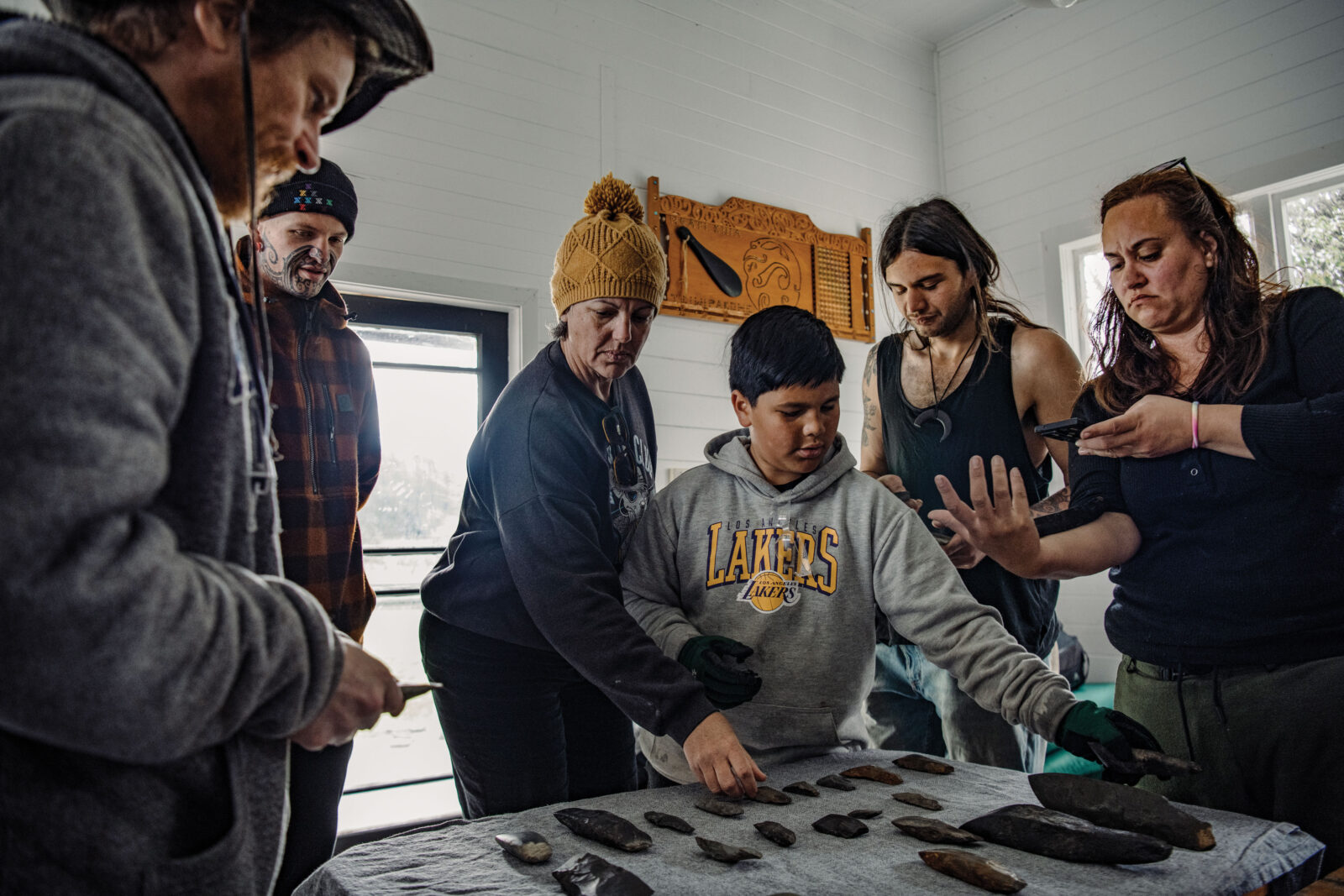
Such tools were handed down through families and resharpened on wet sandstone as needed.At right, Ruihana Smith introduces whānau to pakohe shaped by their tīpuna. From left: Josh Huntley, Smith, Melissa Linton, Uriah-Hemi Hill, Ford Hemi, Gabrielle Kupa.
Smith fits his stoneworking around a young family and mahi for Ngāti Kuia. He finds that working pakohe has a meditative quality. “You get lost in it, the rhythm.”
The iwi loan various taonga, including this toki, to Nelson Provincial Museum. Looking after them there is Hamuera Manihera, a weaver whose work recreating ancestral cloaks we documented in Issue 166.
Tatsiana Chypsanava
Ngāti Kuia once relied on what they call pakohe, a type of argillite found only in their rohe, for the tools that kept them alive. Now, the iwi are revitalising traditional methods of working the precious stone. Tatsiana Chypsanava photographed a recent wānanga. (more…)